
Ball Bearings vs Roller Bearings: Which Is Best for Your Application?
Choosing the right bearing often feels harder than it should. Many equipment failures happen not because of poor maintenance, but because the bearing type was not matched to real operating conditions. Understanding the differences between ball bearings vs roller bearings helps you improve reliability, reduce downtime, and control maintenance costs. This guide breaks down those differences in clear, practical terms you can apply immediately.
Selecting the right bearing affects performance, lifespan, and long-term operating costs. The decision between ball bearings and roller bearings directly impacts load handling, speed, friction, and heat generation. A bearing that looks similar on a spec sheet can behave very differently once installed. Knowing how each design works helps you avoid premature failure and unnecessary replacements.
What Is the Difference Between Ball Bearings and Roller Bearings?
At a basic level, both bearings support rotating shafts. The way they do it is where the real differences begin.
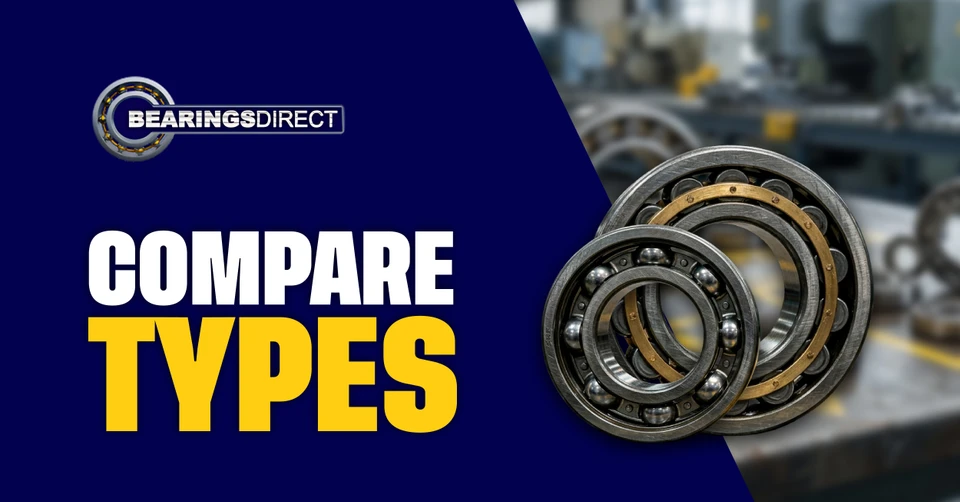
Basic Design Comparison – spherical balls versus cylindrical or tapered rollers.
Ball bearings use hardened steel balls rolling between inner and outer raceways. Roller bearings replace balls with cylindrical, tapered, or spherical rollers. This design change affects strength, friction, and operating limits.
Ball bearings focus on efficiency. Roller bearings focus on strength and stability.
How Load Is Distributed – point contact vs line contact.
Ball bearings create point contact, which keeps friction low but limits bearing load capacity. Roller bearings create line contact, spreading force across a larger surface area.
This makes roller bearings better for heavy loads, while ball bearings excel at speed.
Why Design Matters in Real Applications.
Design determines heat buildup, vibration, and service life. Choosing the wrong option leads to wear, noise, and failure.
Understanding types of bearings for machinery helps you match design to real-world demands instead of relying on assumptions.
How Do Ball Bearings Perform in Industrial Applications?
Ball bearings are popular because they balance speed, efficiency, and cost.
High-Speed Capability – ideal for low-friction, fast-rotating systems.
Ball bearings produce minimal rolling resistance. This allows them to operate at high RPM with less heat. For many machines, they are the preferred high-speed bearings.
Their low friction improves energy efficiency and smooth operation.
Lower Load Capacity – best for light to moderate loads.
Because of point contact, ball bearings are not designed for heavy loads. Excess force increases stress and shortens life.
They perform best when loads are predictable and controlled.
Common Uses – motors, pumps, conveyors, and fans.
You commonly find ball bearings in:
- Electric motors
- Pumps and compressors
- Fans and blowers
- Light-duty conveyors
In many industrial bearing applications, their performance shines when speed matters more than raw strength. They also score well in any bearing friction comparison.
How Do Roller Bearings Perform Under Heavy Loads?
Roller bearings are built for demanding conditions.
Superior Load Handling – designed for radial and axial stress.
The line contact design gives roller bearings a much higher bearing load capacity. This makes them reliable heavy load bearings.
They handle shock loads and vibration far better than ball bearings.
Lower Speed Tolerance – trade-off for strength and durability.
Higher friction limits speed. Roller bearings generally operate at lower RPM to prevent overheating.
This trade-off is acceptable in equipment where load outweighs speed.
Common Uses – gearboxes, crushers, heavy machinery, and conveyors.
You often see roller bearings in:
- Gearboxes
- Crushers and mills
- Construction and mining equipment
- Heavy-duty conveyors
They are a core solution for tough industrial bearing applications.
When Should You Choose Ball Bearings Over Roller Bearings?
Ball bearings are the better choice when efficiency and compact design are priorities.
High-Speed Requirements – minimizing friction and heat.
High rotational speeds demand low friction. Ball bearings reduce heat buildup and energy loss.
This makes them ideal for motors and precision equipment.
Compact Design Constraints – fitting into smaller assemblies.
Ball bearings are typically smaller and lighter. They fit easily into tight spaces without sacrificing performance.
Compact machinery often relies on ball bearings to meet design limits.
Cost Efficiency for Light-Duty Applications.
For moderate loads, ball bearings provide excellent value. They are widely available and simple to install.
In many industrial bearing applications, they deliver reliable performance at a reasonable cost.
When Are Roller Bearings the Better Choice?
Roller bearings are preferred when strength and durability are critical.
Heavy or Shock Loads – maintaining stability under stress.
Roller bearings absorb impact forces better. Their design protects raceways under sudden loads.
This makes them dependable heavy load bearings.
Misalignment and Rigidity Needs – especially in industrial equipment.
Some roller bearings tolerate misalignment better than ball bearings. This is important in large machines where alignment shifts over time.
Rigidity also improves accuracy under load.
Long-Term Durability in Harsh Environments.
Roller bearings last longer in dirty, high-load, or vibrating conditions.
When uptime matters most, they are often the safer option.
How Do Speed, Load, and Friction Affect Bearing Selection?
Speed, load, and friction work together and must be balanced carefully.
Understanding Speed Ratings – why RPM matters.
Every bearing has a maximum speed limit. Exceeding bearing speed ratings causes heat and lubrication breakdown.
Ball bearings generally allow higher speeds than roller bearings.
Balancing Load and Lifespan – avoiding premature wear.
Higher loads shorten bearing life. Selecting the right bearing load capacity ensures reliability.
Oversizing slightly often improves lifespan.
Friction and Heat Generation – impact on efficiency and maintenance.
Friction creates heat, which damages lubricant and components.
A smart bearing friction comparison helps reduce energy loss and maintenance frequency.
What Common Bearing Selection Mistakes Should Be Avoided?
Many failures result from simple oversights.
Choosing Based on Cost Alone.
Lower-cost bearings may not handle real operating conditions.
Ignoring performance leads to higher long-term expenses.
Ignoring Load Direction and Shock Forces.
Radial and axial loads must both be considered. Shock loads are often underestimated.
This mistake is common in industrial bearing applications.
Overlooking Lubrication and Maintenance Requirements.
Even the right bearing fails without proper lubrication.
A solid bearing selection guide always includes maintenance planning.
Why Choose Bearings Direct for Ball and Roller Bearings?
Bearings Direct supports engineers, maintenance teams, and buyers with dependable solutions.
Extensive Product Range – ball, cylindrical, tapered, and spherical roller bearings.
You can source both ball bearings and roller bearings for nearly any application.
This simplifies purchasing and reduces downtime.
Application-Focused Support – guidance tailored to real operating conditions.
Their experts help match bearing type to speed, load, and environment.
This reduces trial-and-error decisions.
Reliable Supply and Quality Assurance – consistent performance you can trust.
Reliable inventory and trusted brands ensure consistent results.
Frequently Asked Questions About Ball Bearings vs Roller Bearings
1. What is the main difference between ball bearings and roller bearings?
Ball bearings support higher speeds with lower friction, while roller bearings support heavier loads.
2. Are ball bearings better for high-speed use?
Yes. They are commonly used ashigh-speed bearings.
3. Can roller bearings handle axial loads?
Yes, especially tapered and spherical designs.
4. Which bearing lasts longer?
It depends on load and speed. Roller bearings last longer under heavy loads.
5. Are roller bearings more expensive?
Often yes, but they can reduce downtime in heavy-duty systems.
6. Do ball bearings handle misalignment well?
Standard designs do not. Self-aligning versions help.
7. What industries rely on roller bearings?
Mining, construction, steel, and heavy manufacturing.
8. Can I replace a roller bearing with a ball bearing?
Only if load and speed limits allow it.
9. How important is lubrication?
Critical. Poor lubrication causes early failure.
10. Where can I get help choosing the right bearing?
Bearings Direct provides expert support and a full bearing selection guide.
Find the Right Bearing for Your Application
Choosing between ball bearings vs roller bearings does not need to be complicated. With the right guidance, you can improve performance and extend equipment life. Explore Bearings Direct’s catalog or contact their team for help selecting the ideal bearing solution for your application.
Need help finding the right bearing?
Send your specs or a photo and the team will help you match the correct part.