
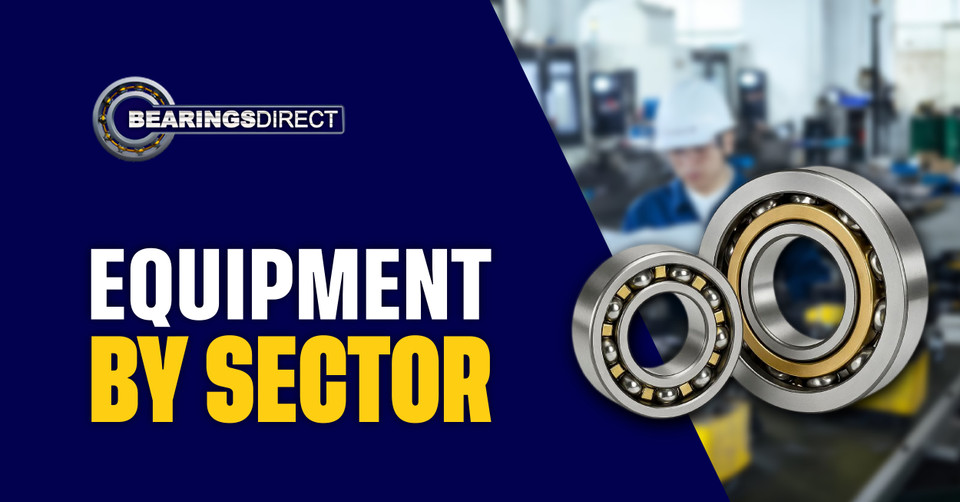
Machines Across Key Sectors
Bearings are the hidden components that make machines across industries move with precision and reliability. Whether you’re working in automotive, aerospace, agriculture, robotics, manufacturing, or construction, bearings in key industries provide the essential motion and load support that keeps equipment running. Without them, critical systems would face friction, inefficiency, and costly downtime.
Why Do Bearings Matter Across the World’s Most Important Industries?
Bearings are the backbone of modern machinery. They deliver:
- Smooth, reliable motion for consistent operation: Bearings reduce friction so machines can run continuously without interruption.
- Lower friction that prevents energy loss: By minimizing drag, bearings improve efficiency and reduce operating costs.
- Helps equipment handle high loads and long service life: Bearings distribute forces evenly, extending the lifespan of heavy-duty machines.
This is why bearings in key industries are indispensable, from industrial bearings for manufacturing to specialized designs for aerospace and robotics.
What Types of Bearings Do Industrial Machines Rely On Most?
Different machines demand different bearing types. You’ll often see:
- Ball bearings for speed-focused applications: Ideal for motors, pumps, and conveyors.
- Roller bearings for heavy-load operations: Handle stress in presses, mills, and mining equipment.
- Mounted bearings for harsh, dusty, and outdoor conditions: Simplify installation in agriculture and construction machinery.
- Precision bearings for robotics and medical systems: Deliver accuracy in surgical robots and automated arms.
From precision bearings for robotics to heavy machinery bearings, each type is engineered to meet specific performance needs.
How Are Bearings Powering the Automotive and Transportation Sector?
Vehicles rely on bearings for safety and efficiency. In bearings in automotive systems, you’ll find:
- Engine components: Bearings support crankshafts and camshafts under high loads.
- Wheel hubs: Enable smooth rotation and stability at high speeds.
- Transmission systems: Bearings reduce friction in gear assemblies.
Durability is key, as automotive bearings must withstand high temperatures, vibration, and constant motion.
How Do Bearings Support Safety and Innovation in Aerospace?
Aircraft systems demand precision and resilience. Aerospace bearing applications include:
- Landing gear: Bearings absorb shock during takeoff and landing.
- Avionics systems: Bearings ensure smooth operation in navigation and control systems.
- Navigation controls: Precision bearings keep flight-critical components reliable.
High-strength designs resist extreme temperatures, pressure, and environmental challenges.
Where Do Bearings Strengthen Production in Manufacturing and Automation?
Factories depend on bearings for productivity. In industrial bearings for manufacturing, you’ll see:
- CNC machines: Bearings ensure accuracy in cutting and shaping.
- Assembly robots: Precision bearings for robotics enable repeatable, accurate motion.
- Conveyor systems: Bearings reduce friction for smooth material handling.
By improving accuracy and reducing downtime, bearings directly boost output and efficiency.
How Do Bearings Keep Construction and Agriculture Equipment Running?
Heavy-duty environments require rugged designs. Bearings in bearings for construction machinery and machine bearings in agriculture provide:
- Load-bearing performance for loaders, excavators, tractors: Bearings distribute forces across large surfaces.
- Shock resistance: Roller bearings absorb vibration and impact.
- Sealing against dirt and moisture: Protects bearings from contamination in outdoor conditions.
These features keep equipment reliable in tough environments.
What Role Do Bearings Play in Medical and Healthcare Machinery?
Healthcare machines demand quiet, precise performance. Medical equipment bearings are used in:
- Diagnostic imaging systems: Bearings enable smooth motion in MRI and CT scanners.
- Lab instruments: Bearings reduce friction in centrifuges and analyzers.
- Surgical robotics: Precision bearings ensure accurate, repeatable movements.
Smooth and quiet operation is critical in patient-focused environments.
How Are Bearings Advancing Renewable Energy and Oil & Gas Operations?
Energy systems rely on bearings for efficiency and durability. Applications include:
- Wind turbine rotation systems: Bearings for renewable energy systems handle heavy loads and constant rotation.
- Drilling equipment: Bearing applications in oil and gas withstand abrasive conditions and high pressure.
- Hydro turbines: Bearings resist water exposure and torque.
Contamination tolerance and long-life reliability are essential in these demanding sectors.
What Should Engineers Consider When Selecting Bearings for Their Sector?
Choosing the right bearing requires careful evaluation:
- Load capacity, operating speed, sealing, lubrication, compliance requirements: Match specifications to your system’s demands.
- Material and design: Stainless steel, ceramic hybrids, or sealed bearings depending on the environment.
- Precision requirements: Precision bearings for robotics ensure accuracy, while heavy machinery bearings deliver durability.
Selecting the right bearing improves performance and reduces downtime.
Why Source Industry-Ready Bearings from Bearings Direct?
Bearings Direct provides:
- Extensive product catalog for every major sector: Automotive, aerospace, manufacturing, energy, and more.
- Fast delivery, expert support, and competitive pricing: Ensuring you get the right bearings quickly.
- Industry-focused performance options for demanding machinery: Bearings tailored to your sector’s needs.
Ready to Source Bearings for High-Performance Machinery?
Your machines deserve bearings designed for their specific industry demands. Explore Bearings Direct’s catalog today and source bearings that deliver reliability, durability, and precision across every sector.
FAQ
Q1: What are bearings in key industries?
A: Bearings reduce friction and support loads in machines across automotive, aerospace, manufacturing, medical, agriculture, construction, energy, and robotics.
Q2: Why are industrial bearings important in manufacturing?
A: They keep production lines efficient by reducing downtime and wear.
Q3: How do bearings improve agriculture equipment?
A: Sealed designs resist dirt and moisture, ensuring tractors and harvesters run longer with machine bearings in agriculture.
Q4: What makes aerospace bearings unique?
A: Aerospace bearing applications withstand extreme speeds, temperatures, and environmental conditions.
Q5: How do automotive bearings enhance safety?
A: Bearings in automotive systems stabilize vehicles, while engine bearings support critical components.
Q6: Why are medical equipment bearings specialized?
A: Medical equipment bearings meet strict standards for precision, cleanliness, and durability.
Q7: How do renewable energy systems use bearings?
A: Bearings for renewable energy systems enable smooth rotation in wind turbines, solar trackers, and hydro plants.
Q8: What types of bearings are used in heavy machinery?
A: Heavy machinery bearings like roller and spherical bearings handle shock and heavy loads in construction and mining.
Q9: Why are precision bearings vital for robotics?
A: Precision bearings for robotics ensure accurate, repeatable motion in robotic arms and automation systems.
Q10: How do bearings support oil and gas operations?
A: Bearing applications in oil and gas withstand harsh drilling environments and heavy loads.
Need help finding the right bearing?
Send your specs or a photo and the team will help you match the correct part.