
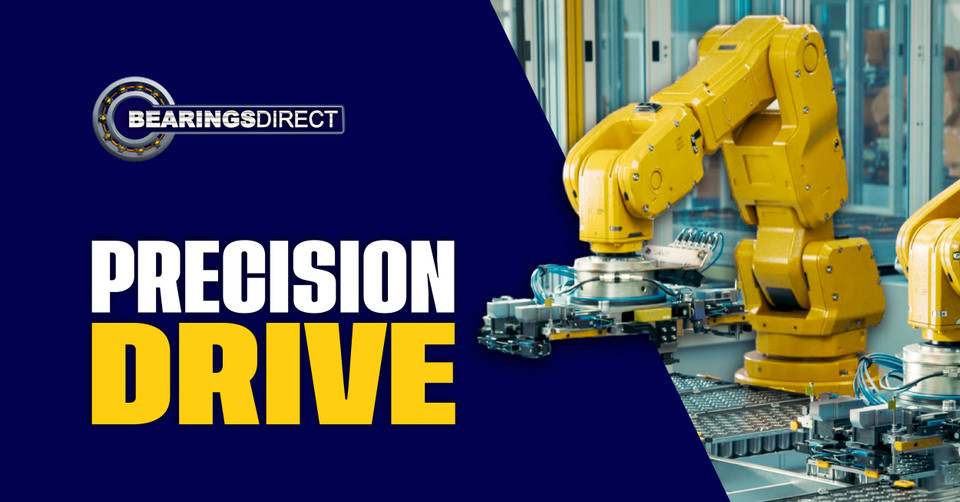
Precision Bearings That Drive Smooth Robotic Movement
Modern robots achieve smooth, reliable movement because every mechanical detail is carefully engineered. At the center of this performance are precision bearings for robotics, which enable tight tolerances, controlled motion, and consistent results across automation, manufacturing, and medical systems.
Why Are Precision Bearings Critical to Robotic Movement?
Robotic systems rely on controlled motion at every joint and axis. Motors and software may command movement, but bearings determine how accurately and smoothly that motion is delivered in the real world. Well-chosen bearings directly influence performance, reliability, and system lifespan.
Ensuring Smooth, Controlled Motion – reducing vibration and jerk in robotic joints
Smooth motion is essential for predictable robotic behavior. When bearings introduce vibration, stick-slip effects, or uneven rolling, robots struggle with jerky movement and inconsistent paths. Precision-manufactured bearings minimize surface irregularities and friction, helping joints move fluidly.
This is why smooth motion bearings are so important in pick-and-place systems, welding robots, and inspection cells. By reducing vibration and jerk, these bearings help robotic joints operate quietly and smoothly, even at high cycle rates.
Maintaining Accuracy and Repeatability – enabling precise positioning and path control
Robots must repeat the same movement thousands or even millions of times without drift. Precision bearings reduce internal play and backlash, allowing joints to stop exactly where commanded.
In applications that demand exact positioning, such as electronics assembly and packaging, high accuracy bearings for automation support consistent path control. Over time, this repeatability protects product quality and reduces rework.
Supporting Speed and Load Demands – balancing agility with structural stability
Robots often move quickly while carrying tools or payloads. Bearings must support speed without sacrificing rigidity. Precision designs balance low friction with high stiffness, so joints remain stable during rapid acceleration and deceleration.
This balance is a defining feature of robotic precision bearings, especially in high-speed automation where both agility and strength matter.
What Types of Bearings Are Commonly Used in Robotic Systems?
Robotic applications use several bearing types, each selected to match specific motion, load, and space requirements.
Precision Ball Bearings – low friction and high-speed capability
Precision ball bearings are widely used in robotics because they provide smooth rotation with minimal friction. They support both radial and axial loads while maintaining excellent speed performance.
You commonly find them in end effectors, drive systems, and joint assemblies. Their efficiency makes them ideal low-friction bearings for robotics, especially where fast response and smooth movement are critical.
Crossed Roller Bearings – compact design with exceptional rigidity for robot joints
Crossed roller bearings use cylindrical rollers arranged at right angles. This structure allows a single bearing to handle loads from multiple directions while maintaining high rigidity.
They are often chosen as bearings for robotic joints and rotary actuators. Their stiffness helps maintain alignment and accuracy in robot arms and positioning systems.
Thin-Section Bearings – space-saving solutions for lightweight robotic arms
As robots become smaller and lighter, designers need bearings that fit tight spaces. Thin-section bearings offer precision performance with a reduced cross-section.
These compact designs are commonly used as robot arm bearings in lightweight or collaborative robots where space savings and low inertia are important.
How Do Precision Bearings Improve Robotic Accuracy and Efficiency?
Precision bearings play a direct role in how efficiently and accurately a robot performs its tasks.
Reducing Friction and Backlash – smoother starts, stops, and directional changes
Friction and backlash interfere with motion control. Precision bearings minimize both by maintaining consistent rolling contact and tight internal clearances.
With low-friction bearings for robotics, robots respond more accurately to control signals. Starts and stops become smoother, and direction changes occur without hesitation or overshoot.
Enhancing Motion Control – consistent movement for vision-guided and AI-driven robots
Advanced robots rely on cameras, sensors, and AI to guide motion. For these systems to work properly, physical movement must match digital commands exactly.
Precision bearings provide consistent motion across cycles, supporting robotics motion control bearings used in vision-guided inspection, adaptive manufacturing, and AI-driven automation.
Improving Energy Efficiency – lowering resistance in continuous-operation systems
Lower friction means motors do not need to work as hard. Precision bearings reduce resistance, which lowers energy consumption and heat generation.
In continuous-duty systems, this efficiency supports longer component life and lower operating costs. This benefit is especially valuable in a precision bearings for automation system that runs around the clock.
Where Are Precision Bearings Used in Robotics Applications?
Precision bearings support robotic motion across a wide range of industries and use cases.
Industrial Robotics – assembly, welding, pick-and-place systems
Industrial robots operate in demanding environments with constant motion. Bearings must withstand high loads, speed changes, and long duty cycles.
In these settings, bearings for industrial robots support arms, joints, and actuators that perform repetitive tasks with tight accuracy requirements.
Medical Robotics – surgical robots, imaging equipment, rehabilitation devices
Medical robotics requires extreme smoothness and reliability. Bearings must operate quietly, without vibration, and with absolute consistency.
Precision designs support delicate movements in surgical tools and imaging systems, where patient safety and accuracy are critical.
Collaborative Robots (Cobots) – safe, smooth interaction with human operators
Cobots are designed to work alongside people. Their movements must be smooth, predictable, and controlled.
Bearings play a key role in ensuring gentle motion and precise stopping. Well-selected smooth motion bearings help cobots operate safely in shared workspaces.
Autonomous Systems – mobile robots and automated guided vehicles
Mobile robots and AGVs rely on bearings for steering, wheel rotation, and payload support. Precision bearings ensure stable movement and accurate navigation.
In these systems, robotics motion control bearings contribute to reliable path following and efficient energy use.
What Performance Factors Matter Most When Selecting Bearings for Robotics?
Selecting the right bearing means evaluating how performance factors affect real-world robotic motion.
Load Capacity and Rigidity – handling dynamic forces without deformation
Robotic motion creates changing loads at joints and axes. Bearings must handle these forces without deforming or losing alignment.
High rigidity ensures joints remain stable, protecting accuracy and extending bearing life in demanding applications.
Precision Tolerances – minimizing play for exact positioning
Tight manufacturing tolerances reduce internal play. Less play means better positioning and repeatability.
This is especially important for robot arm bearings, where even small amounts of looseness can affect reach accuracy and tool alignment.
Noise and Vibration Control – critical for medical and lab environments
Noise and vibration can interfere with sensitive operations. Precision bearings reduce both through smooth raceways and controlled clearances.
In laboratories and medical facilities, quiet operation is often mandatory, not optional.
How Can Proper Maintenance Extend Bearing Life in Robotic Systems?
Even the best bearings require proper care to reach their full service life.
Correct Lubrication Strategies – balancing cleanliness and friction reduction
Lubrication reduces friction and wear, but too much lubricant can attract contaminants. Using the correct lubricant type and amount keeps bearings operating smoothly.
Good lubrication practices help bearings for robotic joints maintain consistent performance in both clean and industrial environments.
Sealed and Shielded Bearings – protection against dust and contaminants
Seals and shields protect bearings from debris, dust, and moisture. This protection is especially important in factories and warehouses.
Sealed designs help smooth motion bearings last longer by preserving lubrication and preventing contamination.
Predictive Maintenance – monitoring wear in continuous-duty robots
Condition monitoring tools track vibration, noise, and temperature. These indicators reveal wear long before failure occurs.
Predictive maintenance reduces unplanned downtime and protects production schedules in high-use robotic systems.
Why Choose Bearings Direct for Precision Robotics Bearings?
Sourcing the right bearings is just as important as selecting the right design.
Broad Selection of Precision Bearings – solutions for robotic joints, arms, and actuators
Bearings Direct offers a wide range of bearing solutions for robotics and automation. Their catalog includes ball bearings, roller bearings, and specialty designs built for precision and durability.
This selection supports everything from compact robots to full-scale automation systems using precision bearings for automation system designs.
Application-Specific Support – helping engineers match bearings to motion requirements
Every robotic application has unique demands. Bearings Direct provides guidance to help engineers select bearings based on load, speed, accuracy, and environment.
This support reduces guesswork and improves long-term system reliability.
Reliable Supply and Fast Delivery – minimizing downtime in automated environments
Automation downtime is expensive. Bearings Direct focuses on reliable inventory and fast shipping to keep production moving.
Consistent supply helps maintenance teams and procurement managers keep robotic systems running smoothly.
Frequently Asked Questions About Precision Bearings in Robotics
Why are precision bearings important in robotic systems?
They enable smooth,accurate, and repeatable motion across robotic joints and axes.
What bearing type is most common in robotic arms?
Precision ball bearings and crossed roller bearings are commonly used asrobot arm bearings.
How do bearings affect robotic accuracy?
Bearings control friction, alignment, and backlash, which directly influence positioning accuracy.
Are ceramic bearings used in robotics?
Yes, ceramic rolling elements are used in high-performance applications to reduce friction and weight.
What causes bearing wear in robotic systems?
Contamination, improper lubrication, overloading, and misalignment are common causes.
Can onebearingtype work for all robotic applications?
No, different motions and loads require different bearing designs.
How do precision bearings reduce vibration?
They use smooth raceways and tight tolerances to minimize surface irregularities.
Are sealed bearings better for robotics?
Sealed bearings help protect against contaminants and often extend service life.
How long do bearings typically last in robotic systems?
With properselection and maintenance, precision bearings can last millions of cycles.
Where can you source reliable bearings for robotics and automation?
Bearings Direct offers a wide range of precision-engineered options for robotics and automation applications.
Power Your Robotic Systems With Precision Bearings
If you want smoother motion, better accuracy, and reliable robotic performance, explore Bearings Direct’s selection of precision bearings for robotics and automation. The right bearings help your systems move with confidence, control, and long-term reliability.
Need help finding the right bearing?
Send your specs or a photo and the team will help you match the correct part.