
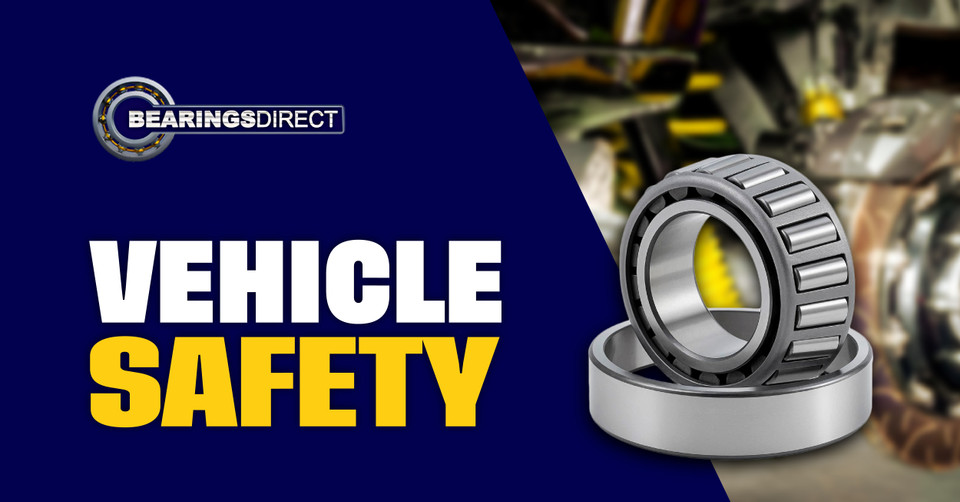
Precision Bearings That Improve Vehicle Efficiency and Safety
The pursuit of better vehicle performance today relies on microscopic engineering, where tiny components make massive differences. Every professional in the automotive industry knows that the quality of your bearings—the unsung heroes of motion—will decide if a vehicle meets its fuel targets, its durability standards, and its safety promises.
How Do Precision Bearings Directly Improve Vehicle Efficiency?
Think about how a vehicle loses energy: a lot of it just turns into wasted heat because parts rub against each other. This is friction. If you can make those moving parts glide almost perfectly, you keep that energy where you need it—moving the vehicle forward. That is the core mission of low-friction bearings for cars.
Reducing Energy Loss Through Low-Friction Design
The single most important difference between a standard bearing and a precision one is the tolerance, or how tightly and perfectly it is built. High-precision automotive bearings are machined to be incredibly smooth, with nearly flawless spacing between the rolling elements and the raceways. This precise fit ensures the lubricant film stays thick and stable, acting like a cushion. This minimized contact patch is what truly makes a component one of the best bearings that improve vehicle efficiency.
Why does this matter so much?
In an older gasoline or diesel vehicle, less friction in the wheels, transmission, and differential means the engine doesn’t have to work as hard to maintain highway speed. That’s a direct boost to your gas mileage. For the modern electric vehicle (EV), this friction reduction is even more critical. Cutting down on drag in the EV drivetrain and motor bearings means less power is pulled from the battery. When you have energy-efficient automotive bearings in place, you are directly extending the vehicle’s driving range, which is one of the biggest challenges facing the EV market today. This focus on minimizing friction turns wasted heat into usable range.
Optimizing Load Distribution and Stiffness
A bearing’s job is to carry the load, and it must do this without bending or flexing under stress. Advanced automotive bearing design excels at this because they are built to ensure the load is distributed exactly equally across all internal parts. If one small area is taking too much pressure, it wears out fast. Precision manufacturing—using advanced techniques like honing and super-finishing—makes sure the force is spread out perfectly.
This meticulous construction is key for stiffness. In parts like the pinion shaft or the differential, you need a bearing that holds everything rigidly in place. If the bearing flexes even a little, the gears inside the transmission might not mesh perfectly. This imperfection causes extra vibration, which wastes energy and creates unwanted noise. By maintaining excellent stiffness, you not only make the vehicle quieter and more pleasant to drive but also ensure the mechanical system provides outstanding vehicle performance bearings results. This is a fundamental principle of modern automotive bearing technology.
What Advanced Technologies Define High-Precision Automotive Bearings?
Today's vehicles demand more from their components than ever before—more speed, more heat resistance, and more efficiency. The automotive bearing technology driving these modern standards is constantly evolving. It is what separates a part that lasts 50,000 miles from a part that is considered a durable bearing for vehicle safety.
Advanced Materials: Hybrid and Ceramic Solutions
For years, high-grade steel was the gold standard. While steel remains a vital material, new engineering challenges, especially those created by electric motors, demand hybrid solutions. You need components that can withstand temperatures and speeds that steel alone might struggle with.
The most exciting development is the hybrid bearing. These often use steel rings but feature rolling elements (balls or rollers) made of advanced ceramic materials, most commonly silicon nitride.
- Lighter and Faster: Ceramic is much lighter than steel. In high-speed automotive bearings, this reduced weight minimizes centrifugal force, meaning the bearing runs cooler and faster without stressing itself.
- Non-Conductive Power: In electric vehicles, stray electrical currents can sometimes flow through steel bearings, causing tiny pits on the raceways in a process called electrical erosion. Ceramic is non-conductive, solving this major failure mechanism in EVs and enhancing vehicle performance bearings integrity.
- Harder and More Durable: Ceramics are also incredibly hard, offering superior resistance to wear and tear. This is a massive boost to the overall durability needed for modern high-precision automotive bearings.
Specialized Cage and Sealing Designs
The cage’s job is simple: keep the rolling elements separated and spaced correctly. But its design can significantly impact friction and heat. Modern advanced automotive bearing design uses lightweight, sophisticated polymer materials like PEEK, which is reinforced with glass or carbon fiber. These materials are stable under heat and improve the way the lubricant flows around the bearing, reinforcing its status as a durable bearing for vehicle safety.
The seals are equally important. They have two jobs: keep the good stuff (clean lubricant) in and keep the bad stuff (dirt, water, contaminants) out. Precision bearings use specialized, low-friction bearings for cars seals that create a tight barrier without adding measurable drag. Effective sealing ensures the component maintains its cleanliness standards throughout its operating life, which is essential for maximizing its useful life and delivering on the promise of bearings that improve vehicle efficiency.
Optimized Lubrication Systems
Lubricant is often misunderstood—it’s not just oil or grease, it’s a critical engineering component. High-precision automotive bearings rely on high-performance synthetic lubricants. These products are specially filtered to remove any microscopic particles and are formulated to maintain a stable viscosity (thickness) over a huge range of operating temperatures.
In many modern applications, you’ll find sealed bearings that are pre-lubricated for life. This means the perfect amount and type of grease is applied in a clean factory environment, guaranteeing long-term performance without the need for periodic re-greasing. This focus on long-lasting, optimized lubrication contributes directly to a solution that is both an energy-efficient automotive bearing and a superior example of automotive bearing technology.
Why Are Precision Bearings Essential for Vehicle Safety?
While engineers are always chasing fuel economy, safety is the first priority. When you install a high-quality, durable bearing for vehicle safety, you are doing more than just protecting the component; you are ensuring the stability and reliability of the vehicle’s most critical control systems.
Enhancing Wheel Bearing Performance and Durability
The wheel bearing unit is arguably one of the most stressed components in the vehicle. It carries the weight (radial load) and manages the cornering forces (axial load). The stability and consistency of the automotive wheel bearings performance directly affects steering feel and handling predictability.
Precision wheel bearings are built into sealed, unitized assemblies that are factory-set to the exact required tolerances. This eliminates "play" or looseness that can develop in standard bearings. Loose wheel bearings lead to alignment issues, uneven tire wear, and unpredictable handling, especially during high-speed maneuvers. By ensuring incredible durability and zero play, precision wheel bearings guarantee the wheel travels exactly where the driver intends, thereby providing reliable vehicle performance bearings.
Improving Braking System Reliability
Braking systems, especially those using modern features like Anti-lock Braking System (ABS) and Electronic Stability Control (ESC), are heavily dependent on accurate data. Most modern wheel hub units contain a sensor or a magnetic encoder that tells the vehicle’s computer how fast the wheel is turning.
If the wheel bearing is low-quality or has too much wear, it can cause the internal components to wobble or move excessively. This movement creates "noise" in the sensor reading, sending false or inaccurate speed data to the computer. When you need to slam on the brakes in an emergency, inaccurate data can compromise the ABS function. Using high-precision automotive bearings ensures the sensor ring stays perfectly aligned, providing clean, accurate data instantly. This is a fundamental component of active safety systems, demanding the highest level of automotive wheel bearings performance.
What Is the Measurable Advantage of Choosing Precision Over Standard?
When you consider the upfront cost of a precision bearing versus a standard one, you need to look beyond the initial price tag. The real value of precision bearings for vehicles is found in the return on investment you get from enhanced performance and minimized failure risk. The improved reliability and reduced energy consumption are key outcomes of the rigorous advanced automotive bearing design process.
|
Performance Factor |
Standard Bearing (P0/ABEC 1) |
Precision Bearing (P5/ABEC 5+) |
Tangible Benefit to You |
|
Friction Reduction |
Standard loss |
Up to 50% less rotational friction |
Direct increase in fuel economy or battery range. |
|
Fatigue Life |
Standard rating |
2 to 3 times longer fatigue life |
Reduced warranty claims and maintenance costs. |
|
High Speed |
Limited by heat generation |
High-speed automotive bearings capable of higher RPMs |
Essential for high-revving turbos and EV motors. |
|
Vibration/Noise |
Noticeable |
Significantly minimized and controlled |
Improved ride comfort and component durability. |
|
Cleanliness |
Basic protection |
Sealed and protected to strict cleanliness standards |
Longevity and resistance to the harsh automotive environment. |
Choosing the right automotive bearing technology is about securing long-term reliability. The tighter tolerances of precision parts mean they last longer under stress, operate quieter, and use less energy every single mile. This translates to a superior vehicle product and lower operating costs for your clients.
Where Are Precision Bearings Most Critical in a Vehicle?
Some parts of a vehicle are so demanding that they simply cannot function optimally without the best high-precision automotive bearings available. These are the areas where high speed, high load, and extreme heat converge.
Electric Motors and Drivetrains
The shift to electric powertrains has placed extreme demands on bearings. EV motors spin much faster than gasoline engines, often running at speeds up to 20,000 RPM. These require specialized high-speed automotive bearings that can withstand intense centrifugal forces.
Furthermore, the bearing must be perfectly balanced to maintain motor efficiency and avoid harmful vibration. When you use low-friction bearings for cars in the motor, you are making sure almost all the battery power is converted into torque, ensuring the vehicle's maximum possible range. This is why many EV makers choose hybrid bearings—for their superior speed, friction reduction, and non-conductive properties, making them truly energy-efficient automotive bearings.
Transmission and Gearboxes
In any gearbox—manual, automatic, or CVT—shaft alignment is everything. If the shafts carrying the gears are not perfectly held by the bearings, noise and energy loss result. Precision tapered roller bearings or cylindrical roller bearings are used extensively to ensure that when one gear meshes with another, the contact is flawless.
These vehicle performance bearings reduce gear noise, minimize friction, and handle the high loads of torque transfer. By maintaining the correct geometry, they ensure that the transmission operates at peak efficiency, avoiding the unnecessary heat that shortens the life of the lubricant and the entire unit. This is a critical area for bearings that improve vehicle efficiency.
Turbochargers
The turbocharger is one of the most hostile environments in a vehicle. Turbochargers rely on tiny shafts that can spin at over 250,000 RPM, all while sitting next to the exhaust manifold where temperatures soar. Only specialized, extremely high-speed automotive bearings—often employing ball bearings for minimal drag—can survive these conditions.
The precision is necessary because any imbalance or friction would instantly lead to catastrophic failure. Using advanced automotive bearing design in a turbocharger means it spools up faster (less turbo lag) and runs more reliably, providing the engine with consistent power delivery. This also requires a truly durable bearing for vehicle safety to maintain component integrity under extreme stress.
Why Choose Bearings Direct for Your Automotive Needs?
As engineers and procurement specialists, you need more than just a box of bearings; you need a reliable supply of guaranteed quality. Bearings Direct understands the intense pressures of the automotive industry, from the tight tolerances of EV motors to the heavy loads of automotive wheel bearings performance.
We don't just supply standard parts. We specialize in providing the high-caliber, high-precision automotive bearings and durable bearings for vehicle safety that your next-generation projects demand. Our inventory includes the latest advancements in automotive bearing technology, from hybrid ceramic solutions to sealed, pre-lubricated units built to the highest cleanliness standards. We ensure every component is manufactured to rigorous standards that meet or exceed ABEC 5 requirements for crucial systems.
Whether your focus is on making a fleet of heavy-duty trucks more reliable with specialized tapered roller bearings or pushing the boundaries of range with low-friction bearings for cars in a new EV platform, Bearings Direct offers the technical expertise and the inventory depth to support your goals. We partner with you to select products that optimize vehicle performance bearings, minimize energy waste, and secure the long-term durability that lowers your total cost of ownership.
Frequently Asked Questions (FAQ)
1. What does 'precision' mean in the context of automotive bearings?
Precision refers to the tight tolerance class to which a bearing is manufactured. Standard bearings are often ABEC 1; high-precision automotive bearings are ABEC 5 or higher. Higher precision means less runout, less vibration, and significantly low-friction bearings for cars, which is key for energy-efficient automotive bearings.
2. How much can low-friction bearings improve vehicle efficiency?
The exact amount varies by vehicle and application, but replacing standard bearings with low-friction bearings for cars can reduce overall mechanical power loss by up to 2-5%. This translates directly into better fuel economy for ICE vehicles or extended range for EVs, making them true bearings that improve vehicle efficiency.
3. Why are hybrid bearings (steel rings, ceramic balls) used in EVs?
Hybrid bearings are crucial for EVs because ceramic rolling elements are non-conductive. This prevents the flow of stray electrical current from the motor through the bearing, which causes pitting damage called electrical erosion. They also handle the high-speed automotive bearings requirements of electric motors better due to their lower mass.
4. What is the role of the wheel hub bearing in vehicle safety?
The automotive wheel bearings performance is essential for stability and safety. They manage all the load and motion of the wheel. They also house the sensor required for the Anti-lock Braking System (ABS) and Electronic Stability Control (ESC). A failing or imprecise bearing compromises the accuracy of these critical safety systems.
5. Are precision bearings necessary for heavy-duty trucks?
Yes. In heavy-duty applications, precision bearings for vehicles are crucial. They must handle enormous loads and extreme heat. Precision manufacturing ensures better load distribution and longer life, reducing maintenance downtime, which is why a durable bearing for vehicle safety is a must in these applications.
6. What is 'runout' and why do precision bearings reduce it?
Runout is the slight wobble or eccentricity in a rotating component. High-precision automotive bearings are manufactured with extremely small variations in their geometry, minimizing runout. This reduction is essential for high-speed automotive bearings stability and accurate sensor readings in ABS systems.
7. How does a precision bearing handlehigh temperaturesbetter?
Advanced bearing designs use special materials, like stabilized steel or ceramics, and high-performance synthetic lubricants that resist thermal degradation. They also generate less internal friction, which means less self-generated heat, maintaining performance in areas like turbochargers and brake systems. This reflects superior automotive bearing technology.
8. What is the most critical difference in the manufacturing of precision bearings?
The most critical difference is the final surface finish, often called super-finishing or honing, of the raceways. This microscopic smoothness significantly reduces friction and stress points, dramatically increasing the bearing's fatigue life—a hallmark of advanced automotive bearing design.
9. Do precision bearings require special lubrication?
Yes. While standard greases may suffice, high-precision automotive bearings often use filtered, synthetic lubricants. These specialized lubricants maintain their film strength and viscosity over a wider temperature range and at higher shear rates, maximizing the benefit of the bearing’s low-friction characteristics.
10. How does a bearing contribute to a quiet ride?
Precision bearings are manufactured to tight tolerances (ABEC 5 and above) to minimize vibration. This reduction in vibration means less transmitted noise through the chassis, contributing to a quieter, more comfortable ride, which is a key goal for vehicle performance bearings.
11. Can older vehicles be upgraded with precision bearings?
Yes. As long as the bearings match the original specifications (dimensions and type, such as tapered roller bearings), you can often upgrade to a higher ABEC class bearing, which will immediately provide benefits like improved efficiency, reduced noise, and increased durability.
12. What role do precision bearings play in regenerative braking?
In EVs, high-precision automotive bearings in the electric motor and drivetrain are crucial during regenerative braking. The motor acts as a generator, and the bearing must handle the rapid changes in load and speed efficiently and reliably, ensuring the kinetic energy is transferred back to the battery with minimal loss, showcasing the importance of automotive bearing technology.
Need help finding the right bearing?
Send your specs or a photo and the team will help you match the correct part.