
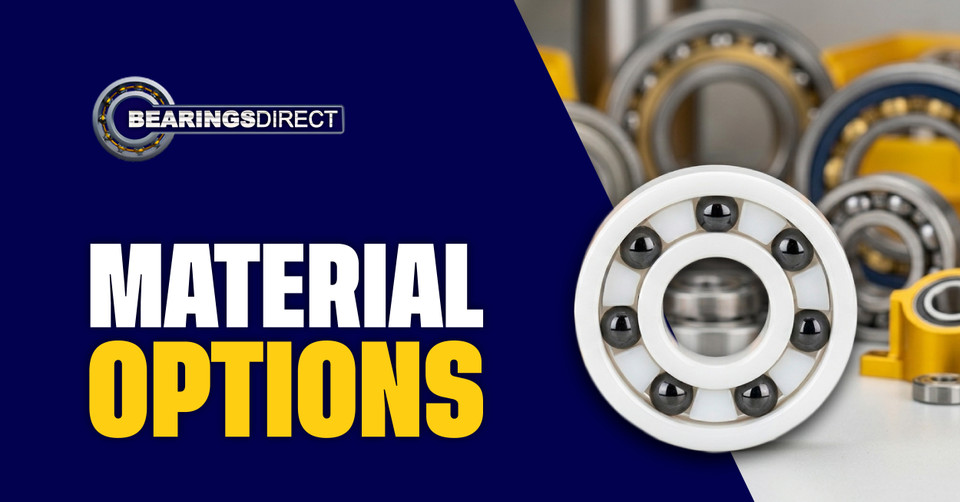
When to Choose Stainless, Chrome, or Ceramic Bearings
You replace a failed bearing in a washdown conveyor, only to see rust forming a few weeks later. In another facility, a high-speed motor keeps overheating even after lubrication checks. In both cases, the issue may not be installation or maintenance—it may be material choice. Selecting the right bearing material directly affects uptime, safety, and long-term cost.
When evaluating stainless vs chrome vs ceramic bearings, you are deciding how your equipment will perform under real operating conditions. The three main options—stainless steel bearings, chrome steel bearings, and ceramic bearings—each solve different problems. Understanding the trade-offs helps you avoid premature failure and reduce maintenance costs.
What Are the Key Differences Between Stainless, Chrome, and Ceramic Bearings?
A proper bearing material comparison starts with composition, corrosion resistance, and wear performance. Each material responds differently to moisture, load, speed, and temperature.
Material Composition
Stainless steel bearings are typically made from 440C stainless steel. This alloy contains chromium, which forms a protective layer that improves rust resistance. These are widely used as corrosion resistant bearings in humid or washdown environments.
Chrome steel bearings are manufactured from 52100 high-carbon chromium steel. This material is extremely hard and offers excellent fatigue resistance, making it ideal for heavy industrial loads.
Ceramic bearings may be full ceramic (ceramic balls and races) or hybrid ceramic bearings, which combine ceramic balls with steel races. Hybrid designs give you the strength of steel with the speed advantages of ceramic.
When comparing stainless vs chrome vs ceramic bearings, composition drives performance.
Corrosion Resistance
Corrosion is often the deciding factor.
- Stainless steel bearings perform well in wet and washdown settings.
- Ceramic bearings do not rust and are ideal for chemical exposure.
- Chrome steel bearings can corrode quickly without seals or coatings.
In food plants or marine systems, corrosion resistant bearings are essential. Stainless and ceramic are usually better choices than chrome steel.
Hardness and Wear Resistance
Chrome steel bearings offer exceptional toughness and handle heavy repeated loads.
Ceramic balls are harder than steel. This makes low friction ceramic bearings highly wear resistant and capable of long service life at high speeds.
A detailed bearing material comparison helps you weigh durability versus environmental resistance.
When Should You Choose Stainless Steel Bearings?
High Moisture or Washdown Environments – food processing, beverage production, marine applications.
If your operation involves frequent cleaning or water exposure, stainless steel bearings are often the safest choice. Food and beverage facilities rely on food grade stainless bearings to prevent contamination and rust.
These bearings are commonly used as corrosion resistant bearings in washdown conveyor systems and packaging equipment.
Corrosion Resistance Over Maximum Load – trade-offs in strength compared to chrome steel.
Stainless steel is slightly softer than chrome steel. If your system requires extreme load capacity, chrome steel bearings may perform better.
However, if moisture is present, stainless usually provides better long-term value despite slightly lower strength.
Medical and Clean Applications – rust prevention and hygiene requirements.
Medical and pharmaceutical equipment often requires materials that resist corrosion from sterilization processes. Stainless steel bearings support clean operation while maintaining structural integrity.
In environments where hygiene matters more than heavy loads, stainless is often preferred in a bearing material selection guide.
When Are Chrome Steel Bearings the Best Option?
High Load Industrial Applications – motors, gearboxes, conveyors.
Chrome steel bearings are the industry standard for high-load applications. You will find them in:
- Electric motors
- Gearboxes
- Industrial conveyors
- Pumps
- Heavy machinery
If your environment is dry and controlled, chrome steel provides excellent performance.
Cost-Effective Performance – strong, durable, widely used in general industry.
When budget is tight, chrome steel bearings often offer the best value. They deliver durability at a lower upfront cost than ceramic bearings or stainless options.
For many applications, a practical bearing material selection guide will point to chrome steel as the first choice in dry environments.
Limitations in Wet or Chemical Environments – risk of corrosion without protection.
The main weakness of chrome steel is corrosion. Without proper sealing and lubrication, rust can reduce lifespan quickly.
If your operation involves moisture, corrosion resistant bearings like stainless or ceramic may reduce long-term maintenance costs.
Why Would You Choose Ceramic or Hybrid Ceramic Bearings?
High-Speed Applications – reduced friction and lower heat generation.
If your equipment runs at very high RPM, high speed ceramic bearings offer clear advantages. Ceramic balls are lighter and smoother than steel.
This creates:
- Less friction
- Lower heat
- Longer lubrication life
Many engineers choose low friction ceramic bearings for spindles, robotics, and precision motors.
Electrical Insulation – preventing electrical pitting in motors and VFD-driven equipment.
Stray electrical currents can damage steel bearings in VFD-driven motors. Hybrid ceramic bearings help prevent electrical pitting because ceramic balls do not conduct electricity.
This makes them ideal for high-speed electric motors.
High Temperature and Lightweight Needs – aerospace, robotics, specialty equipment.
Ceramic expands less under heat and maintains hardness at higher temperatures. In many cases, it is considered the best bearing material for high temperature applications.
Industries such as aerospace and advanced automation often rely on ceramic bearings for heat stability and reduced weight.
Cost Considerations – premium price vs performance gains.
Ceramic options cost more upfront. However, reduced downtime and longer life often offset the higher purchase price.
A thoughtful bearing material comparison helps justify the investment.
How Do Temperature, Speed, and Load Affect Bearing Material Selection?
A smart bearing material selection guide evaluates three main factors: temperature, speed, and load.
Temperature Limits – compare material expansion and heat tolerance.
If your system runs hot, material expansion matters. Ceramic handles heat best and is often the best bearing material for high temperature conditions.
Stainless steel bearings perform well in moderate heat, while chrome steel bearings excel in standard industrial temperature ranges.
Speed Ratings – why ceramic often outperforms steel at extreme RPMs.
At extreme speeds, friction generates heat quickly. High speed ceramic bearings reduce friction and operate at higher RPM than steel.
This is why low friction ceramic bearings are common in advanced motors and precision systems.
Load Capacity – where chrome steel remains the preferred choice.
For heavy radial or axial loads, chrome steel bearings remain the strongest option. Stainless handles moderate loads, while hybrid designs offer a balanced solution.
Below is a summary table for quick reference:
|
Material |
Corrosion Resistance |
Speed Capability |
Load Capacity |
Temperature Resistance |
Typical Industries |
Relative Cost |
|
Stainless Steel |
High |
Moderate |
Moderate |
Moderate |
Food, medical, marine |
Medium |
|
Chrome Steel |
Low |
Moderate to High |
High |
Moderate |
Motors, gearboxes |
Low |
|
Ceramic / Hybrid |
Very High |
Very High |
Moderate (Hybrid: Higher) |
High |
Aerospace, robotics |
High |
Which Bearing Material Is Right for Your Industry?
Food and Beverage – stainless preferred for hygiene and washdowns.
Food plants often rely on food grade stainless bearings because they meet sanitation requirements and function as corrosion resistant bearings.
Industrial Automation – chrome steel for cost-effective durability.
In dry factories, chrome steel bearings provide reliable performance at a lower cost.
High-Speed Electric Motors – hybrid ceramic for electrical insulation and speed.
Motors operating at high RPM benefit from hybrid ceramic bearings due to electrical insulation and reduced friction.
Medical Equipment – stainless or ceramic depending on precision and sterilization needs.
Medical systems may use stainless steel bearings for corrosion resistance or ceramic bearings for precision and temperature stability.
A structured bearing material comparison ensures you match the material to your industry’s needs.
Why Source Stainless, Chrome, and Ceramic Bearings from Bearings Direct?
Bearings Direct supplies stainless steel bearings, chrome steel bearings, ceramic bearings, and hybrid ceramic bearings for OEM and MRO applications.
Wide Inventory of Materials and Configurations – stainless, chrome, full ceramic, hybrid ceramic.
You can access multiple materials and sizes in one place, simplifying your bearing material selection guide process.
Support for Engineers and Procurement Teams – help selecting the right material for operating conditions.
Their team helps evaluate load, speed, temperature, and environmental factors to recommend the right solution.
Reliable Supply for OEM and MRO Needs – fast shipping and consistent availability.
Consistent inventory and fast shipping reduce downtime and support long-term production planning.
Choose the Right Bearing Material for Long-Term Performance
Choosing between stainless vs chrome vs ceramic bearings directly impacts reliability and cost. The wrong choice can lead to overheating, corrosion, or early failure.
Explore the full range of stainless steel bearings, chrome steel bearings, ceramic bearings, and hybrid ceramic bearings at Bearings Direct. Consult their team to apply a proven bearing material selection guide tailored to your speed, load, temperature, and budget requirements.
Frequently Asked Questions
- What is the difference between stainless vs chrome vs ceramic bearings?
The main differences involve corrosion resistance, load capacity, speed performance, and temperature tolerance.
- Which bearing material is best for hightemperature?
In most cases, ceramic bearings are considered the best bearing material for high temperature due to low expansion and high heat tolerance.
- Are stainless steel bearings corrosion resistant?
Yes, stainless steel bearings are widely used as corrosion resistant bearings in washdown and humid environments.
- When should I use chrome steel bearings?
Use chrome steel bearings for heavy loads in dry environments where corrosion is not a major concern.
- Whatarehybrid ceramic bearings?
Hybrid ceramic bearings combine ceramic balls with steel races to provide speed advantages and electrical insulation.
- Are ceramic bearings good for high-speed applications?
Yes, high speed ceramic bearings and low friction ceramic bearings are ideal for extreme RPM applications.
- Are food grade stainless bearingsrequiredin food plants?
Many food facilities use food grade stainless bearings to meet hygiene standards and prevent rust contamination.
- Do ceramic bearings require lubrication?
Most ceramic bearings and hybrid designs still require lubrication, but they generate less heat and friction.
- How do I perform a proper bearing material comparison?
Use a structured bearing material selection guide that evaluates speed, load, temperature, and environment.
- Where can I source all major bearing materials from one supplier?
You can purchase stainless steel bearings, chrome steel bearings, ceramic bearings, and hybrid ceramic bearings from Bearings Direct for reliable supply and expert support.