
Ball Bearings vs Roller Bearings: Which Is Best for Your Application?
Bearings are essential components in nearly every mechanical system, and choosing between ball bearings vs roller bearings can significantly impact performance, lifespan, and efficiency.
What Is the Difference Between Ball Bearings and Roller Bearings?
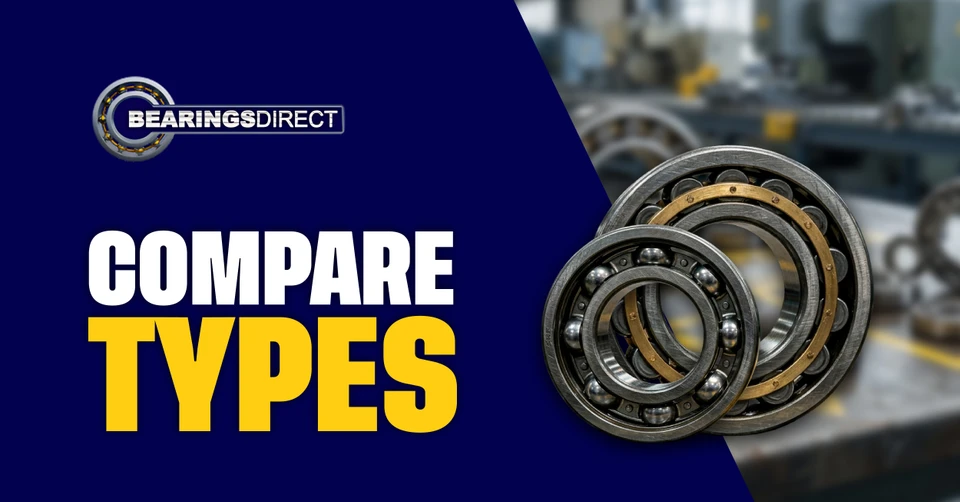
Ball bearings and roller bearings may look similar, but their internal designs work very differently. Ball bearings use spherical rolling elements, while roller bearings use cylindrical, tapered, spherical, or needle‑shaped rollers. This creates two distinct contact patterns: ball bearings rely on point contact, while roller bearings rely on line contact. These design differences affect friction, speed capability, and load strength, forming the core of ball bearings vs roller bearings differences that engineers evaluate when selecting components.
Point contact allows ball bearings to spin faster with less heat. Line contact spreads force across a larger area, giving roller bearings higher load capacity. This is why roller bearings excel in heavy‑duty environments, while ball bearings dominate high‑speed applications.
How Do Ball Bearings Work in Mechanical Systems?
Ball bearings include an inner ring, outer ring, cage, and precision balls that roll smoothly between the rings. As the shaft rotates, the balls reduce friction and support both radial and axial loads. This makes ball bearings ideal for high‑speed, low‑friction operation.
You’ll find many ball bearing applications in electric motors, fans, pumps, robotics, and small machinery. Their quiet operation and efficiency make them a top choice for equipment that runs continuously. When comparing radial ball bearings vs roller bearings, ball bearings are almost always preferred for speed, precision, and smooth rotation.
Ball bearings also generate less heat, require less torque, and offer excellent performance in compact designs. These advantages make them a go‑to solution for engineers working with lightweight or fast‑moving systems.
How Do Roller Bearings Work and Why Are They Used for Heavy Loads?
Roller bearings use rollers instead of balls, which changes how they carry loads. The rollers create line contact, spreading force across a larger surface area. This improves load distribution and allows roller bearings to handle much heavier radial loads than ball bearings.
Because of this strength, roller bearings are used in gearboxes, conveyors, mining equipment, agricultural machinery, and construction systems. These roller bearing applications often involve shock, vibration, or continuous heavy loads. When comparing heavy load bearings vs high-speed bearings, roller bearings are the clear choice for strength, while ball bearings win for speed.
Roller bearings also offer better durability in harsh environments. Their ability to withstand misalignment, shock, and high load makes them essential in heavy‑duty industrial systems.
What Types of Roller Bearings Are Commonly Used in Industry?
Understanding the types of roller bearings helps you match the right bearing to your equipment.
Cylindrical Roller Bearings
These bearings support very high radial loads and operate well at moderate speeds. They’re common in electric motors, gearboxes, and industrial pumps.
Tapered Roller Bearings
Tapered rollers support both radial and axial loads. They’re ideal for automotive wheel hubs, heavy machinery, and equipment exposed to impact or shock.
Spherical Roller Bearings
These bearings self‑align, making them perfect for applications where shafts may bend or misalign. They’re used in mining, construction, and large industrial systems.
Needle Roller Bearings
Needle bearings use long, thin rollers to provide high load capacity in tight spaces. They’re common in transmissions, pumps, and compact machinery.
When Should You Choose Ball Bearings Instead of Roller Bearings?
Ball bearings are the better choice when your equipment needs high rotational speed and smooth, low‑friction performance. They work best in situations with lighter loads and consistent motion. Electric motors, pumps, fans, and small machinery rely on ball bearings because they run quietly and efficiently.
If your application requires precision, low heat generation, or fast acceleration, that’s when to use ball bearings instead of roller bearings.
Ball bearings also excel in compact designs where space is limited. Their versatility makes them suitable for many consumer products, automation systems, and light industrial equipment.
When Are Roller Bearings the Better Choice for Industrial Equipment?
Roller bearings are ideal for heavy machinery and load‑intensive applications. They perform well in equipment exposed to shock loads, vibration, or harsh operating conditions. Industrial conveyors, gearboxes, mining equipment, and construction machinery all rely on roller bearings for durability and strength.
If your equipment must support large radial loads or operate in demanding environments, that’s when to use roller bearings for better performance and longer service life.
Roller bearings also offer superior reliability in systems where downtime is costly, making them a preferred choice for large‑scale industrial operations.
How Do Load Capacity and Speed Ratings Compare Between These Bearings?
Load and speed are two of the most important factors in bearing selection. Roller bearings have higher radial load capacity because their line contact spreads force across a larger area. Ball bearings handle lighter loads but excel at high‑speed rotation.
Axial load handling also differs:
- Ball bearings support both radial and axial loads.
- Roller bearings primarily support radial loads, except tapered rollers, which handle both.
When comparing roller bearings vs ball bearings load capacity, roller bearings are stronger, while ball bearings offer higher speed ratings and lower friction. Engineers must balance these factors based on the equipment’s operating conditions.
This is also where heavy load bearings vs high-speed bearings becomes a practical comparison—roller bearings for strength, ball bearings for speed.
What Factors Should Engineers Consider When Selecting Bearings?
Choosing the right bearing requires understanding your equipment’s needs. This industrial bearing selection guide highlights the most important factors:
Load Type
Determine whether your application involves radial loads, axial loads, or a combination of both.
Operating Speed
High‑speed systems require ball bearings or precision bearings with low friction.
Environmental Conditions
Dust, moisture, chemicals, and temperature extremes all affect bearing performance.
Lubrication and Maintenance
Some bearings require regular lubrication, while sealed bearings are maintenance‑free.
Space and Mounting Constraints
Shaft size, housing design, and available space influence which bearing type fits best.
These considerations help ensure you choose a bearing that performs reliably and lasts longer.
Why Choose Bearings Direct for Ball Bearings and Roller Bearings?
Bearings Direct offers a wide selection of industrial bearings for every application. You can find ball bearings, roller bearings, tapered roller bearings, cylindrical roller bearings, and specialty bearings all in one place. Maintenance teams, engineers, and production managers rely on Bearings Direct for quality, availability, and expert support when selecting the correct bearing type.
Find the Right Bearing for Your Application at Bearings Direct
Explore the full Bearings Direct catalog to find the best ball bearings and roller bearings for your equipment. Whether you’re designing new machinery or replacing worn components, you’ll find reliable options for manufacturing, automation, heavy equipment, and more.
FAQ
1. What is the main difference between ball bearings and roller bearings?
Ball bearings use spherical balls for point contact, while roller bearings use rollers for line contact.
2. Which bearing is better for high‑speed applications?
Ball bearings are better for high‑speed operation because they generate less friction.
3. Which bearing handles heavier loads?
Roller bearings handle heavier radial loads due to their larger contact area.
4. Can ball bearings support axial loads?
Yes, many ball bearings support both radial and axial loads.
5. Are roller bearings good for high‑speed equipment?
No, roller bearings are slower because they produce more friction and heat.
6. What are common ball bearing applications?
Electric motors, pumps, fans, robotics, and small machinery.
7. What are the common roller bearing applications?
Gearboxes, conveyors, mining equipment, and heavy industrial machinery.
8. How do I know when to use ball bearings?
Use ball bearings when you need high speed, low friction, and smooth rotation.
9. How do I know when to use roller bearings?
Use roller bearings when your equipment requires high load capacity or shock resistance.
10. Where can I buy ball bearings and roller bearings?
Bearings Direct offers a full catalog of industrial bearings for all applications.