
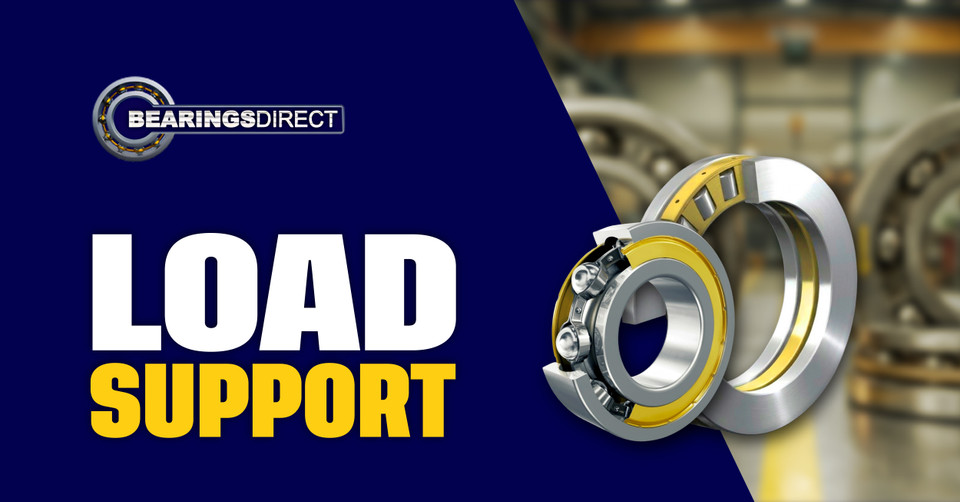
Choosing Between Deep Groove and Thrust Bearings for Load Support
Selecting the right bearing is one of the most important decisions you make when designing or maintaining equipment. The wrong choice can reduce efficiency, increase wear, and lead to early failure. Many problems happen when load direction is misunderstood or ignored. When you clearly understand how loads work and compare deep groove vs thrust bearings, you can avoid downtime and keep your systems running smoothly.
What Is the Difference Between Radial and Axial Loads?
Understanding load direction is the first step in choosing the right bearing.
Radial Loads (Force Perpendicular to Shaft)
Radial loads act at a right angle to the shaft. Imagine a rotating shaft with weight pressing down on it—that force is radial.
You see radial loads in:
- Electric motors
- Conveyor rollers
- Gearboxes
These are common radial load bearing applications, where stability and smooth rotation matter most. Knowing the difference between radial vs axial bearings helps you avoid incorrect installations.
Axial Loads (Force Parallel to Shaft)
Axial loads act along the length of the shaft. These forces push or pull in a straight line, either upward or downward.
Examples include:
- Vertical pumps
- Automotive clutches
- Screw drives
Choosing the correct bearing for these forces is critical for proper axial load bearing selection and long-term performance.
Why Load Direction Matters in Bearing Selection
Using the wrong bearing type leads to overheating, vibration, and early wear.
Having bearing load types explained in simple terms allows you to match the bearing to the job. This is essential when comparing radial vs axial bearings and selecting the right solution.
What Are Deep Groove Ball Bearings and When Should You Use Them?
Design and Structure of Deep Groove Bearings
Deep groove ball bearings feature deep raceways that allow smooth and stable rotation. Their design supports mainly radial loads while handling light axial forces.
This makes them one of the most widely used bearing types across industries.
Best for Radial Loads with Moderate Axial Capacity
These bearings are ideal for applications where radial loads are dominant. They can handle some axial load but are not designed for heavy axial force.
They are widely used in radial load bearing applications where flexibility and performance are required.
High-Speed Performance and Low Friction Benefits
Deep groove bearings are known for:
- Low friction
- High-speed capability
- Quiet operation
These features make them reliable high load support bearings in moderate-load environments.
Common Applications: Motors, Pumps, Conveyors
You will find deep groove ball bearings in:
- Electric motors
- Pumps
- Conveyor systems
- Fans
They are often recommended in any industrial bearing selection guide due to their versatility.
What Are Thrust Bearings and When Are They Required?
Designed Specifically for Axial Loads
Thrust bearings are built to handle forces that move along the shaft. They are essential when dealing with thrust bearings for axial load.
Types: Ball Thrust and Roller Thrust Bearings
There are two main types:
- Ball thrust bearings for lighter loads
- Roller thrust bearings for heavier loads
Both support proper axial load bearing selection depending on the application.
Limitations with Radial Loads
Thrust bearings are not designed for radial forces. Using them incorrectly can cause failure.
This is why understanding bearing load types explained is critical before installation.
Common Applications: Automotive Transmissions, Vertical Shafts
Typical uses include:
- Automotive transmissions
- Vertical shafts
- Cranes
- Machine tools
These are common scenarios where thrust bearings for axial load are required.
How Do Deep Groove and Thrust Bearings Compare in Load Support?
Radial vs Axial Load Handling
The key difference is load direction:
- Deep groove bearings → radial loads + light axial
- Thrust bearings → axial loads only
This comparison is central to understanding deep groove vs thrust bearings.
Speed Capabilities
Deep groove bearings perform well at high speeds due to low friction.
Thrust bearings are better suited for moderate speeds with higher axial loads.
Load Capacity Differences
Thrust bearings handle higher axial loads, making them ideal bearing types for heavy loads.
Deep groove bearings are better for balanced or moderate load conditions.
Friction and Efficiency
Deep groove bearings offer higher efficiency due to lower friction.
Thrust bearings may have slightly more friction but provide stronger axial support.
Cost and Maintenance Considerations
Deep groove bearings are usually more affordable and easier to maintain.
Thrust bearings may require more attention, especially in heavy-duty use. Understanding ball bearings vs thrust bearings helps you balance cost and performance.
Which Bearing Type Is Better for High Load Applications?
When Deep Groove Bearings Are Sufficient
For systems with mainly radial loads, deep groove bearings are a reliable option.
They function well as high load support bearings in moderate conditions.
When Thrust Bearings Are Necessary
When axial force is high, thrust bearings are required.
They are specifically designed as bearing types for heavy loads in axial applications.
When Combined Bearing Solutions Are Used
Some systems require both types.
For example:
- Deep groove bearings handle radial loads
- Thrust bearings handle axial loads
This combined setup ensures full support and improves efficiency.
Examples in Heavy Machinery and Industrial Systems
Heavy equipment often uses both bearing types.
Examples include:
- Mining machines
- Construction equipment
- Industrial presses
Choosing the right high load support bearings improves durability and reduces failure risk.
What Factors Should You Consider When Choosing Between These Bearings?
Load Direction and Magnitude
Always start by identifying load direction and strength.
This is a key step in any industrial bearing selection guide.
Speed Requirements
High-speed systems benefit from deep groove bearings.
Lower-speed, high-force systems require thrust bearings.
Operating Environment
Dust, heat, and moisture can impact performance.
Choosing the right bearing improves reliability in tough environments.
Alignment and Shaft Design
Improper alignment causes wear and reduces lifespan.
Make sure your bearing matches your system design.
Maintenance and Lifespan Expectations
Different bearings require different levels of maintenance.
Selecting the correct type improves lifespan and reduces downtime.
Where Are Deep Groove and Thrust Bearings Commonly Used?
Automotive Systems – Wheels, Transmissions
Deep groove bearings are used in wheels.
Thrust bearings are used in transmissions for proper axial load bearing selection.
Industrial Machinery – Pumps, Gearboxes
Pumps and gearboxes rely on both radial and axial support.
These are key radial load bearing applications where proper selection matters.
Heavy Equipment – Cranes, Turbines
Heavy equipment depends on strong and durable bearings.
Thrust bearings are often used to handle heavy axial forces.
Manufacturing Lines – Conveyors and Rotating Systems
Conveyors use deep groove bearings for smooth motion.
These systems depend on efficient radial load bearing applications to maintain productivity.
Why Choose Bearings Direct for Load Support Bearings?
Wide Selection of Deep Groove and Thrust Bearings
Bearings Direct offers a full range of options, including deep groove ball bearings and thrust solutions for various applications.
High-Quality Materials for Durability and Performance
High-quality materials ensure long-lasting performance and reliability.
Fast Availability and Reliable Supply
Quick access to inventory helps reduce downtime and maintain operations.
Expert Support for Selecting the Right Bearing
Expert guidance helps you navigate complex decisions, especially when comparing ball bearings vs thrust bearings.
Find the Right Bearing for Your Load Requirements
Choosing the right bearing does not have to be complicated. With a clear understanding of load types and performance needs, you can make smarter decisions. Explore Bearings Direct’s catalog to find the best solutions for both radial and axial applications and ensure your equipment runs efficiently.
FAQ: Deep Groove vs Thrust Bearings
1. What is the main difference between deep groove and thrust bearings?
Deep groove bearings handle radial loads, while thrust bearings handle axial loads.
2. Can deep groove ball bearings handle axial loads?
Yes, deep groove ball bearings can handle light axial loads but are not designed for heavy axial force.
3. When should you use thrust bearings?
Use them when your application involves strong axial forces requiring thrust bearings for axial load.
4. Are thrust bearings suitable for high-speed applications?
They are better suited for moderate speeds and heavy axial loads.
5. What are common uses for deep groove bearings?
They are used in motors, pumps, and other radial load bearing applications.
6. What are common uses for thrust bearings?
They are used in transmissions and vertical systems requiring axial load bearing selection.
7. How do you choose between radial and axial bearings?
Understand load direction and compare radial vs axial bearings before selecting.
8. Can both bearing types be used together?
Yes, many systems combine them to handle different load directions efficiently.
9. What happens if you select the wrong bearing?
It can cause overheating, wear, and failure due to incorrect bearing load types explained.
10. Where can you find high-quality bearings?
You can explore Bearings Direct for reliable options, including bearing types for heavy loads and general applications.