
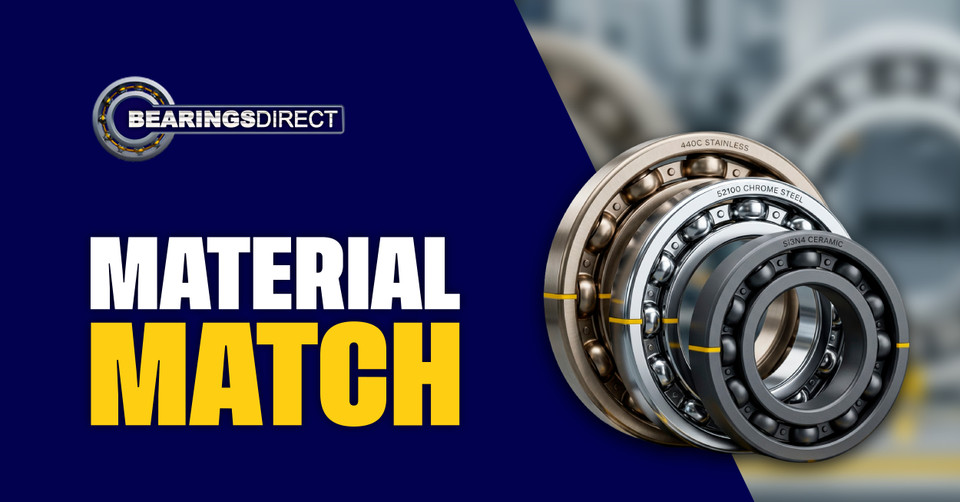
When to Choose Stainless, Chrome, or Ceramic Bearings
A production line kept shutting down every few weeks because standard steel bearings were rusting after routine washdowns. Once the team switched materials, the failures stopped almost overnight. In another case, a high-speed spindle lasted twice as long after upgrading to ceramic components. These real-world examples show how choosing between stainless vs chrome vs ceramic bearings can directly impact performance, uptime, and cost.
Why Does Bearing Material Matter So Much?
When you evaluate stainless vs chrome vs ceramic bearings, you’re really deciding how your equipment will perform under pressure. The material you choose affects durability, maintenance needs, and long-term cost.
A strong bearing material selection guide helps you match the right material to your conditions. Chrome steel, stainless steel, and ceramic each behave differently depending on environment, speed, and load.
Material choice impacts:
- Corrosion resistance
- Load strength
- Speed capability
- Heat tolerance
- Maintenance frequency
There is no one-size-fits-all option. Your decision should reflect your real operating conditions, especially when comparing ceramic vs steel bearings in demanding applications.
What Are Chrome Steel Bearings Best Used For?
Chrome steel bearings are the standard choice for many industrial systems. They are widely used in any reliable bearing material selection guide.
Material Properties
Chrome steel (AISI 52100) provides:
- High hardness
- Strong fatigue resistance
- Excellent load capacity
These qualities make it a dependable option for chrome steel bearings for industrial use.
Ideal Applications
You’ll find these bearings in:
- Motors
- Gearboxes
- Conveyors
- Automation systems
They are often considered the best bearing material for precision equipment in controlled environments where corrosion is not a concern.
Limitations
Despite their strength, they are not corrosion-resistant bearings. They can:
- Rust in wet environments
- Require consistent lubrication
Cost Advantage
Chrome steel is the most affordable option, making it ideal for large-scale operations that need reliable chrome steel bearings for industrial use without high upfront costs.
When Should You Choose Stainless Steel Bearings?
If your environment includes moisture, chemicals, or washdowns, stainless steel is the better choice.
Material Properties
Stainless steel bearings (AISI 440C or 316) offer:
- Strong corrosion resistance
- Good oxidation protection
- Moderate hardness
These are ideal corrosion-resistant bearings designed for harsh conditions.
Ideal Applications
You’ll often use stainless steel bearings for corrosive environments in:
- Food processing
- Marine systems
- Medical equipment
- Outdoor machinery
In regulated industries, food grade stainless steel bearings are essential for hygiene and safety.
Regulatory and Hygiene Considerations
Food and pharmaceutical operations require clean, durable materials. Stainless steel supports sanitation and compliance standards.
Limitations
- Lower load capacity than chrome steel
- Higher cost
- Shorter fatigue life under heavy loads
Still, for wet or chemical exposure, stainless steel bearings for corrosive environments remain the safest option.
What Makes Ceramic Bearings Worth the Investment?
Ceramic bearings are built for performance. They are often highlighted in any advanced bearing material selection guide.
Material Properties
Ceramic materials like silicon nitride provide:
- Extreme hardness
- Lightweight design
- Chemical resistance
They are widely used as high-temperature bearings.
Full Ceramic vs. Hybrid Ceramic Bearings
There are two main types:
- Full ceramic bearings
- Hybrid ceramic bearings (ceramic balls with steel rings)
Hybrid ceramic bearings are more common because they offer a balance between cost and performance.
Ideal Applications
You’ll find ceramic bearings for high-speed applications in:
- Aerospace systems
- CNC machines
- Electric motors
- Medical equipment
They are often compared in discussions of ceramic vs steel bearings.
Performance Advantages
- Lower friction
- Higher speeds
- Longer lifespan
- Electrical insulation
These features make them the best bearing material for precision equipment in high-performance systems.
Limitations
- Higher cost
- More brittle under impact
Even so, they remain the top choice for speed and efficiency.
How Do You Compare Stainless, Chrome, and Ceramic Bearings Side by Side?
This comparison makes it easier to evaluate stainless vs chrome vs ceramic bearings in one place:
|
Property |
Chrome Steel |
Stainless Steel |
Ceramic (Full/Hybrid) |
|
Corrosion Resistance |
Low |
High |
Very High |
|
Hardness |
Very High |
Medium-High |
Extremely High |
|
Max Operating Temp |
~150°C |
~250°C |
~800°C+ |
|
Speed Capability |
High |
Medium |
Very High |
|
Weight |
Standard |
Standard |
~40% lighter |
|
Electrical Conductivity |
Yes |
Yes |
No |
|
Typical Cost |
Low |
Medium |
High |
|
Best For |
General industry |
Wet/corrosive/food |
High-speed/precision |
This table supports your bearing material selection guide and simplifies decision-making.
Which Industries Rely on Each Bearing Material?
Different industries rely on specific materials based on their needs.
Chrome Steel
Used in:
- Automotive
- Manufacturing
- Agriculture
- HVAC
These sectors depend on chrome steel bearings for industrial use.
Stainless Steel
Used in:
- Food processing
- Marine equipment
- Medical devices
- Chemical plants
These industries rely on stainless steel bearings for corrosive environments and food grade stainless steel bearings.
Ceramic / Hybrid Ceramic
Used in:
- Aerospace
- Semiconductor manufacturing
- High-speed machining
- Electric motors
These applications require ceramic bearings for high-speed applications and hybrid ceramic bearings.
What Other Factors Should You Consider When Selecting Bearing Material?
A complete bearing material selection guide goes beyond basic comparisons.
Lubrication Requirements
- Chrome steel needs regular lubrication
- Ceramic can run with minimal lubrication
Temperature Extremes
Ceramic performs best as high-temperature bearings, far exceeding steel limits.
Electrical Insulation Needs
Ceramic is non-conductive, making it ideal for sensitive systems.
Budget vs. Total Cost of Ownership
- Chrome steel: low upfront cost
- Stainless: moderate cost
- Ceramic: higher upfront cost but longer life
Load Type
- Shock loads → steel
- High-speed loads → ceramic
These considerations are critical when comparing ceramic vs steel bearings.
Why Source Your Bearings from Bearings Direct?
Choosing the right supplier simplifies your entire bearing material selection guide process.
Comprehensive Stock
Bearings Direct offers:
- Chrome steel bearings
- Stainless steel bearings
- Ceramic bearings
- Hybrid ceramic bearings
Application-Specific Guidance
Their team helps you choose the right corrosion-resistant bearings or high-performance options for your needs.
Fast Delivery
Quick shipping ensures you get ceramic bearings for high-speed applications and other critical components when you need them.
Technical Support
They provide expert advice on selecting stainless steel bearings for corrosive environments or any specialized requirement.
Ready to Choose the Right Bearing Material?
If you’re comparing stainless vs chrome vs ceramic bearings, now is the time to make a confident decision. Bearings Direct offers a full range of options to match your needs.
You can browse by:
- Material
- Application
- Size
Whether you need high-temperature bearings, durable steel options, or advanced ceramic solutions, the right support helps you choose with confidence.
Frequently Asked Questions
1. What is the difference between stainless and chrome steel bearings?
Stainless offers better corrosion resistance, while chrome steel provides higher strength and load capacity.
2. Are ceramic bearings better than steel?
In ceramic vs steel bearings comparisons, ceramic performs better at high speeds, while steel handles heavier loads.
3. When should you use stainless steel bearings?
Use stainless steel bearings for corrosive environments where moisture or chemicals are present.
4. What are hybrid ceramic bearings?
Hybrid ceramic bearings use ceramic balls with steel rings for improved efficiency and durability.
5. Are ceramic bearings worth the cost?
Yes, especially for ceramic bearings for high-speed applications where performance matters most.
6. What is the best bearing material for high temperatures?
Ceramic is the top choice for high-temperature bearings.
7. Can chrome steel bearings rust?
Yes, they are not corrosion-resistant bearings and require protection.
8. What industries use stainless steel bearings?
Food processing and marine industries rely on food grade stainless steel bearings and corrosion-resistant options.
9. How do you choose the right bearing material?
Follow a bearing material selection guide and consider environment, load, and speed.
10. Where can you buy high-quality bearings?
You can source from trusted suppliers like Bearings Direct for reliable products and expert support.