
Why Size, Clearance, and Fit Are Critical When Buying Bearings
Industrial equipment depends on precision, and even a high‑quality bearing can fail fast when its bearing size clearance fit is even slightly off. You’ve probably seen machines run perfectly during testing, only to break down once they reach full temperature or load. In most cases, the issue isn’t the bearing brand—it’s the sizing, internal clearance, or fit. When these factors aren’t aligned with real‑world conditions, friction rises, heat builds, and wear accelerates, leading to early failure and costly downtime.
Why Does Bearing Size Matter for Performance and Lifespan?
Matching bearing size to load and speed requirements
Choosing the right size starts with understanding how the bearing will handle load, speed, and temperature. When you follow how to size a bearing correctly, you match the bearing’s dimensions to the forces acting on your equipment. A proper bearing selection guide industrial helps you compare load ratings, speed limits, and dimensional constraints so you can choose a bearing that performs reliably under real operating conditions.
Effects of undersized vs oversized bearings
An undersized bearing often leads to:
- Early fatigue
- Excessive heat
- Rapid wear
- Unexpected downtime
An oversized bearing may cause:
- Higher torque
- Increased drag
- Inefficient operation
- Unnecessary cost
Sizing isn’t about going bigger—it’s about choosing the right dimensions for the job.
Impact on efficiency and wear
Correct sizing helps distribute load evenly across the rolling elements. This reduces friction, lowers operating temperatures, and extends service life. Using tools like a bearing tolerance chart ensures you select a bearing that fits your shaft and housing without creating excess stress.
What Is Bearing Clearance and Why Is It Important?
Definition of internal clearance
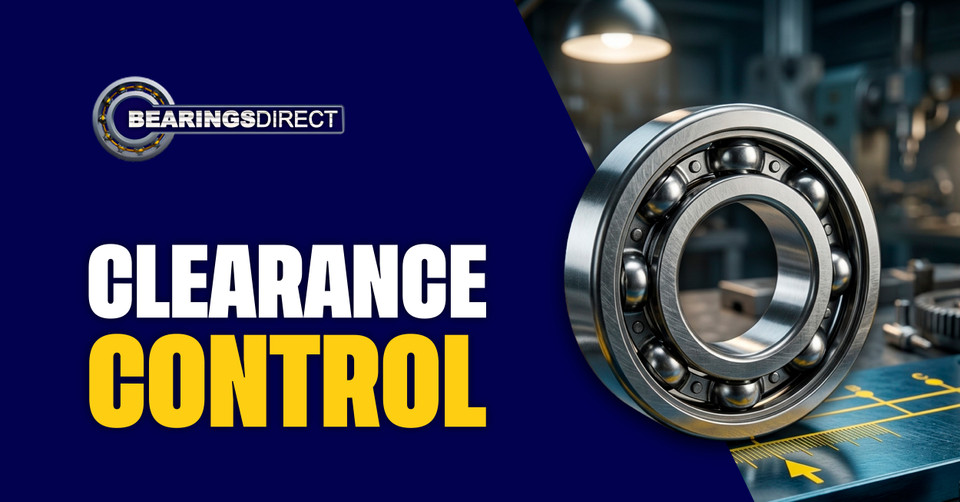
Internal clearance is the space between the rolling elements and the raceways. Understanding bearing clearance explained helps you see how this space affects friction, heat, and load distribution. Too little clearance increases friction, while too much clearance reduces stability.
Types (C2, C3, C4, etc.)
Common bearing internal clearance types include:
- C2 – Less than normal
- CN – Normal
- C3 – Greater than normal
- C4 – Extra clearance
- C5 – Maximum clearance
These classes help you match the bearing to your operating temperature, shaft fit, and load conditions.
How clearance affects heat, speed, and load handling
Clearance changes once the bearing is mounted and running. Heat causes the inner ring to expand, reducing internal space. High speeds require more clearance to prevent roller skidding. Heavy loads may compress the rolling elements, reducing running clearance. Choosing the right clearance prevents overheating, noise, and premature failure.
How Does Bearing Fit Affect Operation and Reliability?
Shaft and housing fit explained
Fit describes how tightly the bearing seats on the shaft and inside the housing. A proper shaft and housing fit bearings setup prevents slippage, vibration, and fretting. The fit also affects internal clearance, which means it directly influences bearing performance.
Interference fit vs clearance fit
- Interference fit: The bearing ring is slightly larger than the shaft or housing, creating a tight press fit.
- Clearance fit: The bearing ring slides easily into place with minimal resistance.
Interference fits are common when the ring rotates under load, while clearance fits are used when the ring remains stationary.
Risks of improper fit (slippage, vibration, overheating)
Incorrect fit can lead to:
- Ring creep
- Excessive vibration
- Distorted raceways
- Heat buildup
- Loss of internal clearance
These issues often shorten bearing life dramatically. This is why proper bearing fit importance is emphasized in every industrial installation guide.
What Happens When Size, Clearance, or Fit Is Incorrect?
Premature wear and failure
When any of these factors are wrong, the bearing experiences stress concentrations that lead to early fatigue. You may see pitting, spalling, or cage damage long before the bearing reaches its rated life.
Increased friction and heat
Incorrect clearance or fit increases friction, which raises operating temperatures. Heat accelerates lubricant breakdown and can cause the bearing to seize.
Noise, vibration, and reduced efficiency
Misalignment, poor fit, or incorrect clearance often shows up as:
- Rattling
- Grinding
- Vibration
- Reduced speed
These symptoms signal that the bearing is not operating within its intended tolerances.
Real-world failure scenarios
A common example is a bearing with normal clearance installed using a tight interference fit. Once the machine heats up, the inner ring expands, eliminating all running clearance. The bearing overheats, the lubricant breaks down, and the bearing fails—often within days. Following bearing installation best practices helps prevent these costly mistakes.
How Do Tolerances and Preload Influence Bearing Performance?
Understanding tolerances in bearing selection
Tolerances define the allowable variation in bearing dimensions. These small differences matter because they affect how the bearing seats, rotates, and handles load. A bearing fit tolerance guide helps you match shaft and housing tolerances to the bearing’s recommended fits.
Preload vs clearance explained
Preload removes internal play by applying a controlled axial force to the bearing. Clearance allows a small amount of internal movement. Preload increases rigidity and precision, while clearance supports heat expansion and high‑speed operation. Understanding bearing preload vs clearance helps you choose the right approach for your application.
When preload is beneficial
Preload is useful when you need:
- High accuracy
- Low vibration
- Precise shaft positioning
- Stable rotation at high speed
However, too much preload can cause overheating and rapid wear.
How Can You Choose the Right Size, Clearance, and Fit?
Step-by-step selection process
- Identify load type and magnitude.
- Determine operating speed and temperature.
- Select the correct bearing size using load ratings.
- Choose internal clearance based on fit and heat.
- Match shaft and housing fits to the application.
- Verify running clearance after installation.
Considering load type, speed, and environment
Heavy loads may require larger bearings or higher clearance classes. High speeds may require precision tolerances and lighter preload. Harsh environments may require seals, shields, or corrosion‑resistant materials.
Using charts and manufacturer guidelines
A bearing tolerance chart and manufacturer selection tools help you avoid guesswork. These resources guide you through load ratings, clearance classes, and recommended fits for industrial applications.
What Are the Best Practices for Bearing Installation?
Proper mounting techniques
Use the correct tools and apply force only to the ring being mounted. Heating the bearing for interference fits helps prevent damage.
Avoiding contamination and misalignment
Cleanliness is essential. Even small particles can cause wear. Proper alignment ensures even load distribution and smooth rotation.
Tools and methods for accurate installation
You may use:
- Bearing heaters
- Press tools
- Alignment gauges
- Clean mounting sleeves
Following bearing installation best practices helps extend service life and prevent early failure.
Why Choose Bearings Direct for Precision Bearing Selection?
Wide range of sizes and configurations
You can find bearings for motors, conveyors, pumps, gearboxes, and more—all in one place.
Reliable quality and performance
Bearings Direct offers precision‑manufactured bearings designed for industrial reliability.
Expert support for selecting the correct fit and clearance
You get access to sizing charts, clearance guides, and technical assistance to help you choose the right bearing every time.
Fast availability for industrial needs
With quick fulfillment and a large inventory, you can keep your equipment running without long delays.
FAQ
1. What is bearing clearance?
Bearing clearance is the internal space between the rolling elements and raceways. It affects friction, heat, and load distribution.
2. How do I choose the right bearing clearance?
You choose based on load, speed, temperature, and fit. Many industrial applications use C3 clearance.
3. What happens if clearance is too tight?
You may see overheating, high torque, andearly failure.
4. What happens if clearance is too loose?
You may experience vibration, noise, and poor precision.
5. How do shaft and housing fits affect bearings?
Fits change internal clearance and prevent ring slippage. Interference fits reduce clearance.
6. What is running clearance?
Running clearance is the clearance after the bearing is mounted and at operating temperature.
7. How do I size a bearing correctly?
You match load, speed, and space requirements to the manufacturer’s load ratings and size charts.
8. What is preload?
Preload removes internal play to increase rigidity. It is common in precision applications.
9. Can temperature affect bearing clearance?
Yes. Heat reduces clearance, especially with interference fits.
10. Where can I buy high‑quality bearings?
You can source precision bearings, clearance options, and fit guidance fromBearings Direct.
Get the Right Bearing Fit for Maximum Performance
Explore Bearings Direct’s full catalog to find the exact bearing size, clearance, and fit your equipment needs. Whether you’re maintaining a production line, upgrading machinery, or sourcing parts for new equipment, you’ll find reliable options backed by expert support. Choosing the right bearing today helps you avoid downtime, reduce costs, and keep your operation running smoothly.