
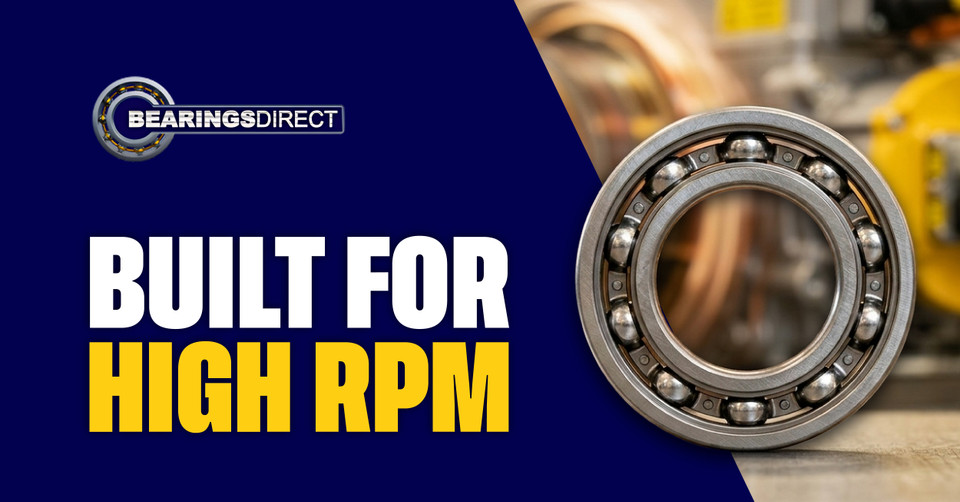
Ball Bearings on High-Speed Machinery: Engineering Stability at Extreme RPM
When your equipment runs at extreme speeds, every component must perform with precision. A CNC spindle spinning at 20,000+ RPM or a motor operating around the clock depends on tight tolerances and controlled motion. That is why ball bearings on high-speed machinery play such a critical role in keeping systems stable, efficient, and safe.
Why Are Ball Bearings Critical for High-Speed Machinery?
At high rotational speeds, friction, heat, and vibration increase rapidly. The right high-speed ball bearings help you control those forces before they turn into failure.
Reducing Friction at High RPM – enabling smooth, controlled rotation under intense operating conditions.
Friction is the main challenge in high-speed applications. Without proper design, metal surfaces generate heat quickly.
Low-friction bearings for high RPM reduce surface contact and allow rolling motion to replace sliding friction. This improves bearing performance at high RPM and keeps temperatures within safe limits.
When you select engineered industrial high-speed bearings, you protect shafts and housings from excess wear. In demanding environments, this stability is essential for long service life.
Maintaining Rotational Accuracy – minimizing runout and vibration in precision systems.
Even slight imbalance becomes a serious issue at extreme RPM.
Precision ball bearings are manufactured with tight tolerances to reduce runout. In high-speed systems, this precision directly supports smoother motion and better bearing performance at high RPM.
For applications like CNC spindle bearings, maintaining rotational accuracy ensures consistent cutting quality and reduces scrap rates.
Supporting Load Stability – handling radial and axial forces in dynamic environments.
High speed does not eliminate mechanical loads. Bearings must handle both radial and axial forces without losing alignment.
Well-designed high-speed ball bearings maintain load stability while delivering smooth operation. This is especially important for durable ball bearings for automation, where repeated motion demands consistency.
What Happens to Bearings at Extreme Rotational Speeds?
As RPM increases, internal stress rises dramatically. Bearings that work well at moderate speeds may struggle under extreme conditions.
Heat Generation and Thermal Expansion – understanding friction-related temperature rise.
Heat buildup is unavoidable at high speeds. As temperature rises, metal expands.
If expansion reduces internal clearance, friction increases further. This cycle can quickly reduce bearing performance at high RPM.
To manage this risk, many industrial high-speed bearings are built with advanced materials and heat-resistant lubrication. In hot environments, high-temperature ball bearings provide additional thermal stability.
Centrifugal Forces on Rolling Elements – how speed affects internal geometry and stability.
At extreme RPM, centrifugal force pushes rolling elements outward. This changes contact angles and load distribution.
Engineered low-friction bearings for high RPM account for these forces by optimizing internal geometry and cage design. Properly balanced precision ball bearings maintain smooth rotation even under strong centrifugal stress.
Vibration and Noise Risks – consequences of imbalance or improper tolerance.
Small defects create vibration at high speeds. Over time, vibration leads to surface fatigue and noise.
Selecting industrial high-speed bearings with tight manufacturing tolerances helps reduce these risks. Consistent bearing performance at high RPM keeps machinery running quietly and efficiently.
How Do Precision Ball Bearings Improve Performance in High-RPM Applications?
Precision is not just about accuracy—it directly impacts durability and uptime.
Tighter Tolerances and Reduced Runout – essential for CNC spindle bearings and robotics.
Precision ball bearings are engineered with exact internal dimensions. This reduces runout and improves balance.
In CNC spindle bearings, reduced runout means better cutting precision and smoother finishes. Robotics systems also depend on stable rotation for repeatable movement.
High-quality durable ball bearings for automation ensure production lines operate without unnecessary vibration.
Advanced Materials and Surface Finishing – improving durability and reducing wear.
Surface smoothness reduces friction and wear.
High-grade steel and specialized coatings improve fatigue resistance. In demanding settings, high-temperature ball bearings maintain structural integrity even during continuous operation.
These material improvements enhance overall bearing performance at high RPM.
Optimized Cage Designs – enhancing stability at extreme speeds.
The cage separates and guides rolling elements. At high speeds, cage stability is critical.
Lightweight and well-balanced cages improve the function of low-friction bearings for high RPM. In high-speed spindles, advanced cage designs protect CNC spindle bearings from instability.
Which Industries Rely on High-Speed Ball Bearings?
Many industries depend on reliable bearing solutions to maintain speed and safety.
Electric Motors – ensuring efficiency and long service life.
Motors are among the most common high-speed machines in industry.
Electric motor ball bearings support constant rotation and help reduce energy loss. When properly selected, they improve motor efficiency and reduce heat buildup.
For motors operating in warm environments, high-temperature ball bearings help prevent lubricant breakdown.
CNC and Machining Centers – supporting ultra-precise cutting operations.
High-speed machining centers rely on CNC spindle bearings to maintain cutting accuracy.
Without stable precision ball bearings, vibration affects tool life and part quality. Strong industrial high-speed bearings provide the reliability needed in demanding manufacturing settings.
Automation and Robotics – enabling rapid, repeatable motion.
Automation systems move fast and repeat cycles thousands of times daily.
Durable ball bearings for automation handle acceleration, deceleration, and continuous rotation. In dusty environments, sealed ball bearings for machinery protect against contamination.
These sealed designs help maintain smooth bearing performance at high RPM.
Turbines and Compressors – maintaining reliability under demanding loads.
Turbines and compressors operate at both high speeds and high temperatures.
Industrial high-speed bearings designed for these systems must withstand centrifugal force and thermal stress. In extreme cases, high-temperature ball bearings provide the durability needed for long service intervals.
What Factors Should Engineers Consider When Selecting Ball Bearings for High-Speed Equipment?
Choosing the correct bearing affects uptime, safety, and long-term cost.
Speed Ratings and Limiting RPM – matching bearing specs to machinery requirements.
Always verify the maximum speed rating.
Using high-speed ball bearings within their rated limits ensures stable bearing performance at high RPM. Exceeding limits increases risk of overheating and premature failure.
Lubrication Methods – grease vs oil for heat management and longevity.
Lubrication plays a major role in reducing friction.
Grease works for many systems, but oil-air or oil mist systems may be better for extreme speeds. Proper lubrication supports low-friction bearings for high RPM and protects electric motor ball bearings from heat damage.
Sealing Options – balancing contamination protection with rotational efficiency.
Contamination shortens bearing life.
Sealed ball bearings for machinery offer protection in dirty environments. In cleaner systems, open designs may improve cooling for industrial high-speed bearings.
Choose the sealing option that balances protection and speed efficiency.
Temperature and Material Considerations – steel vs ceramic hybrid options.
Material selection impacts performance.
Steel works well in many cases. For higher speeds or reduced weight, hybrid options can enhance bearing performance at high RPM.
In hot environments, high-temperature ball bearings help maintain structural stability.
How Can Proper Maintenance Extend the Life of High-Speed Ball Bearings?
Maintenance directly affects reliability.
Routine Inspection and Vibration Monitoring – early detection of imbalance.
Regular vibration checks help detect wear before failure occurs.
Monitoring protects durable ball bearings for automation and ensures smooth production cycles.
Lubrication Schedules – preventing overheating and metal fatigue.
Follow recommended lubrication intervals.
Proper lubrication extends the life of sealed ball bearings for machinery and improves overall bearing performance at high RPM.
Alignment and Installation Best Practices – reducing premature failure.
Improper installation can damage raceways.
Correct alignment protects precision ball bearings and ensures industrial high-speed bearings perform as designed.
Why Choose Bearings Direct for High-Speed Ball Bearings?
When sourcing components for demanding equipment, supplier reliability matters.
Bearings Direct offers a wide range of high-speed ball bearings engineered for extreme RPM environments.
Their inventory includes:
- Precision ball bearings
- Electric motor ball bearings
- Sealed ball bearings for machinery
- High-temperature ball bearings
- Advanced industrial high-speed bearings
With dependable inventory and technical guidance, Bearings Direct helps you maintain consistent bearing performance at high RPM across CNC, motor, and automation applications.
Source High-Speed Ball Bearings Built for Extreme Performance
If your operation depends on extreme rotational speed, the right bearing protects your productivity. Explore precision-engineered ball bearings on high-speed machinery at Bearings Direct and choose solutions built for strength, stability, and long-term performance.
Frequently Asked Questions
- What are ball bearings on high-speed machinery used for?
They reduce friction, support loads, and maintain alignment in equipment operating at extreme RPM.
- What makes high-speed ball bearings different?
High-speed ball bearings are built with tighter tolerances and advanced lubrication to improve bearing performance at high RPM.
- Why are precision ball bearings important in CNC spindles?
Precision ball bearings reduce vibration and runout, improving machining accuracy in CNC spindle bearings.
- How do low-friction bearings for high RPM improve efficiency?
Low-friction bearings for high RPM minimize heat and energy loss, increasing system efficiency.
- Are sealed ball bearings for machinery suitable for high-speed use?
Yes. Sealed ball bearings for machinery protect against contamination while maintaining smooth rotation.
- What causes poor bearing performance at high RPM?
Improper lubrication, misalignment, excessive load, and low-quality materials reduce bearing performance at high RPM.
- When should high-temperature ball bearings be used?
Use high-temperature ball bearings in applications involving constant heat or elevated operating conditions.
- How do electric motor ball bearings differ from standard bearings?
Electric motor ball bearings are optimized for continuous rotation and improved efficiency.
- What are durable ball bearings for automation designed to handle?
Durable ball bearings for automation support rapid cycling, repetitive motion, and continuous operation.
- Where can you source industrial high-speed bearings?
You can purchase reliable industrial high-speed bearings from Bearings Direct for demanding high-speed industrial applications.