
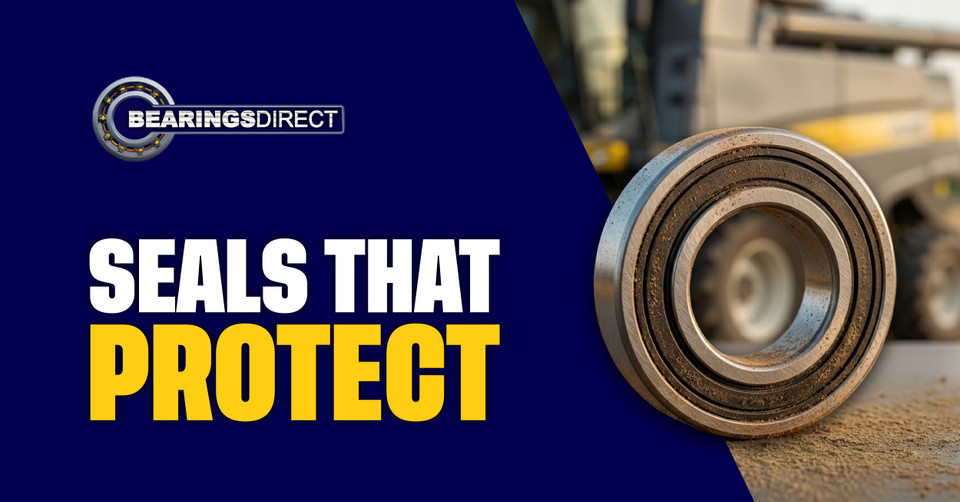
Combine Harvester Bearings: Why Seal Type Determines Harvest-Day Reliability
Harvest season doesn’t wait. You’re working within tight weather windows, pushing equipment hard, and dealing with dust, debris, and moisture every single day. When a combine goes down, the cost isn’t just parts — it’s lost time, lost yield, and added stress. And more often than not, it’s not the bearing itself that fails first — it’s the seal.
Why Does Seal Type Matter So Much in Combine Harvester Bearings?
The harvest environment is brutal.
Out in the field, your machine faces constant exposure to chaff, dirt, grit, and moisture. These harsh conditions put serious pressure on heavy-duty bearings for harvesting equipment. Without proper bearing contamination protection agriculture, even well-built components can wear down quickly.
Contamination Is the #1 Cause of Bearing Failure
Most combine harvester bearings don’t fail because of load limits. They fail because dirt and moisture get inside. Even tiny particles act like sandpaper, wearing down surfaces and breaking down grease. This is why choosing the right combine harvester bearing seals is critical for long-term performance.
The Wrong Seal = Costly Downtime
If the seal can’t keep contaminants out, failure is only a matter of time. A damaged bearing during harvest can stop your machine for hours — or even days. This kind of bearing failure in combine harvesters often happens at the worst possible moment.
What Are the Main Seal Types Used in Combine Harvester Bearings?
Open Bearings
These have no seal at all.
- Require frequent greasing
- Offer zero protection from dust or moisture
- Only suitable for clean, easy-to-access areas
They are rarely used in modern bearings for grain harvesting machinery due to high contamination risk.
Metal Shielded Bearings (ZZ)
These use metal covers to block larger debris.
- Low friction
- Limited protection against fine dust
- Not moisture-resistant
They are not ideal where bearing contamination protection agriculture is needed.
Single Rubber Sealed Bearings (RS/RZ)
These have one rubber lip seal.
- Better protection than shields
- Keeps out splashes and some dust
- Moderate durability
These rubber sealed bearings for farm equipment work well in moderate environments.
Double Rubber Sealed Bearings (2RS)
These are sealed on both sides.
- Strong all-around protection
- Excellent grease retention
- Reduced maintenance
These are among the most common sealed bearings for combine harvesters, offering strong defense against dust and moisture.
Triple-Lip and Heavy-Contact Seals
These are built for extreme conditions.
- Multiple sealing layers
- Maximum contamination protection
- Slightly higher friction
These advanced agricultural bearing seal types are ideal for areas with heavy debris exposure.
How Does Each Seal Type Perform Against Harvest Conditions?
Here’s a simple comparison:
- Open Bearings
-
- Dust resistance: None
-
- Moisture resistance: None
-
- Best use: Clean zones
- ZZ Bearings
-
- Dust resistance: Low
-
- Moisture resistance: Very low
-
- Best use: Internal parts
- RS Bearings
-
- Dust resistance: Moderate
-
- Moisture resistance: Moderate
-
- Best use: Light exposure
- 2RS Bearings
-
- Dust resistance: High
-
- Moisture resistance: High
-
- Best use: Most field applications
- Triple-Lip Seals
-
- Dust resistance: Very high
-
- Moisture resistance: Very high
-
- Best use: Extreme environments
Choosing the right option improves harvest equipment bearing maintenance and reduces downtime.
Which Combine Harvester Components Need the Strongest Seals?
Feederhouse and Conveyor Bearings
These areas handle constant crop flow and debris.
Use heavy-contact seals and dust and debris resistant bearings for maximum durability.
Header and Reel Bearings
These parts face direct exposure to field conditions.
At minimum, use 2RS rubber sealed bearings for farm equipment.
Threshing Drum and Cylinder Bearings
These operate at high speeds and deal with vibration plus dust.
Sealed and re-greasable heavy-duty bearings for harvesting equipment are ideal.
Straw Walker and Shaker Bearings
These experience repeated motion and chaff buildup.
Strong sealing helps reduce bearing failure in combine harvesters.
Grain Auger and Elevator Bearings
Fine grain dust and moisture are common here.
Use sealed bearings for combine harvesters designed for continuous rotation.
How Do You Choose the Right Sealed Bearing for a Combine Harvester?
Match Seal Type to Location Severity
Look at how much dust, moisture, and debris each area faces.
Stronger agricultural bearing seal types are needed in high-risk zones.
Consider Re-Greasability
Some bearings are sealed for life, while others allow maintenance.
This decision impacts long-term harvest equipment bearing maintenance.
Check OEM Specifications vs. Upgraded Options
OEM parts may not always offer the best sealing.
Upgraded combine harvester bearing seals can greatly extend service life.
Factor in Operating Temperature
Tighter seals create more heat.
Make sure your heavy-duty bearings for harvesting equipment can handle the conditions.
What Maintenance Practices Keep Sealed Bearings Performing All Season?
Pre-Season Inspection
Inspect every bearing before harvest.
Check for wear, looseness, or seal damage in your bearings for grain harvesting machinery.
Correct Greasing of Re-Greasable Units
Too much grease can damage seals.
Proper lubrication supports bearing contamination protection agriculture.
Monitoring for Early Warning Signs
Watch for noise, vibration, or heat.
These signs often point to early bearing failure in combine harvesters.
Keeping Spares On-Hand
Stock extra dust and debris resistant bearings for critical areas.
This reduces downtime during peak harvest.
Why Source Your Combine Harvester Bearings from Bearings Direct?
Wide Range of Seal Options
Access a full range of sealed bearings for combine harvesters, including 2RS and heavy-contact designs.
Agricultural-Grade Quality
Products are built for real-world farming conditions, ensuring reliable bearing contamination protection agriculture.
Competitive Pricing and Fast Dispatch
Get heavy-duty bearings for harvesting equipment quickly when you need them most.
Expert Product Support
Receive guidance on selecting the best combine harvester bearing seals for your equipment.
Ready for Harvest Season? Source the Right Sealed Bearings from Bearings Direct
Preparing for harvest means making smart equipment choices. Selecting the right sealed bearings for combine harvesters is one of the easiest ways to prevent breakdowns. Proper sealing improves performance, reduces maintenance, and protects against contamination.
Browse Bearings Direct’s full range of bearings for grain harvesting machinery and get expert help choosing the right fit for your operation before the season begins.
FAQ: Combine Harvester Bearings and Seal Types
1. What is the best seal type for combine harvester bearings?
Double rubber sealed (2RS) bearings are the most common choice. For harsh environments, triple-lip seals provide better bearing contamination protection agriculture.
2. Why do bearings fail during harvest?
Most failures are caused by contamination. Dust and moisture bypass weak combine harvester bearing seals and damage internal parts.
3. Are sealed bearings better than open bearings?
Yes. Sealed bearings for combine harvesters offer better protection and require less maintenance.
4. How often should I replace bearings on a combine?
Inspect before each season. Replace any showing wear to avoid bearing failure in combine harvesters.
5. Can I use the same bearing type across the entire combine?
No. Different areas require different agricultural bearing seal types based on exposure and load.
6. Do triple-lip seals last longer?
Yes. They provide stronger protection, especially in dusty conditions where dust and debris resistant bearings are needed.
7. How do I know if a seal is failing?
Look for grease leaks, dirt buildup, and unusual noise — all signs of poor bearing contamination protection agriculture.
8. Does higher cost mean better performance?
Not always. The right seal type matters more than price when choosing heavy-duty bearings for harvesting equipment.
9. How can I reduce bearing maintenance during harvest?
Use sealed options, inspect regularly, and follow proper harvest equipment bearing maintenance practices.
10. Where can I find reliable combine harvester bearings?
Bearings Direct offers a wide range of combine harvester bearings and sealed solutions designed for agriculture.