
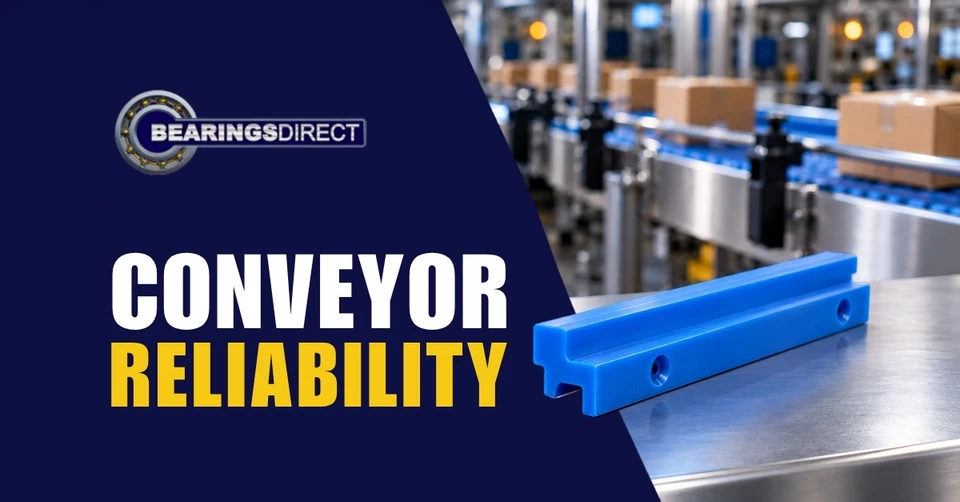
How a Conveyor OEM Reduced Downtime by 30% With Custom UHMW Wear Parts
Unplanned conveyor downtime can quickly lead to lost throughput, missed shipping deadlines, rising maintenance costs, and unhappy customers, which is why one conveyor OEM partnered with a specialty manufacturer to develop custom UHMW wear parts and reduce wear-related downtime by 30%.
What Is Driving Unplanned Downtime in Conveyor Systems?
Conveyor systems are designed for continuous operation, but even minor wear issues can create operational problems that affect productivity, maintenance schedules, and profitability. In many facilities, downtime is not caused by major equipment failures. Instead, it starts with gradual wear on critical components.
Abrasive Material Contact Accelerating Wear on Guides, Strips, and Liners
Conveyors regularly move products that create constant friction against guide rails, wear strips, and liners. Bulk materials, packaged goods, agricultural products, aggregates, and manufactured components all contribute to surface wear over time.
As these surfaces wear down, they lose their ability to protect the conveyor system. Many facilities invest in wear-resistant conveyor components to improve durability, but even quality parts can fail prematurely when exposed to heavy loads, abrasive products, or continuous operation.
This type of wear often develops slowly, making it easy to overlook until performance begins to suffer.
Dimensional Drift in Worn Parts Causing Misalignment and Jams
Wear does more than remove material. It changes the dimensions of the component itself.
As wear surfaces become thinner, chains and belts can drift from their intended path. Misaligned UHMW guide rails, worn strips, and damaged support surfaces frequently contribute to tracking issues and product jams.
Common symptoms include:
- Product buildup
- Material jams
- Belt tracking problems
- Increased vibration
- Excessive chain wear
- Reduced conveyor efficiency
In many cases, operators do not notice the problem until an unexpected shutdown occurs.
Frequent Replacement Cycles Driving Unplanned Maintenance Stops
Repeated wear part replacement can become a significant operational burden. Each maintenance stop interrupts production and consumes labor hours that could be spent on preventive maintenance activities.
Many maintenance managers prioritize conveyor downtime reduction because wear-related failures represent one of the most preventable causes of unplanned shutdowns. Extending component life often provides an immediate benefit in both productivity and maintenance efficiency.
Why Do Standard Wear Parts Fall Short in Demanding Applications?
Standard components remain popular because they are readily available and inexpensive, but they are not always the right choice for demanding conveyor applications.
Off-the-Shelf Parts Not Matched to Specific Load, Speed, or Abrasive Conditions
No two conveyor systems operate under exactly the same conditions.
Variables such as:
- Conveyor speed
- Product weight
- Material abrasiveness
- Duty cycle
- Environmental exposure
- Impact loading
all influence wear performance.
Off-the-shelf parts are designed to work across many applications rather than being optimized for a single operating environment. As a result, they often provide acceptable performance instead of optimal performance.
Generic Materials Lacking Sufficient Abrasion Resistance for the Application
Material selection has a major impact on conveyor reliability.
Some standard plastics perform well in light-duty applications but wear rapidly in environments involving heavy loads, abrasive materials, or continuous sliding contact. Increased wear creates a cycle of more frequent inspections, repairs, and component replacements.
Many engineers choose abrasion-resistant UHMW parts because they offer enhanced durability in applications that quickly wear out conventional materials.
Limited Dimensional Options Forcing Compromises in Fit and Clearance
Another challenge with stock components is limited sizing and geometry options.
When standard parts do not perfectly match conveyor layouts, OEMs are often forced to compromise on mounting positions, clearances, or wear surface dimensions. These compromises can negatively affect alignment and long-term performance.
In many applications, the discussion around UHMW vs standard wear parts ultimately comes down to service life, maintenance frequency, and equipment reliability. Likewise, standard components are rarely optimized as custom wear liners tailored to specific operating conditions.
What Makes UHMW an Ideal Material for Custom Wear Components?
When the OEM in this case study evaluated alternatives, UHMW emerged as an ideal solution because it combines durability, low friction, and environmental resistance in a single material.
Mechanical Performance: High Abrasion Resistance, Impact Strength, and Low Coefficient of Friction Reducing Wear-Driven Failures
UHMW is widely used in wear applications because it performs exceptionally well under repeated friction and impact.
Key benefits include:
- Excellent abrasion resistance
- High impact strength
- Strong wear performance
- Low coefficient of friction
- Resistance to cracking and chipping
These characteristics help reduce wear-driven failures while extending component life.
Many engineers select abrasion-resistant UHMW parts for applications where standard materials cannot provide adequate longevity.
UHMW wear strips for conveyors are especially popular because they support smooth material movement while minimizing wear on adjacent equipment.
Chemical and Moisture Resistance: Stability Against Washdown Chemicals, Moisture, and Mild Solvents in Production Environments
Mechanical durability is only part of the equation.
Many production facilities expose equipment to:
- Moisture
- Washdowns
- Cleaning chemicals
- Humidity
- Mild solvents
Some materials absorb moisture or degrade over time when exposed to these conditions.
UHMW maintains dimensional stability and reliable performance in environments where other materials may struggle. This makes it a practical choice for industries such as material handling, food processing, packaging, and distribution.
Self-Lubricating Properties Reducing the Need for External Lubrication
One of the most valuable characteristics of UHMW is its naturally slick surface.
Because the material offers self-lubricating performance, many applications require less supplemental lubrication. This helps simplify maintenance while supporting smoother equipment operation.
Low-friction conveyor wear parts can also help reduce drag, decrease stress on moving assemblies, lower noise levels, and improve overall efficiency.
For conveyor OEMs looking to improve uptime, UHMW guide rails and other engineered wear surfaces often deliver measurable performance benefits.
How Was the Custom UHMW Solution Engineered for This OEM?
The OEM's results were not achieved simply by changing materials. The improvement came from a structured engineering process designed around the actual causes of wear.
Field Diagnosis of the Specific Wear Pattern and Failure Mode
The first step involved analyzing failed parts that had been returned from operating sites.
Engineers reviewed:
- Wear locations
- Contact points
- Alignment issues
- Load distribution
- Failure frequency
The engineering team also reviewed existing conveyor OEM components to identify the areas where wear and dimensional loss were creating operational problems.
This investigation revealed that both material wear and geometric limitations were contributing to recurring failures.
Material Grade Selection (UHMW-PE) Based on Load and Abrasion Profile
After diagnosing the root cause, engineers evaluated operating conditions to determine the most appropriate UHMW grade.
Important considerations included:
- Conveyor speeds
- Applied loads
- Abrasive exposure
- Operating environment
- Maintenance goals
Selecting the proper grade ensured the new design provided better wear resistance and longer service life.
Custom Dimensioning, Tolerancing, and GD&T Callouts to Match Existing Equipment
Rather than modifying a stock component, engineers designed a completely customized solution.
The redesign included:
- Custom wear liners
- UHMW guide rails
- UHMW wear strips for conveyors
- Optimized mounting features
- Refined wear geometries
Engineering drawings incorporated GD&T callouts, critical tolerances, and dimensional controls to ensure consistent fit and performance.
These custom plastic wear parts were developed around real operating conditions instead of catalog dimensions.
Dimensional Verification and Surface Finish (Ra) Confirmation During Production
Maintaining consistency was a critical objective.
Each component was inspected through established quality procedures including:
- Dimensional inspection
- CMM verification
- Surface finish evaluation
- Ra confirmation
- Drawing compliance checks
This process ensured the final components met design requirements while delivering reliable field performance.
What Results Did the OEM Achieve After Switching to Custom UHMW Parts?
The new wear system produced measurable improvements throughout the conveyor fleet.
30% Reduction in Downtime From Wear-Related Failures
The most significant outcome was a 30% reduction in downtime associated with wear-related issues.
By reducing wear and maintaining alignment, the new design significantly lowered the number of production interruptions requiring maintenance intervention.
The project became a strong example of successful conveyor downtime reduction through targeted component improvements.
Extended Replacement Intervals and Reduced Maintenance Labor
The upgraded components outlasted the previous parts.
Because the abrasion-resistant UHMW parts remained in service longer, maintenance teams spent less time replacing worn components and more time focusing on preventive maintenance activities.
Benefits included:
- Fewer emergency repairs
- Reduced labor costs
- Improved maintenance scheduling
- Lower spare-part consumption
Improved Consistency Across Installed Conveyor Systems
Performance became more predictable across multiple installations.
The upgraded wear-resistant conveyor components provided greater operational consistency, helping the OEM improve customer satisfaction while reducing service variability across its installed equipment base.
What Cost, Lead Time, and Quality Tradeoffs Should Buyers Consider?
Custom solutions provide meaningful performance benefits, but buyers should evaluate the complete picture before making a purchasing decision.
Comparing Upfront Cost of Custom Parts Against Long-Term Maintenance Savings
Custom parts often cost more initially than stocked alternatives.
However, focusing only on the purchase price can be misleading.
A complete cost analysis should consider:
- Downtime costs
- Labor requirements
- Production losses
- Replacement frequency
- Spare inventory expenses
While custom plastic wear parts may carry a higher upfront investment, long-term savings often justify the difference.
Typical Lead Times for Custom UHMW Components Versus Stocked Alternatives
Stocked parts are available immediately. Custom-engineered solutions require design, manufacturing, and inspection time.
Lead times can vary based on:
- Project complexity
- Material availability
- Production schedules
- Quantity requirements
Many OEMs address lead-time concerns through strategic inventory planning and scheduled production programs.
Quality Assurance and Dimensional Consistency Across Production Runs
Consistency is critical when components are deployed across multiple systems.
Robust quality controls should include:
- Controlled engineering drawings
- Dimensional verification
- Material tracking
- Inspection procedures
- Repeatable manufacturing methods
Quality inspections also help ensure that custom wear liners and UHMW guide rails remain consistent from one production run to the next.
Many buyers comparing UHMW vs standard wear parts find that improved reliability and lower maintenance costs provide a significant long-term return.
Why Partner with Bearings Direct for Custom UHMW Wear Parts?
The right manufacturing partner can be just as important as selecting the right material.
Manufacturing Flexibility for OEM-Specific Dimensions and Tolerances
Many conveyor applications require unique dimensions that cannot be sourced from stock catalogs.
Bearings Direct supports customized manufacturing programs designed around specific equipment requirements, helping customers achieve better fit, performance, and service life.
Material Expertise Across UHMW Grades and Wear-Part Applications
Choosing the right material is essential to long-term success.
Bearings Direct helps customers evaluate operating conditions and determine the best material solution based on wear patterns, loads, environmental exposure, and performance goals.
The company also supports the development of low-friction conveyor wear parts designed for challenging industrial environments.
Engineering Support from Diagnosis Through Production and Reliable Supply
Successful projects require more than manufacturing capacity alone.
Bearings Direct provides support throughout the process, including:
- Wear analysis
- Application review
- Material selection
- Design support
- Manufacturing coordination
- Supply planning
The company can manufacture abrasion-resistant UHMW parts and other conveyor OEM components designed around customer requirements. Whether you need UHMW wear strips for conveyors, custom wear liners, or specialized UHMW guide rails, the engineering team can help identify the most effective solution.
Solve Your Conveyor Downtime Problem With Custom UHMW Parts
If recurring wear failures are causing equipment downtime, maintenance headaches, and lost productivity, it may be time to move beyond standard replacement components.
The right design, material selection, and manufacturing approach can help improve reliability, extend maintenance intervals, and support stronger operational performance. Contact Bearings Direct today to discuss custom UHMW wear parts designed specifically for your equipment, production goals, and operating environment.
From low-friction conveyor wear parts to custom plastic wear parts built for demanding applications, Bearings Direct can help you improve uptime, reduce maintenance requirements, and achieve more reliable conveyor performance.
FAQ
1. What are custom UHMW wear parts?
Custom UHMW wear parts are engineered components manufactured from ultra-high molecular-weight polyethylene and designed to match specific equipment dimensions, operating conditions, and performance requirements.
2. Why is UHMW commonly used in conveyor systems?
UHMW offers excellent abrasion resistance, impact strength, low friction, and moisture resistance, making it an effective material for many conveyor applications.
3. How do UHMW wear strips for conveyors reduce downtime?
UHMW wear strips for conveyors help reduce friction, support proper alignment, and resist wear. These benefits can extend service intervals and minimize unexpected shutdowns.
4. What is the difference between UHMW and standard wear parts?
When comparing UHMW vs standard wear parts, many engineers focus on wear resistance, friction performance, and service life. UHMW often provides better long-term durability in demanding applications.
5. Are custom UHMW components worth the investment?
For many operations, the answer is yes. Reduced downtime, fewer replacements, and lower maintenance costs can offset the higher initial purchase price.
6. Can UHMW guide rails be used in wet environments?
Yes. UHMW guide rails perform well in environments exposed to moisture, washdowns, and many common industrial cleaning processes.
7. What industries commonly use custom plastic wear parts?
Custom plastic wear parts are widely used in manufacturing, material handling, packaging, food processing, agriculture, logistics, and distribution facilities.
8. How are custom UHMW components manufactured?
Depending on the application, components may be produced through CNC machining, routing, precision cutting, or molding processes followed by finishing and inspection procedures.
9. How do engineers determine the right UHMW grade?
Engineers evaluate factors such as load, speed, abrasion levels, environmental exposure, and expected service life before selecting a material grade.
10. What information should I provide when requesting a custom part?
Providing equipment drawings, dimensions, operating conditions, wear patterns, and production requirements helps engineers recommend the most effective solution.
11. What are abrasion-resistant UHMW parts used for?
Abrasion-resistant UHMW parts are commonly used in conveyors, packaging equipment, material handling systems, and industrial machinery where repeated contact creates excessive wear.
12. Are UHMW wear strips for conveyors better than standard plastic strips?
In many demanding applications, UHMW wear strips for conveyors provide longer wear life, lower friction, and improved resistance to abrasion compared to standard plastic alternatives.
13. Can custom wear liners help reduce maintenance costs?
Yes. Properly engineered custom wear liners protect equipment surfaces, extend replacement intervals, and contribute to conveyor downtime reduction by reducing wear-related failures.