
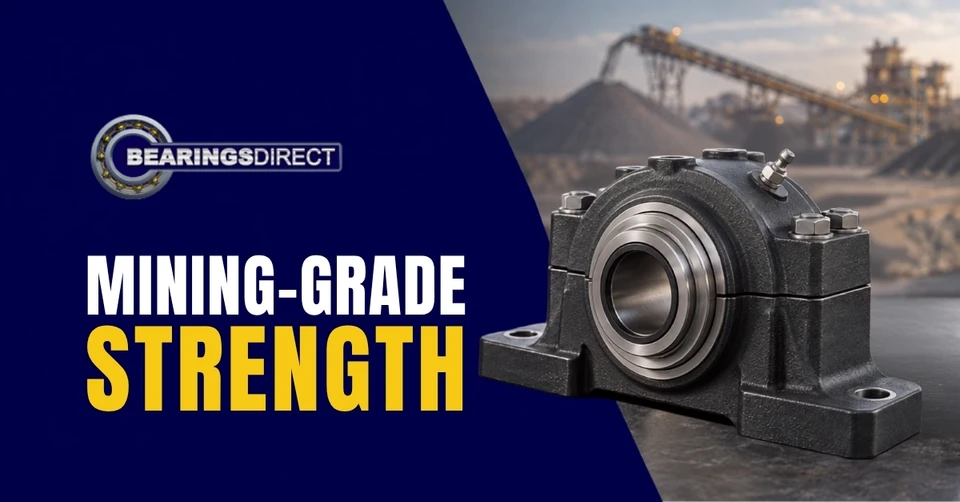
Custom Components for Mining and Bulk Handling: Materials Built for Harsh Conditions
Running a mine or material plant means pushing machinery through heavy stress every single day. Relentless silica grit, heavy shock loads, soaking humidity, and wild temperature swings quickly destroy standard off the shelf parts that were never designed for this work. When a critical bearing or seal snaps, unplanned downtime can easily cost your plant thousands of dollars per hour. Upgrading to custom components for mining and bulk handling gives you mining equipment bearings and corrosion-resistant components for mining specifically engineered to survive your site conditions, keeping your hardware running and reducing your total operational costs.
Why Do Standard Components Fail in Mining and Bulk Handling Environments?
Standard off the shelf parts are designed for clean factories with steady speeds and mild room temperatures. When you place these basic parts into a quarry, underground mine, or bulk port, they reach their physical limits fast. Understanding these failure points explains why generic parts fail in severe industrial service.
Constant Exposure to Abrasive Particulates
Fine dust is the primary killer of rotating bulk material handling components. Airborne silica, coal dust, iron ore, and rock grit settle around moving shafts every hour. Standard rubber lip seals wear down quickly under this grinding friction, allowing dust past the housing wall. Once inside, fine grit mixes with grease, turning lubricant into abrasive paste that scratches metal raceways and destroys mining equipment bearings.
Heavy and Shock Loading
Jaw crushers, primary aprons, and vibrating screens do not run under light or steady forces. Instead, they produce heavy impact loads, continuous vibration, and violent peak forces. Standard off the shelf bearings use basic carbon steels that lack internal toughness. Under heavy shock, standard raceways deform, micro-crack, and suffer early metal flaking, causing sudden structural breakage across your drive system.
Moisture, Corrosion, and Temperature Extremes
Bulk equipment works outdoors through summer heat, winter freezes, and sudden rainstorms. High pressure daily washdowns add even more water to the housing exterior. Standard carbon steel rusts fast when exposed to trapped water, creating surface pitting that ruins precision rolling elements. Furthermore, extreme heat degrades standard grease and hardens rubber, while deep cold turns standard seals brittle, causing them to crack during shaft start up.
What Materials Are Used in Custom Components for Harsh Conditions?
To survive in severe site conditions, custom parts use advanced material science tailored to resist wear, impact, and chemical attack. Choosing specialized metals and protective surface coatings helps heavy-duty bearings for mining run smoothly for years.
Hardened Alloy Steels
Custom heavy-duty bearings for mining rely on high purity, case hardened steel alloys that undergo specialized thermal treatment. Processes like carburizing create an ultra hard outer surface while preserving a tough, flexible inner steel core. This unique design lets the part resist abrasive grit while flexing under heavy shock without snapping. Vacuum degassed steel also removes internal air pockets, directly increasing rolling fatigue strength.
Ceramic Hybrid Bearings
For applications with severe humidity, acid exposure, or high operational speeds, ceramic hybrids offer exceptional durability over standard steel. These units pair precision steel rings with silicon nitride ceramic rolling elements, delivering superior abrasion-resistant bearing materials to your assembly. Ceramic balls are far harder than steel, enabling them to crush incoming dust particles without scratching raceways. They never rust, create less friction, and act as electrical insulators against stray motor currents.
Specialty Coatings and Corrosion-Resistant Finishes
When solid stainless steel lacks the overall load capacity needed for heavy machinery, applying surface coatings to alloy steel delivers full strength along with corrosion-resistant components for mining.
- Thin Dense Chrome: Bonds a micro-porous chrome layer to steel, lowering friction while stopping rust during high pressure washdowns.
- Zinc-Nickel Plating: Offers incredible galvanic protection against salt air, acidic groundwater, and constant ambient moisture.
- Black Oxide Treatments: Provides baseline rust resistance while creating a micro-textured surface that holds protective grease films on internal metal contacts.
- Titanium Nitride: Applied to deliver an extremely hard surface layer that resists heavy sliding wear and abrasive dirt.
How Do Custom Seals Protect Components in Contaminated Environments?
Even the strongest steel alloy will fail if slurry gets inside the housing cavity. Specially designed custom seals for harsh environments act as your primary defense, physically blocking dust from reaching working surfaces.
Multi-Lip and Labyrinth Seal Designs
Standard single lip rubber seals bend easily under physical pressure, giving dirt a direct path inside. Engineered dust and contamination resistant seals use multi-layer protection to keep grit out:
- Multi-Lip Contact Seals: Feature multiple sealing lips placed in a row. Cavities between the lips are packed with grease to catch any dirt that passes the outer lip.
- Non-Contact Labyrinth Seals: Use interlocking metal rings to create a winding pathway. Centrifugal force throws heavy dirt away from the entry point while the winding path stops water without generating friction heat.
- Taconite Sealing Systems: Built specifically for mining, these heavy assemblies combine an outer mechanical labyrinth, an internal grease purge pocket, and a contact lip seal for maximum defense against silica dust.
Elastomer Selection for Temperature and Chemical Exposure
Selecting the right seal compound ensures your dust and contamination resistant seals retain full flexibility across long service intervals:
- Nitrile: Excellent baseline choice for resistance to oil, water, and general mechanical wear up to 212 degrees Fahrenheit.
- Fluoroelastomer: Handles high-temperature bearing materials alongside aggressive synthetic oils, process chemicals, and acidic washdowns up to 400 degrees Fahrenheit.
- Hydrogenated Nitrile: Delivers superior resistance to mechanical tearing, cutting, and physical abrasion under heavy dust loads.
- Silicone: Retains elastomeric flexibility in deep arctic cold down to minus 75 degrees Fahrenheit, preventing winter seal stiffening.
Sealed-for-Life vs. Relubricatable Designs
Custom engineering lets maintenance managers choose the ideal lubrication strategy. Factory sealed bearings for extreme environments are pre-filled with synthetic grease and fully sealed, eliminating human greasing errors and keeping dirt locked out completely. Alternatively, relubricatable designs feature internal grease channels that allow technicians to periodically flush fresh grease through the housing, pushing out localized heat, water, and fine dirt during routine service.
Where Are Custom Mining and Bulk Handling Components Used?
Custom engineered parts are deployed across every stage of material extraction, processing, and bulk transport to eliminate recurring mechanical breakdowns.
Conveyor Systems
Overland bulk conveyors use thousands of support rollers, pulleys, and drive reducers running continuously under massive tonnage. Utilizing custom bearings for conveyor systems ensures drive pulleys and take up units handle continuous radial tension, heavy belt sag, and fine dirt entry. Custom pillow blocks equipped with taconite seals protect drive shafts, keeping conveyor lines moving reliably across long distances.
Crushers and Screens
Primary jaw crushers, cone crushers, and vibrating sizing screens generate massive shock forces and continuous vibration. These machines rely on heavy-duty bearings for mining featuring brass cages, hardened guide rings, and tight radial clearance options. Heavy walled custom housings protect internal bearing assemblies from structural flex and bolt looseness caused by violent vibration.
Bucket Elevators and Feeders
Vertical bucket elevators lift heavy material straight up, applying severe radial and axial stress to top head shaft bearings. Apron feeders and screw conveyors push heavy ores through congested transfer points. Installing dust and contamination resistant seals on these units prevents airborne grit from seizing lower tail shafts, protecting critical drive mechanisms from sudden failure.
How Do Custom Components Perform Compared to Standard Parts in the Field?
Replacing generic off the shelf parts with site specific custom hardware completely transforms your equipment performance metrics and maintenance routines.
Extended Service Life
Because custom hardware uses superior metallurgy, specialized internal clearances, and advanced barrier seals, operational lifespan increases dramatically. Rather than replacing a standard unit every few months due to wear, sealed bearings for extreme environments operate continuously for years under identical site conditions.
Fewer Unplanned Shutdowns
Unscheduled equipment outages ruin production targets and force maintenance teams into expensive emergency repairs. Custom engineered parts deliver consistent mechanical reliability, ensuring your machinery operates smoothly between scheduled plant turnarounds so maintenance can be planned in advance.
Better Fit for Site-Specific Conditions
Off the shelf hardware is built to meet generic design averages. In contrast, custom components for mining and bulk handling allow every dimension, internal clearance grade, seal compound, and housing coating to match your exact operating speeds, ambient temperature ranges, and load profiles for optimum performance.
Is Custom Sourcing Worth the Higher Upfront Cost and Longer Lead Time?
Procurement teams often pause at the higher purchase price and extended delivery times associated with custom components. However, taking a broader view reveals that focusing solely on initial unit price is a costly mistake.
Comparing Upfront Cost to Lifecycle Savings
A standard off the shelf bearing might cost 400 dollars, whereas a custom engineered replacement costs 1,400 dollars. If that 400 dollar standard bearing fails every four months, you spend 1,200 dollars annually on replacement parts alone, not including emergency labor and lost production time. If the 1,400 dollar custom component runs continuously for four years without failure, it quickly pays for itself, lowering your total cost of ownership by preventing repeated repair cycles.
Planning Lead Times Around Maintenance Schedules
Because custom parts are built to precise engineering specifications, lead times are naturally longer than picking standard inventory off a distributor shelf. You can easily manage lead times by practicing proactive maintenance planning. Utilizing predictive tools like vibration analysis and oil testing allows plant engineers to identify component wear months before a failure occurs, letting procurement order custom parts early so they are ready on site well before scheduled maintenance shutdowns.
When Standard Components Are Still the Right Choice
Custom components are not required for every single rotating shaft in your plant. For low demand, light duty auxiliary equipment operating in relatively clean indoor environments, such as small utility fans or light packaging lines, standard off the shelf parts work well and keep initial capital costs low. Reserve custom engineering budgets for critical, high load, or heavily contaminated equipment where a sudden failure halts primary production.
Why Choose Bearings Direct for Custom Mining and Bulk Handling Components?
Navigating component options for severe operating environments requires a supply partner with deep industry experience and strong technical capabilities. Bearings Direct provides the engineering knowledge, product range, and technical support needed to solve your toughest equipment reliability challenges.
Materials and Design Expertise
Our experienced technical team understands the real world demands of bulk handling and mining operations. Whether you require abrasion-resistant bearing materials for clinker plants, specialized coatings for humid mines, or high-temperature bearing materials for sintering lines, we work closely with your team to select the right materials, tolerances, and configurations.
Flexible Custom Sourcing
Every production facility faces a unique combination of operating speeds, loads, and environmental factors. Bearings Direct offers flexible sourcing solutions to meet your exact machinery requirements. We help you specify and source heavy-duty bearings for mining, specialized custom bearing components, and high performance custom seals and retaining rings designed specifically for your equipment operating conditions.
Reliable Supply and Engineering Support
We understand that clear communication and prompt delivery are essential for maintaining productivity. Our team provides fast price quotes, accurate technical drawings, and responsive support through every stage of your project. Partnering with Bearings Direct allows you to move away from reactive troubleshooting toward a dependable, long term equipment reliability strategy.
Frequently Asked Questions (FAQ)
1. What is the primary reason standard bearings fail in mining applications?
Infiltration of abrasive dust and moisture is the leading cause of bearing failure. Fine silica grit and water break down internal lubrication, causing rapid surface wear, rusting, high friction, and premature bearing seizure.
2. How do taconite seals prevent dust contamination?
Taconite seals combine an outer mechanical labyrinth ring, an inner contact lip seal, and a grease filled purge cavity. This multi-stage design deflects heavy debris and traps fine particulates before they can reach internal bearing raceways.
3. Are ceramic hybrid bearings durable enough to handle heavy shock loads?
Yes. Modern silicon nitride ceramic rolling elements feature high compressive strength. When combined with case hardened steel raceways and reinforced cages, ceramic hybrids reliably absorb high shock loads and severe vibration.
4. When should a facility switch from standard parts to custom components?
You should upgrade to custom components for mining and bulk handling whenever standard off the shelf parts fail repeatedly before reaching their expected operational lifespan, particularly in high dust, moist, high load, or severe temperature environments.
5. What materials best resist corrosion in high-humidity mining conditions?
Thin dense chrome coatings, zinc-nickel plating, passivated stainless steel alloys, and non-metallic ceramic materials offer exceptional resistance to rust and chemical attack in humid or washdown areas.
6. How can procurement teams manage longer lead times for custom components?
Plant teams can manage lead times by utilizing predictive maintenance tools, such as vibration monitoring and thermal imaging. Spotting component wear months early allows custom parts to be ordered in time for planned maintenance outages.
7. What is the operational difference between sealed-for-life and relubricatable bearings?
Factory sealed bearings for extreme environments are pre-filled with synthetic grease and permanently sealed, eliminating manual maintenance and dirt entry. Relubricatable bearings feature grease ports that allow technicians to flush out old lubricant, heat, and moisture during routine service.
8. How do custom seals withstand extreme operating temperatures?
Specially designed custom seals for harsh environments utilize specialized elastomeric compounds matched to site conditions, such as Viton for high-temperature bearing materials up to 400 degrees Fahrenheit or silicone for arctic cold down to minus 75 degrees Fahrenheit, preventing cracking or seal distortion.
9. Why are case-hardened alloy steels preferred for mining components?
Case hardening produces a very hard, wear resistant outer shell while keeping the inner core tough and flexible. This combination allows the component to resist surface abrasive wear while absorbing violent shock impacts without cracking.
10. How do custom components lower total cost of ownership if their purchase price is higher?
While custom components require a higher initial investment, using reliable bulk material handling components with an extended service life prevents frequent part replacements, expensive labor calls, and lost production downtime, generating massive net savings over time.
Get Custom Components Engineered for Your Mining or Bulk Handling Operation
Do not let standard off the shelf parts disrupt your production targets with unscheduled breakdowns and high maintenance expenses. Protect your machinery with heavy-duty bulk material handling components engineered to withstand abrasive dust, moisture, extreme temperatures, and heavy shock loads.
Contact the engineering and supply specialists at Bearings Direct today to discuss your site's specific equipment requirements. Our technical team is ready to help you source custom bearings for conveyor systems, specialized seals, and custom housings engineered to extend machinery life and optimize your total cost of ownership