
Custom Housing and Adapter Plates for Bearing Installations: Options, Materials & Lead Times
When standard bearing housings don’t match your machine’s footprint or load needs, custom housing and adapter plates for bearing installations give you the precise fit, alignment, and durability your equipment depends on.
What Are Bearing Housings and Adapter Plates — and Why Do They Matter?
Bearing housings are the structural supports that hold and protect your bearings. They keep the bearing aligned, help manage loads, and reduce vibration. When designed correctly, they improve bearing life and reduce downtime. Many standard options exist, including pillow block bearing housing units and flanged bearing housing units, but they don’t always match your machine’s exact geometry.
Adapter plates are machined components that bridge gaps between different bearing sizes, mounting patterns, or shaft centerlines. They’re part of the essential bearing installation hardware used when you need to match a new bearing to an existing frame. You rely on adapter plates for bearings when bolt patterns don’t match, shaft heights differ, or you’re upgrading equipment.
The right housing and adapter plate directly affect:
- Load transfer
- Alignment accuracy
- Vibration control
- Bearing lifespan
Standard units work well for common applications. But when you’re dealing with tight spaces, legacy equipment, or unusual loads, you need custom bearing housing options and custom bearing mounts designed for your exact setup.
What Types of Housing and Adapter Plate Options Are Available?
Pillow Block (Plummer Block) Housings
These housings mount horizontally and support a rotating shaft on a flat surface. They’re common in conveyors, packaging lines, and general industrial machinery. Custom versions let you adjust bolt spacing, shaft height, and lubrication access. This is where bearing housing design options become important.
Flanged Housings
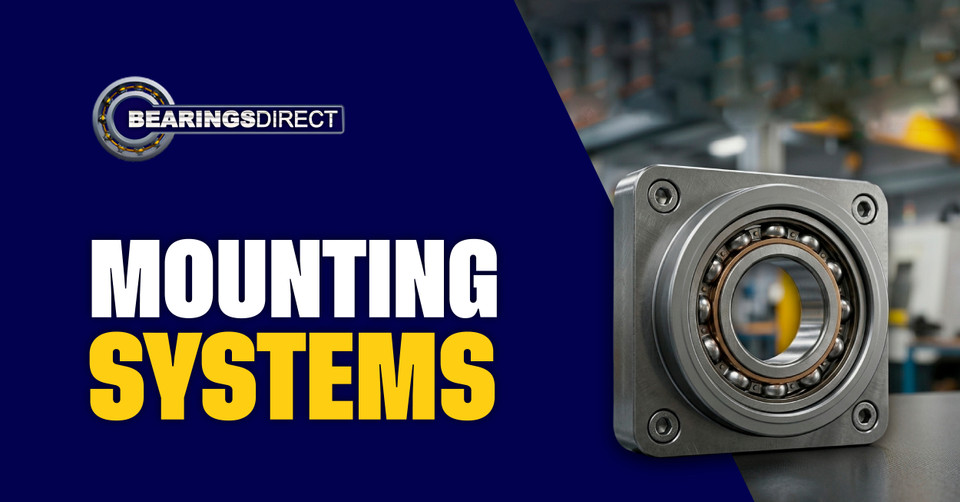
Flanged housings come in 2‑bolt and 4‑bolt styles for wall or face mounting. They’re ideal when you need to support a shaft passing through a panel or when space is limited. Custom flanged units help you match nonstandard bolt circles or tight envelopes.
Take‑Up Housings
These housings allow for shaft tension adjustment, making them ideal for belt‑driven systems. Custom take‑up units can be built to match unique frame slots or travel distances.
Cartridge / Sleeve Housings
Cartridge housings are compact, inline units used when space is tight or when you need a clean, enclosed design. They’re common in food processing and automated machinery. Custom versions help you meet strict hygiene or dimensional requirements.
Custom Machined Adapter Plates
Adapter plates are often the fastest way to retrofit new bearings into existing housings or frames. They help you:
- Match new bolt patterns
- Adjust shaft center height
- Convert between bearing series
- Replace obsolete OEM parts
These machined bearing adapter plates are essential when you want to avoid cutting, welding, or drilling into your machine.
Split Housings
Split housings allow you to service or replace bearings without removing the shaft. They’re used in heavy duty applications where downtime is costly. Custom split housings can include special seals, lubrication paths, or reinforced bases.
What Materials Are Used for Bearing Housings and Adapter Plates?
Choosing the right bearing housing materials affects strength, corrosion resistance, temperature limits, and cost.
Cast Iron
- Most common
- Excellent vibration damping
- Cost effective
- Suitable for general industrial loads
Cast Steel
- Higher strength
- Handles shock loads
- Ideal for mining, construction, and heavy duty machinery
Aluminum
- Lightweight
- Easy to machine
- Good for food processing and automation
Stainless Steel
- Corrosion resistant
- Ideal for washdown, chemical, or marine environments
Engineering Plastics (Nylon, PEEK, UHMW)
- Electrically isolating
- Noncorrosive
- Lightweight
- Used in cleanrooms and low load systems
Material choice affects load ratings, temperature limits, and long term durability. For tight tolerances or high speed applications, machined bearing adapter plates in steel or aluminum are often preferred.
When Do You Need a Custom Housing or Adapter Plate Instead of a Standard Unit?
You’ll want a custom solution when:
- You’re retrofitting new bearings into older machinery with nonstandard bolt patterns
- Your OEM design has tight packaging constraints
- Your environment involves extreme heat, cold, moisture, or contamination
- You’re upgrading from sliding bearings to rolling element bearings
- You’re working with multi‑bearing assemblies that require precise alignment
- Your shaft center height doesn’t match standard housings
- You need a unique seal or lubrication setup
These situations call for custom bearing mounts and specialized bearing housing design options that standard catalog parts can’t provide.
What Factors Affect Lead Times for Custom Bearing Housing and Adapter Plates?
Lead times vary depending on design complexity, material, and machining requirements. Here’s what affects bearing adapter plate lead times and custom housing delivery.
Complexity of Design
- Simple adapter plates: quick turnaround
- Fully machined housings with seals, lubrication ports, and surface finishes: longer lead times
Material Availability
- Cast iron and aluminum: usually in stock
- Stainless steel or exotic alloys: may add days or weeks
Tolerancing Requirements
Tighter fits (H7/p6, interference fits, precision bores) require more machining time and inspection.
Quantity
- One-offs prototypes: faster
- Batch production: requires scheduling
Drawing and Approval Process
- Customer supplied CAD files: fastest
- Reverse engineering from samples: adds time
Typical Lead Time Ranges
- Standard catalog housings: same day or next day
- Simple adapter plates: 3–10 days
- Fully custom housings: 2–6 weeks
These ranges help you plan ahead when sourcing custom bearing housing options.
How Should You Specify a Custom Housing or Adapter Plate?
To get an accurate quote and fast turnaround, provide the following details:
Key Dimensions
- Shaft diameter
- Bearing OD and width
- Housing bore
- Bolt pattern and bolt centers
- Overall envelope dimensions
Surface Finish and Tolerances
Most rotating applications use an H7 bore tolerance, but your supplier can help confirm what’s needed.
Environment and Load Data
- Radial and axial loads
- Operating speeds
- Temperature range
- Exposure to moisture, dust, or chemicals
Sealing Requirements
- Open
- Shielded
- Lip seals
- Labyrinth seals
Lubrication Provisions
- Grease nipples
- Oil fill and drain ports
- Automatic lubrication compatibility
Drawings and Samples
CAD or DXF files are ideal. If you don’t have drawings, you can send a sample part for reverse engineering.
These details help speed up bearing adapter plate lead times and ensure your housing is built correctly.
Why Source Custom Bearing Housing and Adapter Plates from Bearings Direct?
Bearings Direct supports both standard and custom projects with:
- A wide range of standard housings: pillow block, flanged, take‑up, and cartridge
- Custom machining for adapter plates and bespoke housings
- Material options including cast iron, steel, aluminum, and stainless steel
- Engineering support to help you specify the right solution
- Fast turnaround on standard units
- Competitive lead times on custom components
You can explore related categories on the Bearings Direct website:
- Bearing Housings
- Adapter Plates
- Pillow Block Units
- Flanged Units
Whether you need a simple adapter plate or a fully engineered housing, you get reliable support from start to finish.
Get the Right Housing or Adapter Plate for Your Bearing Installation
If you’re upgrading equipment, retrofitting older machinery, or solving a mounting challenge, send your specifications to Bearings Direct. You can source standard housings off the shelf or request a fully custom adapter plate built to your exact dimensions. From one off prototypes to full production runs, you get engineering support every step of the way.
FAQ: Custom Housing and Adapter Plates for Bearing Installations
1. What information do I need to requesta custom housing?
You’ll need shaft size, bolt pattern, bearing dimensions, load details, and environmental conditions.
2. How long do custom adapter plates take to manufacture?
Simple plates take 3–10 days, while complex housings may take 2–6 weeks.
3. Can I retrofit a new bearing into an old housing?
Yes — a custom adapter plate can bridge the size or bolt pattern mismatch.
4. What materials work best for washdown environments?
Stainless steel or coated aluminum are the most reliable choices.
5. Do custom housings improve bearing life?
Yes. Better alignment and load distribution reduce heat and wear.
6. Can I order a single custom housing or plate?
Yes. One off prototypes are common, especially for retrofits or repairs.
7. What if I don’t have drawings?
You can send a sample part for reverse engineering.
8. Are custom housings stronger than standard ones?
They can be, especially when built from steel or designed for specific loads.
9. Can custom housings include special seals or lubrication ports?
Absolutely. Seals, grease fittings, and oil channels can all be added.
10. Do adapter plates affect shaft alignment?
A well‑designed plate improves alignment by matching the exact mounting geometry of your machine.