
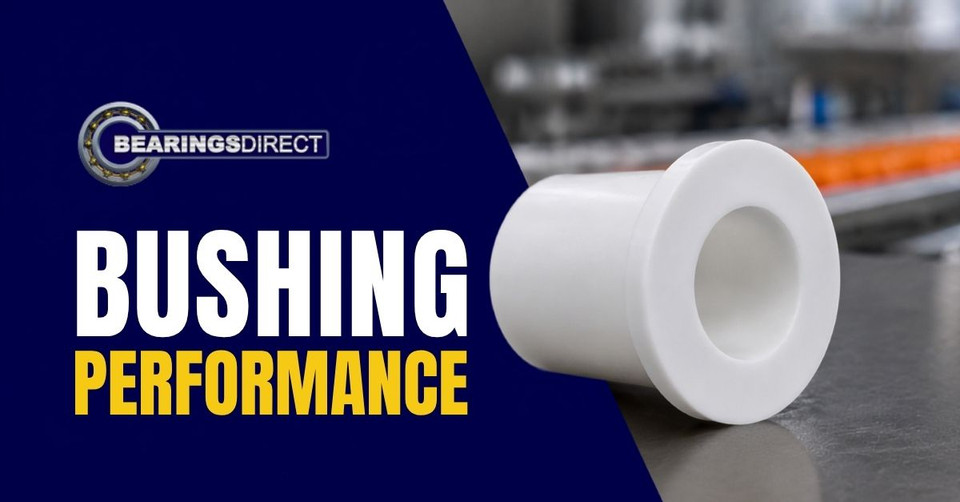
Custom Plastic Bushings and Sleeves: A Buyer's Guide to Material, Fit & Finish
Picture a maintenance team on a food packaging line who used to shut the conveyor down every few weeks just to re-grease a set of metal bushings. It was messy, it ate into production time, and grease near food product raised compliance flags every single time. Once they switched to self-lubricating plastic bushings made from PTFE, the re-lubrication stopped altogether, and the line ran cleaner with far less downtime. That's the kind of payoff you can expect from custom plastic bushings and sleeves, but only if you get the material and the fit right from the start, which is exactly what this guide will help you do.
What Are Plastic Bushings and Sleeves, and Where Are They Used?
Plastic bushings and sleeves are simple, cylindrical plain bearings made from engineered polymers. You install them between a shaft and a housing, and their job is to cut friction and absorb wear, so parts keep turning smoothly. Unlike ball or roller bearings, there's nothing rolling around inside them. The bore surface itself does all the work.
You'll run into plastic bushings in places like:
- Conveyor systems and packaging lines
- Food and beverage processing equipment
- Agricultural and outdoor machinery
- Medical devices and lab equipment
- Pumps, valves, and fluid handling systems
- Automotive assemblies and light to medium duty industrial machinery
Compared to metal bushings, plastic sleeve bearings offer some real practical perks. They resist corrosion, many of them run without any added lubricant, they're lighter, they run quieter, and certain grades hold up well against chemicals and washdown environments that would eat away at bare metal over time. When you weigh plastic vs metal bushings side by side, that combination of benefits is a big part of why so many engineers now reach for a trusted plastic bushing supplier USA teams already know, instead of defaulting to bronze or steel wherever the load and speed allow it.
What Plastic Materials Are Available and How Do You Choose the Right One?
Not every engineered polymer behaves the same way under load, heat, or chemical exposure, so it helps to know what you're working with before you spec a part. Here's a practical rundown of the materials you'll come across most often in a plastic bushing materials guide.
Nylon (PA6 / PA66) is a strong, tough, general purpose choice. Nylon bushings for industrial use are common because the material handles moderate loads well and machines or molds easily. Its one drawback is that nylon absorbs some moisture from the air, which can shift bore dimensions slightly over time. In most designs that's manageable, but it's worth accounting for up front.
PTFE has one of the lowest friction coefficients of any solid plastic, and it's chemically inert, meaning almost nothing reacts with it. FDA compliant grades exist for food and medical use. PTFE sleeve bearings are the go to pick for low load, high precision, or chemically aggressive applications, though pure PTFE has lower load capacity than filled compounds.
Acetal (POM / Delrin) is known for excellent dimensional stability and low moisture absorption, so it holds tight tolerances better than nylon over the long haul. It also machines cleanly, which makes it a favorite for precision parts with tight plastic bushing tolerances.
UHMW-PE, short for ultra high molecular weight polyethylene, shrugs off impact and abrasive wear and costs less than most engineering plastics. It's a common pick for heavy conveyor systems and bulk material handling, where durability matters more than tight precision.
PEEK and specialty polymers step in when temperatures or loads exceed what standard plastics can handle. They cost more, but they hold their strength and shape at high heat and under heavier stress.
|
Material |
Max Temp (approx.) |
Load Capacity |
Self-Lubricating |
Chemical Resistance |
Best For |
|
Nylon (PA6/PA66) |
~200°F |
Moderate |
Yes (moly filled grades) |
Good |
General industrial, light to medium load |
|
PTFE |
~500°F |
Low to Moderate |
Excellent |
Excellent |
Food grade, chemical, precision, low load |
|
Acetal (POM/Delrin) |
~180°F |
Moderate |
Fair |
Good |
Tight tolerance, dimensionally stable parts |
|
UHMW-PE |
~160°F |
Moderate to High (impact) |
Fair |
Very Good |
Heavy conveyor, bulk handling, abrasion |
|
PEEK |
~480°F+ |
High |
Fair to Good |
Excellent |
High temp, high load, harsh environments |
These are general guidelines, and actual performance depends on the specific grade, fillers, and conditions your part will face. Your supplier's engineering team should confirm the specs against your application before you commit to production, especially when plastic bushing tolerances are tight enough that a small material shift could throw off the fit.
Why Do Fit and Finish Specifications Matter for Plastic Bushings?
Two bushings made from the exact same material can perform completely differently if the polymer bushings fit and finish aren't dialed in correctly, so this part of the spec deserves just as much attention as material choice.
Bore tolerances and housing fits. You'll typically choose between a press fit, also called an interference fit, where the bushing's outer diameter is slightly larger than the housing bore for a tight, non-rotating hold, or a slip fit, also called a clearance fit, which allows easier assembly and, in some designs, lets the bushing rotate along with the shaft. Plastic behaves differently than metal here, since polymers expand and contract more with temperature changes than metal does. A fit that works fine at room temperature might bind or loosen once the part heats up in service, so good custom sleeve bearings are designed with that in mind from day one.
Surface finish. The roughness of the bore surface, measured as Ra, has a direct effect on friction and wear. A bore that's too rough will speed up shaft wear, while one that's too smooth can sometimes reduce the material's ability to hold a thin lubricating film. Getting this balance right is part of what separates a generic off the shelf part from properly engineered polymer bushings fit and finish.
Dimensional stability. Moisture absorbing materials like nylon can swell slightly as they take on humidity, which shrinks the effective bore diameter. For loose tolerance applications, this barely matters. For tight tolerance assemblies, it's a real design consideration, and it's one reason acetal or PTFE sometimes wins out over nylon when plastic bushing tolerances are critical to how the part performs.
Concentricity and wall thickness. An off center bore or uneven wall thickness causes vibration, uneven wear, and a shorter part life, especially in high speed or precision assemblies. This is yet another reason dimensional control deserves just as much attention as material selection.
When Does a Standard Bushing Fall Short and When Should You Go Custom?
Off the shelf plastic bushings cover a lot of ground, but they don't cover everything. Here's when custom fabrication is the smarter call:
- Your bore or outer diameter falls outside standard catalog sizes
- You need a custom flange configuration, whether that's flanged, double flanged, or a thrust shoulder design
- Your application calls for an unusual length to diameter ratio to distribute load properly
- You require special finishes, FDA or NSF compliance, or color coding for maintenance identification
- Your OEM production run is too low volume to justify stocking a standard part
- You need a custom polymer blend to meet a specific chemical or temperature requirement
If you've ever weighed plastic vs metal bushings and landed on plastic for the weight, noise, or corrosion benefits, there's a good chance your application also calls for custom bushings for OEM applications, since few standard catalog parts are drawn with those benefits in mind from the start. That's especially true if you need custom sleeve bearings built around a shaft or housing size that no catalog part quite matches.
How Do Self-Lubricating Plastic Bushings Reduce Maintenance Costs?
Some of the biggest maintenance savings in industrial equipment come from cutting routine lubrication out of the picture entirely. Filled PTFE, oil impregnated nylon, and graphite filled polymers all work by holding a lubricating agent inside the material itself, releasing small amounts as the part wears, so there's no grease gun involved. This is the core idea behind self-lubricating plastic bushings, and it's one of the biggest reasons buyers switch away from metal in the first place.
This matters most in situations like:
- Food and beverage plants, where grease near product is a contamination risk
- Cleanrooms and medical equipment, where lubricant residue simply isn't acceptable
- Outdoor and agricultural machinery, where dirt sticks to grease and speeds up wear
- Hard to reach equipment, where scheduled lubrication is expensive or downright dangerous
One important trade-off to consider is that self-lubricating plastic bushings generally have lower load ratings than grease-lubricated metal bushings. For many light- to medium-duty applications, that trade-off is worthwhile once you factor in labor savings, eliminated lubricant costs, and fewer maintenance shutdowns. Many buyers who first consider PTFE sleeve bearings for chemical resistance ultimately choose them for maintenance savings as well.
What Should You Include in a Custom Plastic Bushing Specification?
When you're ready to request a custom part, a complete specification gets you a faster, more accurate quote and saves you from costly revisions down the line. Use this checklist as your starting point:
- Bore diameter and tolerance class
- Outer diameter and housing fit (press fit vs. slip fit)
- Length and wall thickness
- Flange requirements, if any
- Material and grade, including any compliance needs such as FDA or RoHS
- Surface finish on the bore and OD
- Operating temperature range
- Load type and direction (radial, axial, or combined)
- Shaft material and surface finish, since this affects the wear pair
- Volume, minimum order quantity, and delivery timeline
Having these details ready, even in rough form, lets an experienced supplier flag any fit or material concerns before parts go into production instead of after. It also helps to know your target plastic bushing tolerances ahead of time, since tightening a tolerance class after a quote is issued can change both price and lead time.
Why Source Custom Plastic Bushings from Bearings Direct?
Bearings Direct manufactures custom plastic bushings and sleeves domestically, built to your print and your tolerances. Here's why engineering and procurement teams keep coming back to us:
- Domestic US manufacturing, so you're not stuck managing overseas lead times or import delays
- A wide in stock range of polymer materials, including nylon, PTFE, acetal, UHMW-PE, and specialty grades
- Engineering support to help you choose materials, review tolerances, and confirm fit before you commit to a production run
- Fast turn prototyping and low MOQ custom runs, suited to both OEM programs and MRO replacement parts
- Dimensional inspection and traceability on every custom run, so what you receive matches exactly what you specified
As a plastic bushing supplier USA based engineers and buyers already trust for standard parts, we bring that same reliability to custom bushings for OEM applications without the overseas sourcing risk. Whether you need a small batch of custom sleeve bearings for a prototype or an ongoing production run, our team can walk you through material selection from day one.
Frequently Asked Questions
1. What's the difference between a bushing and a sleeve bearing? In practice, these terms get used interchangeably. Both describe a simple cylindrical bearing that sits between a shaft and a housing to reduce friction and wear.
2. Are plastic bushings as strong as metal bushings? It really depends on the material and the load involved. High performance polymers like PEEK can rival metal in a lot of applications, while general purpose plastics like nylon or UHMW-PE work best in light to medium load conditions. If you're comparing plastic vs metal bushings for a specific application, your supplier can help you match material to your load requirements.
3. Can plastic bushings handle high temperatures? Standard nylon and acetal handle moderate heat, generally up to around 180 to 200°F. For higher temperatures, PTFE and especially PEEK are better suited, with PEEK holding up well even in demanding, high heat environments.
4. What is the minimum order quantity for custom plastic bushings? This varies by supplier and part complexity. Many suppliers, including Bearings Direct, offer low MOQ custom runs and prototyping, so you're not forced into a huge production order just to get a properly fitted part.
5. How do I know if I need a press fit or slip fit bushing? A press fit holds the bushing stationary in the housing, which works well when you want the shaft to rotate freely inside the bushing. A slip fit allows easier assembly and disassembly and is often used where the bushing itself may need to rotate. Your application's load, speed, and maintenance needs will point you toward the right choice.
6. Can you match FDA or food grade compliance requirements? Yes. Certain PTFE sleeve bearings and nylon grades come in FDA compliant formulations, which makes them suitable for food, beverage, and medical equipment applications.
7. How long does it take to get a custom plastic bushing made? Turnaround depends on the complexity of the part and the material, but many suppliers offer fast turn prototyping that can get a sample part in your hands in days rather than weeks. Production runs typically take a bit longer once the design is finalized.
8. Do custom plastic bushings cost more than standard catalog parts? Not always. Tooling and setup can add cost for very complex geometries, but for many applications a custom part actually saves money over time by eliminating a poor fit, reducing wear, or removing the need for ongoing lubrication.
9. Can plastic bushings replace metal bushings in an existing design? In many cases, yes. Engineers regularly retrofit equipment with self-lubricating plastic bushings to cut weight, reduce noise, or eliminate corrosion issues, as long as the load, speed, and temperature conditions stay within the plastic material's range.
10. What information do I need before I can get an accurate quote? At minimum, you'll want your bore and outer diameter, length, material preference, and any compliance requirements. A drawing helps, but it's not always required. Many suppliers can quote from dimensions and a description of the application alone, especially for straightforward custom sleeve bearings.
Ready to Spec Your Custom Plastic Bushings? Start Here.
You don't need a finished drawing to get started. Upload a sketch, share your dimensions, or simply describe your application, and Bearings Direct's engineering team will help you land on the right material, fit, and finish, backed by domestic manufacturing and fast turnaround. Submit your specs or request a quote today to get your custom plastic bushings and sleeves moving toward production.