
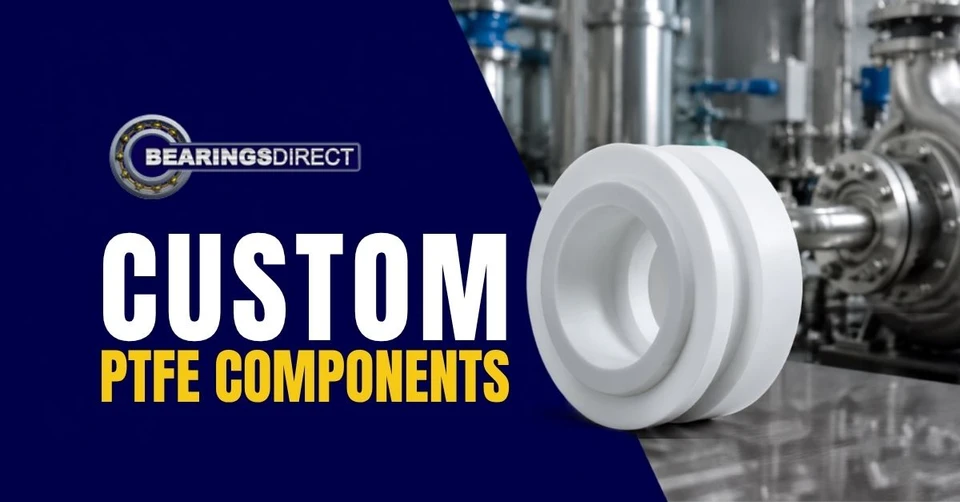
Custom PTFE Components: Properties, Applications & Why Teflon Parts Are Worth the Cost
Imagine a part inside a chemical pump or food grade conveyor that fails long before it should because heat, corrosive fluids, or strict cleanliness rules push standard materials past their limits. When that happens, custom PTFE components step in and solve problems that metal or common plastics cannot handle. PTFE, also known as Teflon, is chosen for its unmatched chemical inertness, broad thermal range, and naturally low friction surface.
What Makes PTFE Unique as an Engineering Material?
Exceptional Chemical Resistance
PTFE is almost completely inert, giving you outstanding PTFE chemical resistance against acids, solvents, and corrosive media. This is why engineers rely on it in chemical processing and pharmaceutical environments where contamination risks are high and reliability matters.
Broad Operating Temperature Range
PTFE stays stable from minus 200 degrees Celsius to plus 260 degrees Celsius, outperforming most engineering plastics and elastomers. This wide range supports PTFE parts properties and applications in cryogenic systems, high heat machinery, and equipment exposed to constant thermal cycling.
Industry Leading Low Friction
PTFE has one of the lowest friction coefficients of any solid, making it ideal for low friction PTFE parts that run without lubrication. This helps you eliminate grease in food grade, medical, and cleanroom environments.
Electrical and Thermal Insulation
PTFE has strong insulating properties that make it valuable in electronics and high voltage systems. You will see Teflon components for industrial use in semiconductor tools, sensors, and precision electrical assemblies.
FDA and RoHS Compliance
PTFE is available in grades that meet FDA, RoHS, and other regulatory standards. This supports the benefits of PTFE in engineering for food contact surfaces, medical devices, and clean manufacturing.
What Types of Custom PTFE Components Are Commonly Manufactured?
PTFE Bushings and Plain Bearings
PTFE bushings provide self-lubricating sliding surfaces for shafts and pivot points. Because they do not require grease, PTFE bushings and seals are ideal for wash down environments, sterile equipment, and food grade conveyors.
PTFE Seals and O Rings
PTFE seals withstand aggressive chemicals and high temperatures that quickly degrade rubber. These PTFE components for bearings and pumps help maintain reliability in valves, cylinders, and chemical handling systems.
Thrust Washers and Wear Pads
These low friction surfaces protect mating metal parts and extend service life. They are common in rotating assemblies where PTFE parts properties and applications help reduce wear.
Guide Strips and Slide Bearings
PTFE guide elements appear in hydraulic cylinders, machine tool slideways, and linear guides. Their smooth motion supports Teflon components for industrial use in high cycle automation.
Custom Machined PTFE Parts
Manufacturers produce flanges, spacers, valve seats, insulators, and specialty shapes based on your drawings. These custom PTFE machined parts require tight tolerances because PTFE can deform under load, making precision machining essential.
Where Are Custom PTFE Components Used Across Industries?
Chemical and Petrochemical Processing
PTFE is ideal for pump internals, valve seats, gaskets, and pipe liners exposed to corrosive fluids. Its PTFE chemical resistance helps prevent failures that could shut down production.
Food and Beverage
PTFE wear strips, guide rails, and seals operate without lubricants and withstand repeated wash downs. These low friction PTFE parts help maintain cleanliness and avoid contamination.
Pharmaceutical and Medical
Cleanroom compatible PTFE bushings and seals appear in filling equipment, imaging gantries, and surgical tools. They support the benefits of PTFE in engineering for sterile automation.
Semiconductor and Electronics
PTFE has ultra low outgassing and strong electrical insulation, making it ideal for wafer handling guides and insulators. These Teflon components for industrial use support ultra clean environments.
Industrial Automation and Motion Systems
PTFE guide elements, wear liners, and bushings complement precision bearings in high cycle machinery. These PTFE components for bearings reduce friction and extend system life.
How Does PTFE Compare to Other Plastic and Bearing Materials?
PTFE vs. Nylon (PA)
PTFE wins on chemical resistance and friction, while nylon offers better load capacity. This comparison highlights PTFE vs other plastics in applications where chemicals or heat are present.
PTFE vs. UHMW PE
UHMW has higher impact toughness and abrasion resistance. PTFE leads on temperature range and chemical inertness, supporting PTFE parts properties and applications in harsh environments.
PTFE vs. Acetal (POM)
Acetal provides tighter tolerances and higher compressive strength. PTFE is preferred where chemicals or heat would degrade acetal, reinforcing the benefits of PTFE in engineering.
PTFE vs. Bronze Bushings
PTFE eliminates lubrication and resists chemicals. Bronze handles higher loads and dissipates heat better, making both useful depending on the application.
Filled PTFE Grades
Glass filled, carbon filled, and bronze filled PTFE improve compressive strength and reduce creep while retaining low friction. These enhanced custom PTFE machined parts help PTFE perform better in demanding applications.
Why Are Custom PTFE Parts Worth the Higher Upfront Cost?
Total Cost of Ownership
PTFE components cost more upfront, but they often last significantly longer. You eliminate lubricant costs, reduce downtime, and avoid premature failures. These advantages support strong Teflon parts cost and value.
Failure Cost Avoidance
In chemical, food, or pharmaceutical lines, a single contamination event or unplanned shutdown can cost thousands per hour. PTFE reliability helps prevent these failures and protects your production schedule.
Precision Fit Reduces System Wear
Custom dimensioned PTFE parts protect shafts, housings, and bearings from wear. This supports PTFE components for bearings in reducing vibration and friction.
Off the Shelf vs. Custom
Standard PTFE shapes exist, but custom machining is cost effective when you need unusual profiles, tight tolerances, or high cycle performance. Precision machining ensures your custom PTFE machined parts fit perfectly and perform reliably.
What Should Engineers Specify When Ordering Custom PTFE Components?
Dimensional Tolerances
PTFE expands more than metals when heated. Specify tolerances based on your operating temperature range to ensure proper fit and maintain PTFE parts properties and applications.
PTFE Grade
Choose between unfilled, glass filled, carbon filled, or bronze filled PTFE depending on load, speed, and chemical environment. This helps optimize the benefits of PTFE in engineering.
Surface Finish Requirements
Shaft and bore roughness directly affect friction and wear. Include surface finish requirements to support low friction PTFE parts.
Regulatory Requirements
Confirm FDA, RoHS, or USP Class VI compliance if your application requires it.
Quantity and Lead Time
Custom PTFE machining requires planning. Discuss prototype quantities and production volumes early to keep your project on schedule.
Why Source Custom PTFE Components Through Bearings Direct?
Complementary to Bearing and Seal Assemblies
PTFE bushings, wear elements, and seals integrate seamlessly with the bearing products you already source from Bearings Direct. This simplifies procurement and supports PTFE components for bearings across your motion system.
Access to Multiple PTFE Grades and Forms
You can source unfilled and filled PTFE grades, machined components, and specialty shapes tailored to your application.
Engineering Support
Bearings Direct helps you specify the right grade, tolerance, and fit for your bearing housings, shafts, and seals. This reduces guesswork and improves reliability.
Reliable Supply
Consistent lead times, responsive service, and support for both prototypes and production volumes make sourcing easier and more predictable.
Ready to Specify Custom PTFE Parts for Your Application?
If you are designing equipment for chemical processing, food production, medical devices, or high cycle automation, custom PTFE components can dramatically improve reliability and reduce long term cost. Browse Bearings Direct PTFE bushings, seals, and custom components or contact the engineering team for help specifying the right material, grade, and tolerances for your application.
Pairing the right PTFE component with a precision bearing assembly is one of the simplest ways to extend system life and minimize maintenance cost.
FAQ: Custom PTFE Components
1. What is PTFE and why is it used in industrial applications? PTFE is a fluoropolymer known for chemical resistance, low friction, and high temperature stability. These qualities supportPTFE parts properties and applications in harsh environments.
2. Are PTFE and Teflon the same thing? Teflon is a trade name originally used for PTFE. Today, Teflon may refer to several fluoropolymers.
3. What industriesbenefit mostfrom PTFE components? Chemical processing, food and beverage, medical, semiconductor, and automation rely heavily on Teflon components for industrial use.
4. Do PTFE components require lubrication? No. PTFE is naturally self lubricating, making it ideal forlow friction PTFE parts.
5. Can PTFE handle high temperatures? Yes. PTFE operates from minus 200 degrees Celsius to plus 260 degrees Celsius.
6. What filled PTFE grades are available? Glass filled, carbon filled, and bronze filled PTFE improve strength and reduce creep, enhancingcustom PTFE machined parts.
7. How long do PTFE components last? Service life varies by load and environment, but PTFE typically outlasts standard plastics and elastomers.
8. Are custom PTFE parts expensive? Upfront cost is higher, but Teflon parts cost and value often outweigh cheaper alternatives due to reduced failures and maintenance.
9. Can PTFE be machined into complex shapes? Yes. Experienced fabricators produce tight tolerancecustom PTFE machined parts for demanding applications.
10. What information should I provide when ordering PTFE components? Include drawings, tolerances, PTFE grade, surface finish requirements, regulatory needs, and expected quantities to support accurate production ofPTFE bushings and seals and other components.