
Custom Shaft Components: Collars, Spacers & Couplings for Precision Drive Systems
You’ve probably seen it happen: a conveyor drifts out of sync; a pump vibrates more than usual, or a motor overheats long before its expected service life. Often, the culprit isn’t the motor or bearings; it’s undersized, misaligned, or low quality shaft components. Custom shaft components for precision drive systems may be small, but they’re mission critical. When you choose the right collars, spacers, and couplings, you get better performance, longer machine life, and fewer costly shutdowns.
What Role Do Shaft Collars Play in Precision Drive Systems?
Shaft collars are simple but powerful. They keep your equipment aligned, secure, and performing at its best.
- Positioning and Retention Collars lock bearings, gears, sprockets, and pulleys into precise axial positions. This ensures timing accuracy in shaft collars for precision drives where even small shifts can disrupt performance.
- Load Bearing and Thrust Management Collars absorb and transmit axial loads, protecting shaft surfaces and connected components. Many engineers rely on custom shaft collars for high load applications.
- Two‑Piece Collars for Easy Installation Two piece collars allow placement without full shaft disassembly. Maintenance teams often prefer clamp style shaft collars for quick, damage‑free installation.
What Is the Difference Between Set Screw and Clamp Style Shaft Collars?
- Set Screw Collars Budget friendly and easy to install, set screw shaft collars are best for light duty or static positioning. But under high load, they can mar the shaft surface.
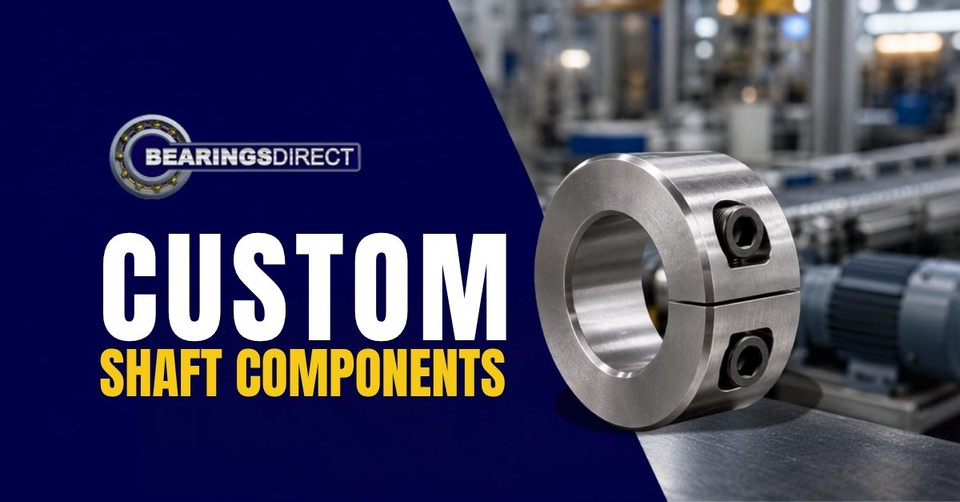
- Clamp Style (Split) Collars Clamp style shaft collars apply uniform pressure, offering stronger holding power without damaging the shaft. They’re ideal for dynamic, high precision applications.
- Heavy Duty and Threaded Collars For demanding shaft collar applications, threaded collars provide extra security and alignment stability.
How Do Shaft Spacers Contribute to Alignment and Bearing Performance?
Spacers ensure exact spacing for smooth operation.
- Maintaining Axial Spacing Spacers keep bearings, gears, and pulleys at precise intervals, preventing side loading. This is critical in shaft spacers industrial applications.
- Precision Tolerances Tight tolerances reduce vibration and extend bearing life, making them essential precision drive system components.
- Material Choices Steel for heavy loads, stainless steel for corrosion resistance, and aluminum for lightweight, high speed systems.
What Types of Shaft Couplings Are Used in Precision Drive Systems?
Couplings connect shafts and transmit torque. The right choice depends on alignment and load.
- Rigid Couplings Rigid shaft couplings provide zero backlash and maximum torque transfer. Perfect for aligned shafts in servo motors.
- Flexible/Jaw Couplings Flexible shaft couplings accommodate minor misalignment and dampen vibration. Common in pumps and conveyors.
- Disc and Bellows Couplings High torsional stiffness with flexibility, ideal for robotics and motion control.
- Oldham Couplings Handle parallel misalignment without stressing bearings, making them reliable shaft couplings precision systems.
How Do You Select the Right Shaft Component for Your Application?
Selection depends on system demands.
- Key Sizing Parameters Bore diameter, shaft diameter, torque capacity, and speed rating.
- Misalignment Tolerance Rigid couplings need perfect alignment; flexible couplings allow more forgiveness.
- Environmental Factors Temperature extremes, moisture, chemicals, or cleanroom conditions all affect component choice.
- Bore Finish and Keyway Options Keyed bores secure torque transmission, while keyless simplify installation. Many engineers choose custom shaft components for precision drive systems for exact fits.
Why Does Material and Finish Matter for Shaft Collars and Couplings?
Material impacts durability and performance.
- Steel vs. Stainless Steel: Steel offers load capacity; stainless resists corrosion.
- Aluminum Options: Lightweight and ideal for high speed systems.
- Black Oxide and Zinc Plating: Surface treatments extend life in demanding shaft collar applications and shaft couplings precision systems.
Why Source Custom Shaft Components from Bearings Direct?
Bearings Direct delivers quality and reliability.
- Wide Selection Stock and custom shaft collars, spacers, and couplings across bore sizes and materials.
- Precision Grade Options Manufactured to tight tolerances for demanding precision drive system components.
- Knowledgeable Support Team Expert guidance for load, speed, and environment requirements.
- Fast Fulfillment Short lead times minimize downtime.
Find the Right Shaft Components for Your Drive System
Browse Bearings Direct’s catalog of custom shaft components for precision drive systems or contact their team for tailored recommendations. The right components make your drive system more reliable, efficient, and easier to maintain.
FAQ: Custom Shaft Components for Precision Drive Systems
1. What do shaft collars do in a drive system? They position and secure components, manage axial loads, and maintain alignment.
2. Are clamp style collars better for high‑precision applications? Yes, clamp style shaft collars provide stronger holding power without damaging shafts.
3. How do shaft spacers improve bearing life? By maintaining exact spacing, shaft spacers industrial reduce vibration and extend bearing performance.
4. What type of coupling should I use for misaligned shafts? Flexible shaft couplings handle minor misalignment while reducing vibration.
5. Do rigid couplings require perfect alignment? Yes, rigid shaft couplings are only suitable for perfectly aligned shafts.
6. Which materials work best for shaft collars? Steel for heavy loads, stainless for corrosion resistance, aluminum for lightweight systems.
7. Can I use aluminum spacers in high speed systems? Yes, aluminum spacers are ideal for lightweight, high speed applications.
8. What’s the difference between keyed and keyless bores? Keyed bores secure torque; keyless simplify installation.
9. How do I know if I need a custom shaft component? If standard parts don’t meet tolerance, load, or environment needs, choose custom shaft collars or couplings.
10. Where can I source precision grade shaft collars and couplings? Bearings Direct offers a wide range of shaft couplings precision systems and collars designed for industrial use.