
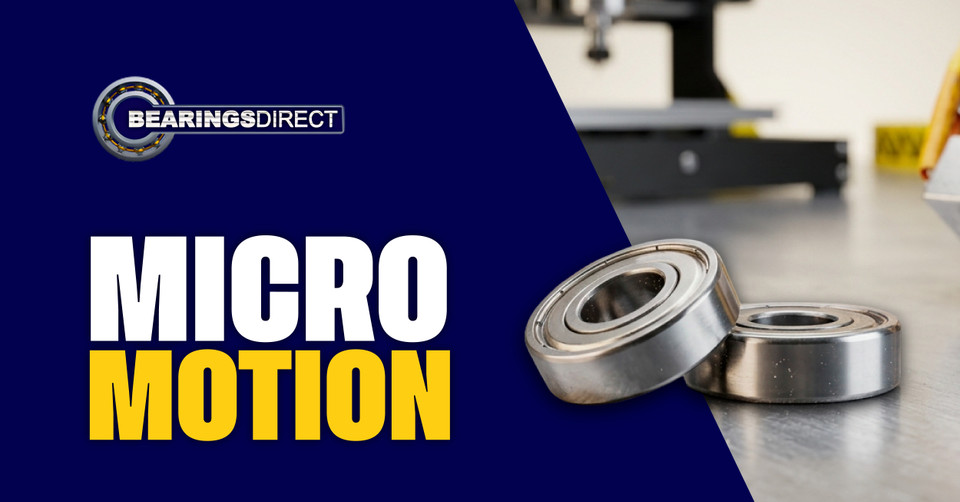
Mini Bearings for 3D Printers, CNC, Scooters, RC, and Home Projects
A 3D printer that produces smooth, accurate layers depends on precise motion from dozens of small mechanical components. The same is true for RC cars, scooters, and CNC machines that rely on smooth rotation and minimal friction to perform well. At the center of this motion are mini bearings, tiny components that quietly support shafts, wheels, and guide rails. When the right bearing is installed, your system runs smoothly, accurately, and reliably.
What Are Mini Bearings and Why Are They So Important?
Mini bearings are compact mechanical components designed to reduce friction between moving parts in small machines. They allow shafts or components to rotate smoothly while supporting loads in tight spaces. You will commonly see them used in robotics, hobby machines, and compact equipment where standard bearings are too large.
Many compact mechanisms rely on miniature ball bearings, which use small steel or ceramic balls rolling between two rings called races. This rolling action greatly reduces friction compared to sliding contact, allowing moving parts to spin freely and consistently.
Because they operate in small systems, these bearings must be manufactured with extremely tight tolerances. High-quality small precision bearings ensure smooth movement and stable alignment, which is essential for devices like 3D printers or micro-motor assemblies.
Small bearings also enable high rotational speeds. Many high-speed mini bearings can operate at thousands of revolutions per minute while maintaining stability and minimal heat generation. This makes them ideal for applications such as electric motors, drone components, or compact spindles.
Their importance comes down to three main performance benefits:
- Reduced friction for smoother motion
- Higher efficiency in compact systems
- Improved accuracy for precision devices
Without these capabilities, many small machines would suffer from vibration, misalignment, or premature wear.
How Do Mini Bearings Improve Performance in 3D Printers and CNC Machines?
Desktop manufacturing equipment relies heavily on precise motion control. Components such as guide rails, spindles, and extruders require bearings that can move smoothly without introducing vibration or resistance.
In these systems, micro bearings for 3D printers support moving parts such as carriage assemblies, filament drive gears, and cooling fans. These bearings allow the printer head to move precisely along its axes, helping maintain consistent layer placement and smooth surface finishes.
CNC machines depend on the same principle. High-quality mini bearings for CNC machines reduce resistance in spindles and drive assemblies. When friction is minimized, motors can operate more efficiently and tools can move with greater precision.
Smooth motion is especially important in these machines because even small vibration can affect results. Properly sized small precision bearings help reduce mechanical play and maintain accurate alignment throughout long operating cycles.
Another key factor is rotational speed. Many desktop CNC spindles and extruders operate at high RPMs. This makes high-speed mini bearings particularly valuable because they are engineered to maintain stability under rapid rotation.
You will often find common miniature sizes used in hobby machines, such as:
- 608 bearings for guide rollers
- 625 or 626 bearings for drive systems
- Small flanged bearings for pulley assemblies
Using the right bearings ensures that cutting tools and printer heads move smoothly, producing cleaner results and reducing mechanical wear.
Why Are Mini Bearings Critical in Scooters and RC Vehicles?
Compact vehicles rely on bearings to maintain stability and efficiency. Whether you are repairing a scooter or upgrading a hobby vehicle, properly sized bearings help keep wheels spinning smoothly and efficiently.
For electric scooters, scooter wheel bearings support the wheel hubs and allow them to rotate freely under load. These bearings must handle continuous movement, vibration, and outdoor exposure while maintaining smooth operation.
RC hobby vehicles use similar components but often at even higher speeds. RC car miniature bearings reduce friction in wheel hubs, gearboxes, and drivetrain assemblies. This helps vehicles accelerate faster and maintain stability while turning or jumping.
Lower rolling resistance is another benefit. When high-quality mini bearings are installed, the drivetrain loses less energy to friction. This allows electric vehicles to achieve better battery life and improved performance.
Because these vehicles often operate outdoors, protection is important. Many replacement mini bearings include shields or rubber seals that help prevent dust, water, and debris from entering the bearing.
Common protection options include:
- Metal shields – reduce dust entry while maintaining speed
- Rubber seals – offer stronger protection against moisture and dirt
- Open bearings – allow easy lubrication but require clean environments
Choosing the right type ensures long-lasting performance even under demanding conditions.
What Should You Look for When Choosing Mini Bearings for Home Projects?
If you build DIY equipment or hobby machines, selecting the correct bearing is essential for reliable motion. Many makers rely on small bearings for hobby projects because they fit into tight spaces and support smooth movement.
The first factor to consider is size. Bearings are typically defined by three measurements:
- Inner diameter (ID) – the shaft size
- Outer diameter (OD) – the housing size
- Width – the thickness of the bearing
Selecting the correct dimensions ensures proper alignment and load support.
Load ratings also matter. Even though they are small, small precision bearings can support significant loads when properly installed. Always check the dynamic and static load ratings to ensure the bearing can handle your application.
Material choice also affects performance. Steel bearings are common, but ceramic options may offer benefits for certain systems. Many compact bearings for robotics use hybrid ceramic designs to reduce friction and increase durability.
Another important choice is bearing style. For example:
- Flanged bearings simplify mounting in thin housings
- Non-flanged bearings fit standard shaft supports
- Shielded bearings protect from light debris
- Sealed bearings offer stronger contamination protection
Selecting the right configuration helps ensure smooth motion and longer service life in DIY builds and automation systems.
How Do Materials and Seals Affect Mini Bearing Performance?
Material selection plays a major role in how a bearing performs. The most common option is chrome steel, which offers strong durability and cost-effective performance for many small precision bearings.
Stainless steel bearings provide improved corrosion resistance. They are commonly used in applications where moisture or humidity may be present, such as outdoor equipment or marine environments.
Hybrid ceramic designs are also popular for high-speed mini bearings. These bearings use ceramic balls combined with steel races, providing several advantages:
- Lower friction
- Reduced heat generation
- Higher speed capability
- Longer service life in demanding environments
Seals and shields also influence performance. Bearings with rubber seals offer stronger protection against contamination, which helps extend life in dusty or wet environments.
Metal shields, on the other hand, allow slightly higher speeds while still blocking larger particles. This makes them suitable for applications like micro bearings for 3D printers, where high RPM and low friction are important.
Lubrication also matters. Many miniature bearings come pre-lubricated, but periodic maintenance can extend life and maintain smooth operation.
What Maintenance Practices Extend the Life of Mini Bearings?
Even high-quality bearings eventually wear out if they are not maintained properly. Regular inspection and care can significantly extend the lifespan of your bearings.
Start with basic cleaning. Dust, metal chips, and debris can accumulate over time, especially in workshop environments. Keeping systems clean helps protect small precision bearings from premature wear.
Lubrication is another key factor. Many high-speed mini bearings require specialized grease or oil to maintain smooth rotation and reduce friction. Always follow manufacturer recommendations when relubricating.
You should also watch for warning signs that indicate a problem. Common symptoms include:
- Unusual noise during rotation
- Increased vibration or wobble
- Excessive heat buildup
- Reduced efficiency or slower movement
When these issues appear, it may be time to install replacement mini bearings rather than attempting repairs.
Replacing worn bearings early prevents additional damage to shafts, housings, and other mechanical components.
Why Choose Bearings Direct for Mini Bearings?
Finding reliable bearings is critical for both hobbyists and professionals. Bearings Direct offers a large inventory of high-quality miniature ball bearings designed for compact systems.
Bearings Direct’s catalog includes many sizes of small precision bearings used in 3D printers, CNC machines, scooters, and automation systems. Whether you need a single bearing for a repair or bulk components for manufacturing, their selection supports many applications.
Makers and engineers also benefit from options such as:
- Deep groove bearings
- Flanged miniature bearings
- Ceramic and hybrid designs
- Shielded and sealed configurations
These solutions support everything from compact bearings for robotics to high-speed rotating assemblies.
Quality control is another advantage. Bearings Direct focuses on consistent tolerances, ensuring that every bearing delivers reliable motion and long service life.
Fast shipping and knowledgeable support make it easier to source replacement mini bearings quickly when repairs or upgrades are needed.
Where Can You Source Reliable Mini Bearings for Your Next Project?
If you build, repair, or maintain compact machines, high-quality mini bearings make a major difference in performance and durability.
Explore the full Bearings Direct catalog to find small bearings for hobby projects, mini bearings for CNC machines, micro bearings for 3D printers, and durable scooter wheel bearings for repair work. You will also find specialized RC car miniature bearings and high-speed mini bearings designed for demanding applications.
Their extensive selection of miniature ball bearings, flanged bearings, and precision components helps ensure smooth motion, accurate alignment, and long-lasting performance across robotics, automation, and DIY builds.
FAQ: Mini Bearings for 3D Printers, CNC, Scooters, RC, and DIY Projects
1. What are mini bearings used for?
Mini bearings are used in compact mechanical systems that require smooth, low-friction motion. Common applications include robotics, printers, electric motors, RC vehicles, and small bearings for hobby projects.
2. What size qualifies as a miniature bearing?
Most miniature ball bearings have inner diameters under 10 mm. These compact sizes make them suitable for precision equipment and lightweight mechanical assemblies.
3. Are mini bearings suitable for high-speed applications?
Yes. Many high-speed mini bearings are designed to operate at thousands of RPM. They are commonly used in motors, spindles, and micro bearings for 3D printers.
4. What materials are mini bearings made from?
Most small precision bearings are made from chrome steel or stainless steel. Hybrid ceramic designs are also available for higher speed capability and lower friction.
5. Can mini bearings handle heavy loads?
Although small, many miniature bearings can support significant loads relative to their size. Always check specifications when selecting mini bearings for CNC machines or robotics systems.
6. Are sealed bearings better than shielded ones?
Rubber seals offer better protection against dust and moisture, while metal shields allow slightly higher speeds. The right choice depends on the environment and performance needs.
7. How often should mini bearings be replaced?
The lifespan depends on speed, load, and contamination levels. If you notice noise, vibration, or heat buildup, it may be time to install replacement mini bearings.
8. What bearings are used in scooters?
Many scooters rely on standard scooter wheel bearings, often based on common sizes like 608. These bearings allow smooth wheel rotation and support rider weight.
9. What bearings are used in RC vehicles?
Most hobby vehicles use RC car miniature bearings in wheel hubs, gearboxes, and drivetrain systems to reduce friction and improve performance.
10. Where can I buy high-quality mini bearings?
Reliable miniature ball bearings and compact bearings for robotics are available from specialized suppliers such as Bearings Direct, which offers a wide selection for hobbyists, engineers, and repair technicians.