
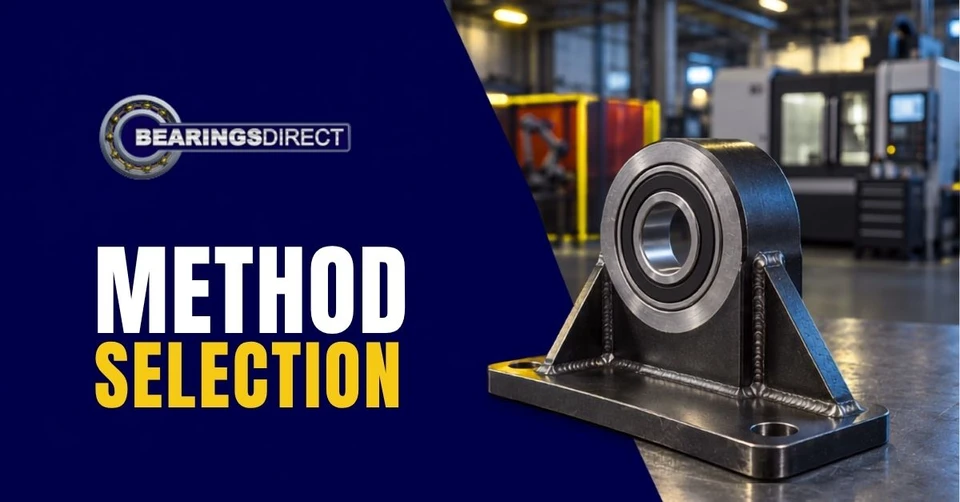
The Difference Between Custom Fabrication and Custom Machining: Which Process Do You Need?
You have a custom component to source, but one question can quickly complicate the project: should you have it fabricated or machined? Choosing the right process can help you control cost, meet performance requirements, and keep your project on schedule.
What Is Custom Fabrication?
Custom fabrication turns raw material into a finished component or assembly by cutting, bending, forming, welding, and assembling individual pieces. Instead of starting with one solid block and removing material, you typically build the desired shape from sheet, plate, tube, or other stock.
The process is a practical choice when you need a component that provides structure, protection, support, or an enclosure. Depending on the design, a manufacturer may use manual or CNC controlled equipment to cut material, form bends, create holes, and prepare pieces for assembly.
Definition and Core Process
A typical fabrication job can involve several steps:
- Cutting: Raw material is cut to the required size and profile.
- Bending and forming: A press brake or other forming equipment creates angles, flanges, and other shapes.
- Welding and joining: Individual pieces are joined to create the finished assembly.
- Assembly: Hardware, brackets, fasteners, or other components may be added.
- Finishing: The part may be painted, powder coated, plated, or otherwise treated.
The exact sequence depends on the component. A simple bracket may need only cutting and bending, while a large frame could require cutting, drilling, welding, grinding, and finishing.
That flexibility is one reason custom metal fabrication services are useful across many industries. You can produce a part around the needs of your equipment rather than trying to modify an off the shelf component.
The sheet metal fabrication process can also be adapted to different shapes, sizes, and production volumes. This makes fabrication useful for both one off projects and repeat production.
Common Materials Used
Fabrication is commonly performed with:
- Sheet metal
- Structural steel
- Stainless steel
- Aluminum
- Plate stock
- Tubing and other structural sections
Your material choice depends on what the part needs to handle. Steel can provide strength and durability, while aluminum can reduce weight. Stainless steel may be a better choice when corrosion resistance matters.
Material thickness also affects fabrication. A thin sheet may be easy to cut and bend, while thicker plate may require different cutting, forming, and welding methods.
When you evaluate custom metal fabrication services, consider the material along with the environment in which the finished component will operate. Factors such as load, temperature, moisture, corrosion, and weight can all affect your selection.
Typical Applications
Custom fabrication is a good fit for components such as:
- Enclosures
- Brackets
- Frames
- Machine guards
- Panels
- Cabinets
- Mounting structures
- Structural assemblies
For example, imagine you need a protective enclosure around industrial equipment. The enclosure may require several panels, bends, mounting points, and welded joints, but it does not necessarily need extremely tight dimensional tolerances. Fabrication would typically make more sense than machining the entire enclosure from solid material.
The same principle applies to large frames and support structures. Fabrication lets you create the required shape without paying to remove large amounts of material from a solid block.
If you are deciding when to use custom fabrication, look first at the size and function of the part. If structure, shape, support, or protection are the main goals, fabrication may be the most practical option.
What Is Custom Machining?
Custom machining creates a component by removing material from a solid piece of stock until the desired shape and dimensions are achieved. The process is especially useful when you need accurate holes, bores, threads, slots, shoulders, mating surfaces, or other precise features.
Instead of forming the part from several pieces, machining can often produce the required geometry as one component.
Definition and Core Process
With custom machining services, your manufacturer starts with material such as bar stock, plate, or a solid block. Cutting tools then remove material according to the part's design.
The machining process can involve:
- CNC programming
- Material setup
- Rough cutting
- Finish cutting
- Drilling
- Threading
- Inspection
- Surface finishing
The goal is not simply to make the part look right. It is to control the dimensions that determine how the component performs.
That distinction becomes important when your part must fit with another component. A shaft that rotates inside a bearing, for example, needs more than the correct general shape. Its diameter, surface condition, and other dimensions may need to fall within defined limits.
When reviewing custom machining services, consider the features that control fit and function. A supplier can then determine which equipment, tooling, and machining operations are appropriate.
Common Methods
Several machining methods can be used depending on the component.
CNC turning is commonly used for round components such as shafts, pins, spacers, and bushings. The workpiece rotates while cutting tools remove material.
CNC milling uses rotating cutting tools to create flats, pockets, slots, holes, and more complex three dimensional features.
Grinding can provide very fine dimensional control and surface finishes when a component requires additional precision after other machining operations.
A single component may use more than one method. Your manufacturer can select the most practical combination based on the material, geometry, tolerance, quantity, and required finish.
Understanding CNC machining vs fabrication becomes easier when you focus on how the material reaches its final shape. Fabrication primarily cuts, forms, and joins material, while machining removes material to achieve the required geometry.
Typical Applications
Machining is commonly used for precision machined components, including:
- Shafts
- Bushings
- Spacers
- Pins
- Housings
- Bearing components
- Precision brackets
- Custom mechanical components
If the component has to move, rotate, mate with another part, or maintain a specific fit, machining is often worth considering.
For example, a custom shaft may need a precise diameter where a bearing is installed. A machined bushing may need controlled dimensions, so it fits correctly inside a housing. These are applications where precision can matter more than simply producing the overall shape.
For teams deciding when to use custom machining, the most important question is often whether the part has critical features that must maintain a specific size, fit, or alignment.
How Do Fabrication and Machining Differ in Tolerances and Precision?
The biggest practical difference between the two processes often comes down to dimensional control.
Fabrication is generally well suited to structural components and assemblies where moderate tolerances are acceptable. Cutting equipment can be highly accurate, but bending, welding, and assembly can introduce additional variation.
Machining is generally better suited to tight and repeatable tolerances. Because cutting tools remove material in controlled steps, machining can produce precise features that need to mate with other components.
Fabrication Tolerances
Fabricated components can be very accurate, but not every fabrication process provides the same level of dimensional control.
For a simple bracket, a small amount of dimensional variation may have no effect on performance. A structural frame may also have some tolerance for variation if its purpose is primarily to provide support.
Welding can make tolerance control more challenging because heat can cause material movement or distortion. A skilled fabricator can account for these factors, but they should still be considered during design.
This is an important part of custom component manufacturing. Your supplier needs to understand which dimensions are critical and which ones can have more flexibility.
Machining Tolerances
Machining is generally the better choice when specific features must meet tight dimensional requirements.
This can include:
- Bearing fits
- Shaft diameters
- Precision bores
- Threaded holes
- Mating surfaces
- Alignment features
The important thing is not to specify extremely tight tolerances on every dimension simply because you can.
Every tighter tolerance can add manufacturing and inspection requirements. A better approach is to identify the dimensions that actually affect function and assign tighter tolerances there.
When comparing CNC machining vs fabrication, this is one of the most important factors to consider. If a component has several precision features, machining may provide better control and repeatability.
Why Precision Requirements Should Drive the Decision
Before choosing a manufacturing process, ask yourself: Which dimensions actually matter to performance?
If a component simply needs to support a load or protect equipment, fabrication may be enough. If two components must move together, seal against one another, or maintain precise alignment, machining may be the better option.
This is a central consideration in custom component manufacturing. The best process is the one that meets your functional requirements without adding unnecessary production costs.
Do not pay for precision you do not need. At the same time, do not sacrifice a critical tolerance just to lower the initial quote.
How Do Cost and Lead Time Compare Between the Two Processes?
Cost is often one of the first questions buyers ask when comparing fabrication and machining. The problem is that there is no simple rule that says one process is always cheaper or faster.
Your part's size, material, geometry, quantity, tolerances, and finishing requirements can change the answer.
Material and Setup Costs
Fabrication can be economical for large, relatively simple components because you can cut and form the material without removing a large amount of stock.
For example, turning a sheet of steel into a bent enclosure may require far less material and machine time than machining that same enclosure from a solid block.
Fabrication can also make sense for lower volume structural parts where creating specialized tooling would not be practical.
When evaluating fabrication vs machining cost, compare the complete manufacturing route instead of looking only at the hourly machine rate. Material waste, setup time, labor, finishing, inspection, and assembly can all affect the final price.
Machining Costs
Machining may have a higher per part cost when a component has complex geometry or requires significant material removal.
Tight tolerances can also increase cost because they may require additional machining steps, specialized tooling, more careful setup, and inspection.
That higher cost, however, can be justified when precision is essential. Paying more for a part that fits correctly can be much less expensive than dealing with premature wear, alignment problems, vibration, or assembly issues later.
The same principle applies to custom machining services. A well designed machined part can provide the accuracy and repeatability needed for demanding applications.
Lead Time Considerations
Lead time depends on more than the manufacturing method.
For either fabrication or machining, consider:
- Material availability
- Part complexity
- Quantity
- Programming and setup
- Tooling
- Finishing
- Inspection
- Shipping
A simple fabricated bracket may be produced quickly. A complex machined component may take longer because it requires several setups and operations.
But the reverse can also happen. A complicated fabricated assembly with many welded pieces may take longer than a relatively simple machined component.
Your supplier's production capacity also matters. This is another reason to discuss the project early when planning custom industrial component sourcing.
Addressing the Misconception That One Process Is Always Cheaper or Faster
There is no universal winner in fabrication vs machining cost.
Instead, compare the complete manufacturing route. Look at material usage, setup time, production time, finishing, inspection, and the cost of meeting the required tolerances.
This matters when you are managing custom industrial component sourcing. A lower quote is not necessarily the lower total cost if the part requires rework, does not fit properly, or creates problems during assembly.
The fastest manufacturing method is not necessarily the best choice, either. A slightly longer lead time may be worthwhile if it gives you a more reliable component and reduces future production problems.
Which Process Should You Choose for Your Application?
The easiest way to decide between fabrication and machining is to start with the application rather than the manufacturing process.
Ask what the component needs to do, what it needs to connect to, and which dimensions are critical.
When to Choose Fabrication
Consider when to use custom fabrication for:
- Large structures
- Enclosures
- Frames
- Panels
- Brackets
- Machine guards
- Welded assemblies
- Components made from sheet, plate, or structural material
Fabrication is often the practical choice for budget driven structural projects where extremely tight tolerances are not necessary.
If your component is primarily about shape, support, protection, or structure, fabrication should be on your list.
When to Choose Machining
Consider when to use custom machining for:
- Precision fit components
- Shafts
- Bushings
- Bearing components
- Precision housings
- Controlled bores
- Tight tolerance assemblies
- Moving or rotating parts
Machining is particularly useful when dimensional accuracy directly affects performance.
If your component must fit inside, around, or against another component, talk with your manufacturer about the required tolerances before selecting the process.
When a Combination of Both Makes Sense
You do not always have to choose one process.
In some cases, the most efficient solution combines fabrication and machining. A large welded assembly, for instance, may be fabricated first and then machined in specific areas where precise alignment is required.
This approach can give you the best of both processes.
Rather than machining an entire structure, you can fabricate the main body and machine only the critical surfaces. That can reduce material waste and machining time while still delivering the precision your application needs.
For many custom component manufacturing projects, this hybrid approach can provide a practical balance between structural efficiency and precision.
Why Choose Bearings Direct for Custom Fabrication and Machining Needs?
Finding the right manufacturing process is only part of the job. You also need a supplier that understands your component requirements and can help you move from a drawing or concept to a finished part.
Bearings Direct offers custom component manufacturing capabilities for metal and plastic parts, including custom brackets, shafts, housings, and bearing components. Its custom component services are designed to support projects ranging from prototypes to production quantities.
The company also highlights engineering support for drawings, specifications, materials, tolerances, and manufacturability. That can be useful when you know what the component needs to accomplish but are less certain about the best way to manufacture it.
Broad Manufacturing Capabilities
A supplier with access to both fabrication and machining can give you more options during the sourcing process.
Instead of forcing your design into one manufacturing method, the supplier can consider whether fabrication, machining, or a combination provides the best fit.
That flexibility can be particularly useful for custom industrial components where different features have different requirements.
When evaluating custom metal fabrication services and custom machining services, having access to both options can simplify the sourcing process. You can focus on the application and let the manufacturing team help determine the most practical production route.
Engineering Support
Your drawing may specify dimensions and tolerances, but application details can provide important context.
Sharing information about load, movement, operating conditions, material requirements, bearing interfaces, and production volume can help the engineering team assess your project more effectively.
The result can be a manufacturing recommendation based on what the component actually needs to do.
This type of engineering input is valuable when you are deciding when to use custom fabrication and when to use custom machining. It can also help you avoid specifying unnecessary tolerances or processes.
Reliable Sourcing and Fast Turnaround
Production requirements can vary from a single prototype to an ongoing production order. Material availability, manufacturing location, quantity, and part complexity can all affect turnaround.
Bearings Direct works with domestic and global manufacturing resources to support custom component sourcing. For procurement teams, having access to multiple manufacturing options can make it easier to balance cost, quality, and delivery requirements.
That flexibility can also support custom industrial component sourcing when you need a supplier that can handle changing production needs.
Talk to Bearings Direct About Your Custom Component Project
Still not sure whether you need fabrication or machining? Start with your component's function, critical dimensions, material requirements, quantity, and delivery target.
The right manufacturing process should give you the performance you need without paying for precision or production steps that your application does not require.
If you need help evaluating those choices, talk to the Bearings Direct team about your project. You can provide your drawing, CAD file, specifications, or even an initial concept and discuss whether custom fabrication, custom machining, or a combination of both makes the most sense.
For custom industrial component sourcing, getting the process right at the beginning can save you time and money later.
FAQ: Custom Fabrication vs Custom Machining
1. What is the main difference between custom fabrication and custom machining?
Custom fabrication generally involves cutting, bending, forming, and joining material to create a component or assembly. Custom machining removes material from solid stock to create precise shapes and features.
2. Is custom machining more precise than fabrication?
Generally, yes. Machining is typically better suited to tight, repeatable tolerances, while fabrication is often used for structural components where moderate tolerances are acceptable.
3. Is custom fabrication cheaper than machining?
Not always. Fabrication can be more economical for large, simple structures, while machining may be more cost effective for smaller components that require precision features.
When reviewing fabrication vs machining cost, consider the entire production process rather than the price of one operation.
4. When should you use custom fabrication?
You should consider when to use custom fabrication for enclosures, frames, brackets, panels, guards, and other structural assemblies made from sheet metal, plate, tube, or similar materials.
5. When should you use custom machining?
You should consider when to use custom machining for shafts, bushings, housings, bearing components, and other parts that require precise dimensions, controlled bores, mating surfaces, or tight tolerances.
6. Can acomponentbe both fabricated and machined?
Yes. A component can be fabricated to create its main structure and then machined in specific areas where greater precision is required.
This combined approach can be useful in custom component manufacturing when different areas of the same part have different tolerance requirements.
7. Does machining always take longer than fabrication?
No. Lead time depends on part complexity, quantity, material availability, setup, tooling, finishing, and inspection.
A complex fabricated assembly can take longer than a relatively simple machined component. Your supplier can help estimate lead time based on the complete production plan.
8. What materials can be used for custom fabrication?
Common options include sheet metal, structural steel, stainless steel, aluminum, and plate stock.
The best material depends on factors such as strength, weight, corrosion resistance, operating environment, and cost. Your custom metal fabrication services provider can help evaluate the options based on your application.
9. How can you reduce the cost of a custom machined part?
Start by identifying which dimensions truly require tight tolerances. Simplifying unnecessary features, choosing an appropriate material, reducing the number of setups, and providing complete drawings can also help control machining costs.
The same principle applies when you compare custom machining services from different suppliers. Make sure each quote is based on the same material, tolerances, quantity, finish, and inspection requirements.
10. How do you choose between custom fabrication and custom machining?
Start with the part's function. If you need a large structural component or formed assembly, fabrication may be the better choice. If you need precise mating, moving, or bearing related components, machining may be more appropriate.
If you are still comparing custom fabrication vs custom machining, review the material, geometry, tolerances, quantity, budget, and timeline together. When a project includes both structural and precision features, combining the two processes may provide the best result.