
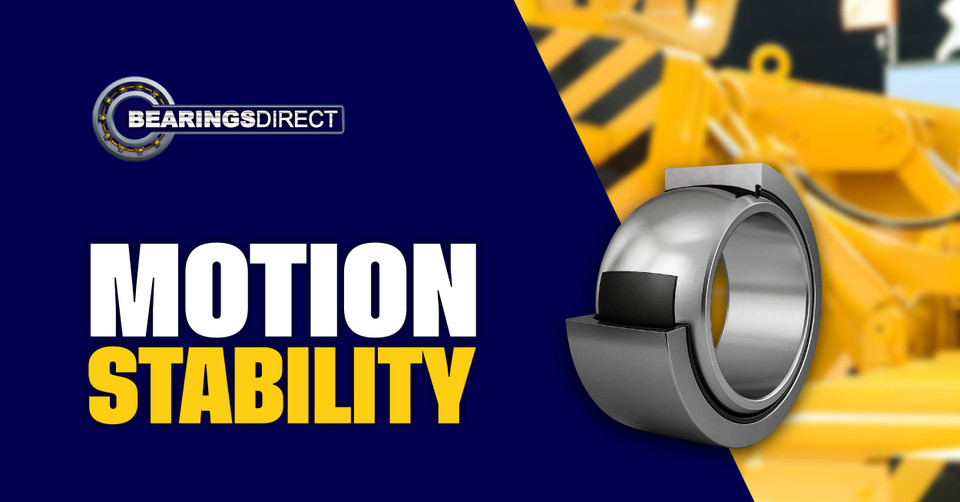
Smooth Performance in Swinging or Rotating Applications Starts with the Right Bearings
Swinging, pivoting, and rotating systems put constant stress on moving parts, especially bearings. When you choose the wrong bearing, vibration, uneven wear, and early failure often follow, which is why selecting bearings for swinging and rotating applications is critical for smooth and reliable performance.
Why Do Swinging and Rotating Applications Require Specialized Bearings?
Swinging and rotating systems behave differently from simple spinning shafts. Motion direction changes, load shifts, and contact pressure moves across the bearing surface. You need bearings designed for these conditions to maintain stability and control, especially when using rotating application bearings in demanding equipment.
Continuous vs oscillating motion challenges
Some machines rotate fully and continuously, while others move back and forth in short strokes. Bearings for continuous rotation spread wear evenly, while bearings for oscillating motion concentrate movement in small areas, increasing friction and surface stress.
Oscillating systems often need stronger surfaces and improved lubrication retention. Without it, wear increases quickly and motion becomes rough. This is why properly designed swinging motion bearings are essential in pivoting systems.
Radial and axial load considerations
Rotating equipment often carries more than one type of load. Radial load pushes outward from the shaft, while axial load pushes along the shaft. Many swinging systems carry both at the same time. Industrial rotation bearings must support combined forces to prevent stress buildup and performance loss.
Understanding load direction helps you select the correct bearing for smoother and longer-lasting operation.
Impact of misalignment on rotating components
Misalignment is a major cause of vibration and uneven wear. Even a small angle error shifts load unevenly across the bearing surface. Over time, this causes heat, noise, and surface damage. Many heavy duty pivot bearings are designed to tolerate slight misalignment and maintain performance.
Proper alignment reduces stress and helps extend the life of bearings for swinging and rotating applications.
What Types of Bearings Are Best for Swinging and Rotating Motion?
Different motion patterns require different bearing designs. Choosing the right structure improves stability, load handling, and motion control.
Ball Bearings for smooth, consistent rotation
Ball bearings are widely used for steady rotation. They reduce friction and allow consistent movement at moderate to high speeds. Many motors and conveyors rely on smooth rotation bearings for efficiency and stable motion.
They are also common low friction rotary bearings in light-duty rotating systems where energy efficiency matters.
Spherical Plain Bearings for pivoting and misalignment tolerance
Spherical plain bearings allow angular movement and tolerate mounting errors. You often see them in pivot joints, hydraulic arms, and mechanical linkages. These bearings for arms joints linkages support heavy load while allowing slight directional movement.
They are widely used swinging motion bearings in machinery with frequent motion reversal.
Slewing Bearings for large rotating structures
Large equipment such as cranes and rotating platforms require bearings that support heavy axial and radial load together. Slewing and pivot bearings provide stability and controlled motion in slow rotating systems under high weight.
They are essential rotating application bearings for heavy machinery and industrial structures.
How Do Bearings Reduce Friction and Vibration in Rotating Systems?
Friction and vibration reduce efficiency and increase wear. Bearings reduce surface contact and allow rolling instead of sliding, improving motion quality.
Surface contact and rolling efficiency
Rolling elements separate moving surfaces and reduce metal contact. This improves efficiency and prevents overheating. Low friction rotary bearings maintain steady motion and minimize energy loss.
Reduced friction also protects shafts and housings from excessive wear.
Importance of lubrication and sealing
Lubrication creates a protective film that prevents direct surface contact. Without lubrication, friction rises quickly and surfaces begin to wear. Proper sealing protects industrial rotation bearings from dust, debris, and moisture.
Good lubrication is essential for maintaining smooth rotation bearings and extending service life.
Noise and vibration control in industrial equipment
Vibration often begins with uneven load or poor lubrication. Over time, vibration spreads through the system and affects performance. Bearings designed for smooth motion absorb small motion changes and reduce noise.
This is especially important in equipment using bearings for oscillating motion where movement repeats constantly.
Where Are Swinging and Rotating Bearings Commonly Used?
Swinging and rotating bearings are used across many industries where controlled motion and load support are required.
Industrial machinery and automation arms
Automation systems rely on industrial rotation bearings for accurate and stable movement. Robotic arms, pivot mechanisms, and positioning systems use bearings for arms joints linkages to maintain precision and reduce vibration.
These systems require smooth motion to prevent positioning errors.
Construction and material handling equipment
Heavy machines such as cranes, loaders, and excavators depend on heavy duty pivot bearings to handle high load and repeated motion. These machines operate in harsh environments and require strong slewing and pivot bearings for durability.
Reliable bearings reduce downtime and maintain equipment stability.
Agricultural and forestry machinery
Agricultural machines operate in dusty and dirty conditions. Bearings must resist contamination and repeated motion cycles. Many systems use swinging motion bearings for pivoting arms and rotating components.
Strong sealing helps maintain performance in tough environments.
Robotics and articulated joints
Robotics relies on precise movement and repeatability. Low friction rotary bearings reduce resistance and improve motion accuracy. Bearings designed for articulated systems support complex movement while maintaining stability.
These applications often depend on specialized rotating application bearings for performance and control.
What Causes Premature Bearing Failure in Rotating Applications?
Most bearing failures result from incorrect selection, poor installation, or lack of maintenance.
Incorrect load rating selection
If a bearing cannot support the load, stress builds quickly. Overloading leads to surface fatigue, cracking, and early failure. Properly rated heavy duty pivot bearings prevent overload damage and improve durability.
Choosing the correct load rating ensures stable operation.
Poor alignment and mounting practices
Improper mounting creates uneven load distribution. Misalignment increases friction, heat, and vibration. Over time, this leads to failure of industrial rotation bearings and reduced equipment life.
Careful alignment is essential for smooth motion and reliability.
Contamination and insufficient lubrication
Dust, debris, and moisture damage rolling surfaces. Without lubrication, friction rises and surfaces wear quickly. Many failures in low friction rotary bearings result from contamination or lack of maintenance.
Sealed bearings and routine lubrication reduce this risk.
How Can Proper Bearing Selection Extend Equipment Lifespan?
Correct bearing selection improves efficiency, reduces wear, and keeps equipment operating longer.
Matching bearing type to motion profile
Different motion patterns require different bearings. Systems with repeated directional movement need strong bearings for oscillating motion, while continuous systems benefit from smooth rotation bearings.
Matching bearing design to motion reduces uneven wear and vibration.
Choosing materials suited to environment and load
Harsh environments require corrosion-resistant materials and strong seals. Heavy-load systems need durable structures. Well-designed slewing and pivot bearings built for your environment last longer and require less maintenance.
Material selection plays a major role in reliability.
Preventive maintenance considerations
Routine inspection and lubrication extend bearing life significantly. Monitoring noise, vibration, and temperature helps detect problems early. Maintaining industrial rotation bearings prevents unexpected downtime and costly repairs.
Preventive care improves long-term performance.
Why Choose Bearings Direct for Swinging and Rotating Applications?
Selecting the right bearing can be challenging when motion, load, and environment vary. You need a reliable supplier with proven solutions.
Bearings Direct offers a wide range of bearings designed for pivoting, oscillating, and rotating systems. Their catalog includes ball bearings, spherical plain bearings, mounted units, and slewing and pivot bearings built for real-world performance.
From light-duty systems to heavy industrial equipment, their solutions support smooth motion, reduced vibration, and long service life using high-quality rotating application bearings.
Expert guidance helps you choose the correct bearing based on motion type, load, and environment.
Find the Right Bearings for Smooth Swinging and Rotation
The right bearing improves motion control, reduces vibration, and prevents costly downtime. Explore Bearings Direct’s full range of bearings for swinging and rotating applications to improve efficiency, extend equipment life, and keep your systems running smoothly.
FAQ
1. What are bearings for swinging and rotating applications?
They are bearings designed to support pivoting, oscillating, or continuous motion while handling load and reducing friction.
2. What is the difference between rotating and oscillating bearings?
Rotating bearings support full circular motion, whilebearings for oscillating motion handle repeated back-and-forth movement.
3. Which bearing is best for smooth rotation?
Ball bearings are commonly used assmooth rotation bearings because they reduce friction and allow steady motion.
4. Where are industrial rotation bearings used?
They are used in conveyors, cranes, motors, robotic arms, and heavy equipment requiring controlled rotation.
5. What are heavy duty pivot bearings used for?
They support high load in cranes, excavators, and rotating platforms where strength and durability are required.
6. How do low friction rotary bearings improve performance?
They reduce resistance, heat, and wear, improving efficiency and extending equipment life.
7. What are slewing and pivot bearings?
They are large bearings designed to support heavy axial and radial loads in rotating structures.
8. What causes vibration in rotating systems?
Misalignment, poor lubrication, uneven load, and wornrotating application bearings are common causes.
9. How can I extend bearing life in rotating equipment?
Use proper alignment, correct lubrication, contamination protection, and select the right bearing for the motion type.
10. How do I choose the right bearing for my system?
Evaluate motion type, load direction, speed, environment, and maintenance needs to select the bestswinging motion bearings for reliable performance.