
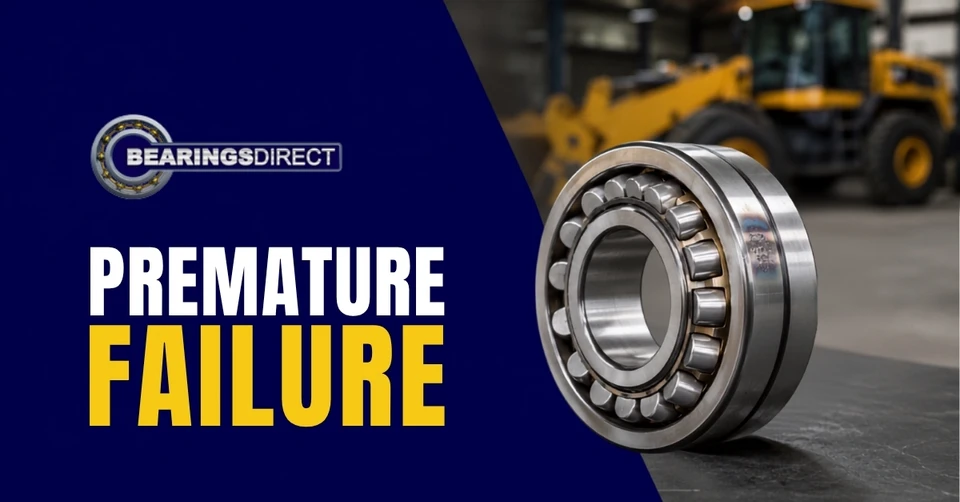
Why Heavy Equipment Bearings from Lesser-Known Brands Often Fail Prematurely
A mid‑shift bearing failure on a dozer or excavator can shut down production instantly, exposing the real tension between saving money on parts and the hidden cost of using unverified bearing brands in high demand machines like haul trucks, wheel loaders, crushers, and excavators.
What Makes Heavy Equipment Bearing Applications So Demanding?
Heavy equipment bearings operate under extreme conditions that push even high‑quality components to their limits. Machines in construction, mining, and heavy manufacturing face continuous high radial and axial loads that far exceed what you see in standard industrial applications. These loads come from digging, lifting, hauling, crushing, and constant directional changes.
Shock loading is another major factor. Every bucket strike, blade impact, or haul truck jolt sends sudden force spikes through the bearing. Add in constant vibration from engines, tracks, and hydraulic systems, and the stress becomes relentless.
Contamination is unavoidable on job sites. Bearings are exposed to dust, sand, crushed rock, water, mud, and abrasive particles that work their way into housings and lubrication systems. Even small amounts of contamination accelerate wear dramatically.
Temperature swings also take a toll. Bearings heat up during long duty cycles, then cool rapidly during breaks or overnight. This expansion and contraction stresses the steel and lubrication film.
Finally, long service intervals mean bearings must survive thousands of hours of cumulative stress. When you combine all these factors, it’s easy to see why heavy equipment bearings premature failure is common when the bearing isn’t built to withstand these conditions — and why trusted heavy duty bearing brands matter.
Why Do Off-Brand Bearings Often Fail to Meet Heavy Equipment Demands?
Many off‑brand bearings look similar to premium bearings on the outside, but the internal differences are what determine real‑world performance.
Inferior Steel Metallurgy
Some off-brand bearings heavy equipment suppliers use lower‑grade steel with inconsistent carbon content. Without proper case hardening or through‑hardening, the bearing surface becomes vulnerable to:
- Surface fatigue
- Spalling
- Pitting
- Reduced load capacity
This is especially dangerous in excavators and loaders where shock loads are constant.
Poor Dimensional Tolerances
Heavy equipment requires precise fits. Bearings that deviate from ABEC or ISO tolerance grades create:
- Loose fits on shafts
- Misalignment
- Excess vibration
- Accelerated wear
This is a common issue with cheap bearings heavy machinery, where manufacturing tolerances vary widely.
Substandard Heat Treatment
Heat treatment determines how well a bearing resists deformation. Inconsistent hardening leaves the bearing vulnerable to:
- Raceway distortion
- Plastic deformation
- Early fatigue
This is a major contributor to poor bearing quality heavy equipment performance.
Weak Cage Construction
Cages made from thin stamped steel or plastic cannot handle heavy cyclic loads. Under stress, they fracture, releasing rolling elements and causing catastrophic failure. Premium bearings use machined brass or reinforced steel cages for a reason — they survive conditions that off‑brand cages cannot.
How Does Counterfeit or Mislabeled Bearing Stock Enter the Supply Chain?
Counterfeit and mislabeled bearings are a growing problem in construction and mining. These products often look identical to genuine bearings but fail quickly under load.
Bearings Rebranded With False Markings
Some suppliers stamp low‑quality bearings with fake grade or origin labels. These products claim to meet OEM specs but do not.
Unverified Overseas Manufacturing
Third‑party resellers sometimes source from factories with no quality oversight. These bearings may match dimensions on paper but lack proper metallurgy or heat treatment.
Spec Sheets That Look Correct
Counterfeit bearings often come with spec sheets that match OEM ratings. But the materials and processes behind them are inferior, making them unsafe for heavy equipment.
Visual Inspection Limitations
Even trained technicians struggle to spot counterfeit bearings construction equipment by appearance alone. The differences only show up under load when it’s too late.
This is why many teams prefer OEM-equivalent bearings heavy equipment from verified suppliers rather than taking risks with unknown brands.
What Are the Most Common Failure Modes Linked to Low-Quality Bearings?
When a bearing from a lesser‑known brand fails, the failure mode often reveals the underlying manufacturing weakness.
Premature Spalling and Pitting
Soft or poorly finished raceways develop fatigue damage quickly. This leads to:
- Rough rotation
- Heat buildup
- Rapid failure
This is common in low-quality bearings excavator applications where shock loads are constant.
Cage Fracture
Weak cages crack under heavy cyclic loading. Once the cage breaks, rolling elements scatter and destroy the bearing within minutes.
Fretting Corrosion
Poor dimensional tolerances allow micromovement between the outer ring and housing bore. This creates:
- Rust-colored debris
- Surface wear
- Loosened fits
Grease Incompatibility
Some off brand bearings come pre-packed with unverified grease. Under heavy equipment temperatures, this grease:
- Breaks down
- Separates
- Reacts with field-applied lubricants
This is a major contributor to bearing failure causes heavy machinery.
False Brinelling
Soft raceways deform during transport or storage — before the bearing even enters service. This leads to early vibration and rapid failure.
What Does Premature Bearing Failure Actually Cost in Heavy Equipment Operations?
The cost of a failed bearing goes far beyond the price of the part.
Unplanned Downtime
Production-critical machines like excavators, haul trucks, and crushers can cost thousands per hour when idle. A single failure can exceed the entire annual savings from buying discount bearings.
Secondary Damage
A failed bearing often damages:
- Shafts
- Housings
- Seals
- Gears
- Final drives
This multiplies repair costs and extends downtime.
Labor Costs
Replacing a bearing once is expected. Replacing it twice because of a poor-quality part is wasted labor — and wasted budget.
Safety Risks
Catastrophic bearing failure in wheel ends, swing drives, or final drives can create serious hazards for operators and nearby workers.
This is why many teams prefer bearings that meet bearing grade standards construction rather than taking risks with unknown brands.
How Can Maintenance Teams Verify Bearing Quality Before Installation?
You can prevent most failures by verifying bearing quality before installation.
Source From Authorized Distributors
Work with suppliers who provide traceable manufacturer information. This reduces the risk of counterfeit or mislabeled stock.
Request Material Documentation
For critical applications, ask for:
- Mill certificates
- Heat treatment records
- Material traceability
This is especially important when sourcing OEM-equivalent bearings heavy equipment.
Check Dimensional Conformance
Verify that the bearing meets ABEC or ISO tolerance classes. Poor tolerances are a major cause of heavy equipment bearings premature failure.
Inspect Cage Material and Surface Finish
Look for:
- Machined brass or reinforced steel cages
- Smooth raceway surfaces
- Consistent grease fill
Cross-Reference Part Numbers
Compare part numbers against OEM catalogs or Tier 1 manufacturer listings. This helps avoid mismatched or mislabeled bearings.
Why Source Heavy Equipment Bearings From Bearings Direct?
Bearings Direct helps you avoid the risks associated with off-brand or counterfeit bearings by offering:
Verified Manufacturers
All stocked bearings come from reputable, vetted manufacturers — no unverified substitutions.
Full Range of Heavy Equipment Bearings
You’ll find:
- Tapered roller bearings
- Spherical roller bearings
- Cylindrical roller bearings
- Needle roller bearings
All designed for the load profiles of construction and mining machinery.
Accurate Specifications
Every product includes clear dimensional, load rating, and tolerance information to ensure proper fit and performance.
Reliable Fulfillment
Whether you’re planning a scheduled rebuild or responding to a breakdown, Bearings Direct provides fast, dependable delivery.
Don't Let the Wrong Bearing Become Your Most Expensive Part
Explore ’ Bearings Direct s heavy equipment bearing catalog to source verified, high‑quality components for your fleet. Verified quality at the point of purchase is always cheaper than unplanned downtime.
FAQ
1. Why do lesser-known bearing brands fail faster in heavy equipment?
They often use lower-grade steel, inconsistent heat treatment, and poor tolerances that cannot handle heavy equipment loads.
2. Are cheap bearings safe for excavators or loaders?
Not usually. Cheap bearings heavy machinery options often fail early under shock loads and contamination.
3. How can I tell if a bearing is counterfeit?
Counterfeit bearings may look identical to real ones. Always buy from authorized distributors and request documentation.
4. What failure signs should I look for?
Noise, heat, vibration, metal debris, and grease leakage are early indicators of bearing failure causes heavy machinery.
5. Do OEM-equivalent bearings perform as well as OEM?
Yes. If sourced from verified manufacturers. High-quality OEM-equivalent bearings heavy equipment match OEM performance.
6. What happens if a bearing cage breaks?
The bearing fails immediately, often damaging shafts, seals, and housings.
7. Why is steel quality so important?
Poor metallurgy leads to spalling, pitting, and early fatigue, especially in low-quality bearings excavator applications.
8. How does grease compatibility affect bearing life?
Incompatible grease can break down under heat, causing lubrication failure.
9. Should I replace bearings early to avoid failure?
Follow OEM intervals and inspect regularly. Early replacement is cheaper than catastrophic failure.
10. Why choose Bearings Direct?
They supply verified, high‑quality bearings from trusted manufacturers, reducing the risk of heavy equipment bearings premature failure.